Malaysia has achieved a significant environmental milestone, restoring approximately 3,965 hectares of mangrove forests nationwide through the planting of more than 9.3 million mangrove trees and complementary coastal plant species. The accomplishment demonstrates sustained governmental effort in coastal rehabilitation and represents one of Southeast Asia's more substantial mangrove restoration initiatives in recent years. The scale of this undertaking—involving millions of individual trees planted across three major regions—underscores the complexity and resource intensity required for meaningful ecosystem restoration in tropical environments.
Minister of Natural Resources and Environmental Sustainability Datuk Seri Arthur Joseph Kurup highlighted that these conservation achievements reflect broader government policy priorities around coastal ecosystem management. The initiative operates within a comprehensive framework extending beyond simple tree-planting activities, encompassing maintenance protocols, scientific research, environmental monitoring, and community engagement programmes. This multi-layered approach distinguishes the project from more superficial greening efforts, instead positioning it as a long-term ecological recovery strategy requiring ongoing technical oversight and adaptive management practices.
The financial commitment supporting this work remains substantial. Through 2025, RM71.3 million has been channelled into the National Coastal Mangrove and Suitable Species Tree Planting Programme, funding the complete lifecycle of restoration activities from initial planting through to long-term ecosystem stewardship. Looking forward, the 13th Malaysia Plan allocates an additional RM2 million specifically for mangrove conservation and coastal area preservation in 2026, with activities planned across Peninsular Malaysia, Sabah, and Sarawak. This continuing budgetary allocation signals governmental determination to maintain restoration momentum beyond single-year initiatives.
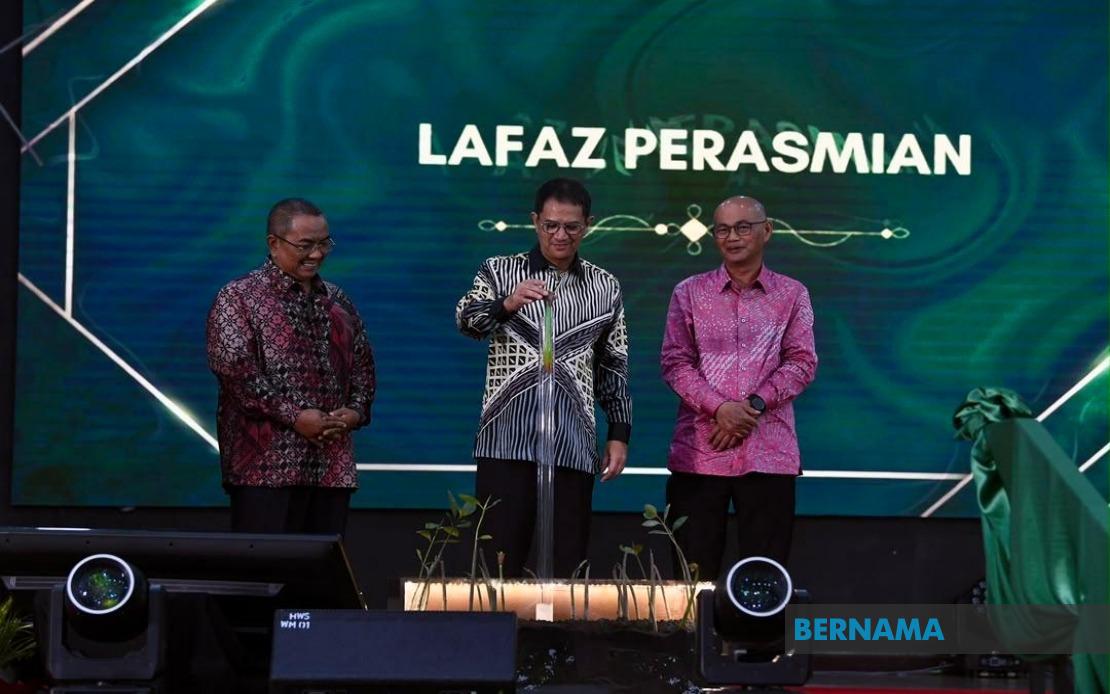
The National-level International Day for the Conservation of the Mangrove Ecosystem 2026 celebration, held in Alor Setar and themed around Blue Economy Sustainability, provided the backdrop for formally recognising these achievements. Kedah Raja Muda Tengku Sarafudin Badlishah Ibni Sultan Sallehuddin officiated the event, reflecting the participation of state-level leadership in supporting environmental conservation efforts. Such ceremonial recognition helps elevate mangrove restoration within public consciousness, potentially catalysing broader societal support for coastal ecosystem initiatives.
Restoration efforts operate through complex inter-agency collaboration mechanisms spanning multiple governmental bodies. Forestry Peninsular Malaysia takes the lead coordinating activities, working alongside Sabah Forestry Department and Sarawak Forest Department to ensure regional coordination. The Forest Research Institute Malaysia contributes technical expertise and scientific validation, while various stakeholder organisations provide specialised knowledge and implementation capacity. This distributed governance model reflects the reality that coastal ecosystem management extends across institutional boundaries and requires coordinated action across competing departmental jurisdictions.
Non-governmental organisations and local communities emerge as critical partners in sustaining restoration efforts. Beyond governmental departments, these actors contribute environmental education initiatives, public awareness campaigns, and ecosystem protection activities that reinforce conservation outcomes. The involvement of community groups particularly matters for long-term success, as local engagement creates constituency support for protecting restored areas against encroachment or exploitation. Recognition of NGO contributions through formal appreciation certificates demonstrates institutional acknowledgment of non-state actors' essential roles in environmental stewardship.
Mangrove forests possess particular ecological significance throughout Southeast Asia, providing nursery habitat for commercially important fish and crustacean species while offering storm surge protection and carbon sequestration services. Their restoration becomes increasingly urgent as coastal development pressures and aquaculture expansion have historically reduced mangrove coverage across the region. Malaysia's restoration programme therefore carries implications extending beyond national borders, contributing to regional ecosystem health and supporting transboundary species migrations and fishery productivity that affect downstream communities.
The accompanying National Mangrove and Coastal Ecosystem Seminar 2026, organised collaboratively by Forestry Peninsular Malaysia and the Forest Research Institute Malaysia, created a structured platform for knowledge dissemination and technical advancement. With twelve research presentations, fifteen technical posters, and nine exhibition booths, the seminar facilitated dialogue among researchers, technical specialists, government officials, and implementation stakeholders. Such convening mechanisms strengthen the evidence base informing ecosystem management practices and enable practitioners to adopt proven techniques across different operational contexts.
Mangrove ecosystem restoration connects directly to Malaysia's blue economy development strategy, positioning environmental conservation within economic frameworks rather than positioning it as constraint on growth. This framing acknowledges that ecosystem services—fishery support, coastal protection, carbon storage—generate tangible economic value when properly maintained. The blue economy integration suggests that future mangrove programmes may attract private sector participation and investment, potentially diversifying funding sources beyond government budgets and creating business cases for long-term stewardship.
Looking ahead, the continuation of restoration programmes through 2026 and beyond reflects recognition that ecosystem recovery operates on multi-year timescales requiring sustained commitment. Early-planted mangrove stands require years of maintenance before achieving ecological self-sufficiency, meaning current investments create long-term obligations for ongoing management. The allocation of resources through the 13th Malaysia Plan demonstrates governmental acceptance of these extended timelines and commitment to seeing restoration initiatives through to completion rather than pursuing short-term symbolic gestures.
The restoration achievements also align with international environmental commitments Malaysia has undertaken, including various biodiversity conservation targets and climate change mitigation obligations. Mangrove forests function as significant carbon sinks, sequestering atmospheric carbon in biomass and sediments, contributing meaningfully to national emissions reduction strategies. Recognition of these co-benefits helps justify continued investment in restoration programmes to both domestic audiences and international environmental monitoring bodies assessing national climate action progress.
Successful restoration at this scale creates templates and experience repositories that can inform future coastal conservation initiatives throughout Malaysia and potentially across Southeast Asian neighbours facing similar mangrove degradation challenges. Documentation of planting techniques, species selection protocols, and maintenance procedures developed through this programme generates intellectual capital with regional applicability. As other nations contemplate mangrove restoration programmes, Malaysia's experience provides practical evidence regarding implementation feasibility, cost-effectiveness, and ecological outcomes achievable through systematic, well-resourced approaches.

