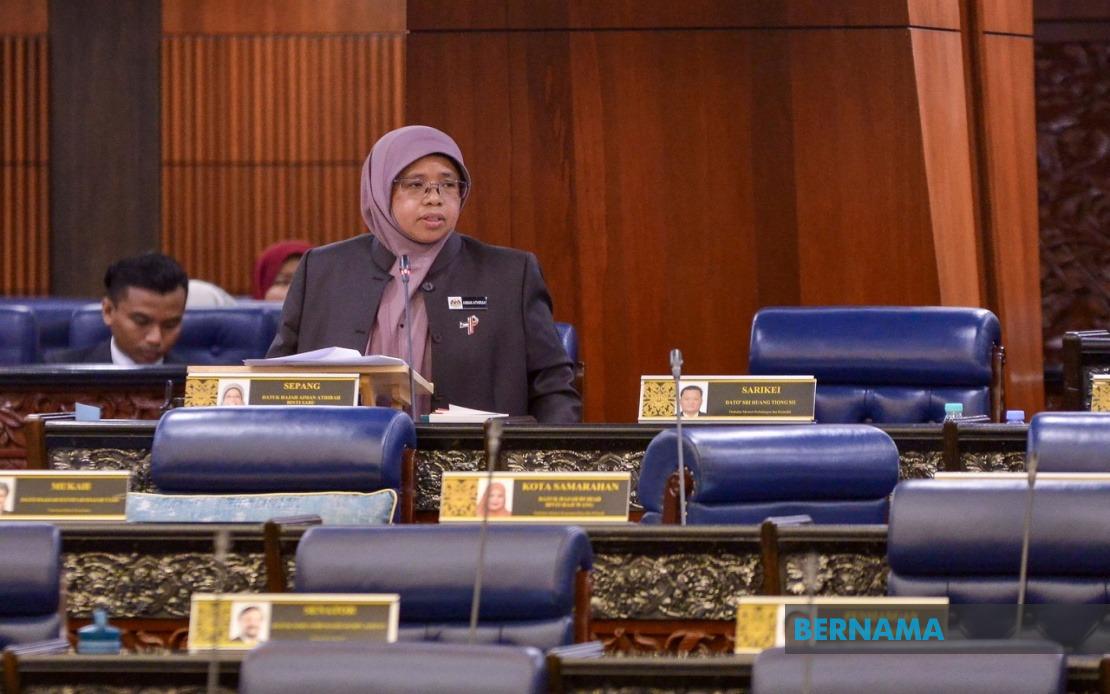
Malaysia's government is pursuing an ambitious overhaul of its housing sector by anchoring development decisions in hard data rather than speculation, marking a significant shift in how the country plans residential construction to serve ordinary families struggling with affordability. Deputy Housing and Local Government Minister Datuk Aiman Athirah Sabu outlined the initiative in Parliament, revealing that the administration has successfully resuscitated 1,615 previously stalled housing projects containing 190,422 units with a combined gross development value of RM150.8 billion since establishing a dedicated task force in December 2022.
The evidence-based approach draws on multiple sources of reliable information to guide where homes should be built and what types best suit local populations. The government taps into datasets maintained by the Department of Statistics Malaysia, the National Property Information Centre, and the Malaysian Urban Observatory, alongside supply figures and application records from various state and federal agencies. By synthesizing this information, planners can identify genuine mismatches between what communities actually need and what developers have constructed, addressing a chronic problem that has left properties sitting empty while families struggle to find affordable housing within their means.
This methodical framework allows the government to tailor housing provision to conditions on the ground at the state and district level, determining not just the quantity of new homes required but their characteristics and price points. Rather than permitting developers to build whatever they believe will generate maximum profits, the system demands alignment between construction and demonstrated household demand, coupled with careful consideration of what residents in different regions can realistically afford. The approach represents a departure from earlier decades when housing development often appeared disconnected from actual demographic and economic realities, contributing to oversupply in some areas while others remained underserved.
Coordination across federal and state governments has been institutionalized through the National Affordable Housing Council, which operates under Prime Minister leadership to harmonize policies and resolve jurisdictional complications that traditionally fragmented Malaysia's housing efforts. The council monitors implementation of initiatives and addresses strategic bottlenecks that single-agency approaches cannot solve. This governance architecture acknowledges that affordable housing is not merely a market issue requiring developer action but a strategic national priority demanding high-level political attention and inter-agency collaboration.
The government's task force for addressing delayed, sick and abandoned projects has proven particularly consequential for addressing a backlog of failed developments that devastated buyer confidence and trapped capital in unfinished construction. Since its establishment, the task force has resuscitated over 1,600 projects, preventing what could have otherwise become permanent losses for hundreds of thousands of Malaysians who had purchased units in stalled schemes. For context, these 190,422 units represent homes for potentially a million or more family members, making the revival programme directly relevant to the housing security of ordinary Malaysians.
The finalized National Housing Policy 2026-2035 will institutionalize more responsive pricing mechanisms that reflect local economic conditions rather than applying blanket affordability definitions nationwide. The ministry is currently mapping what residents in different states and districts genuinely earn using the 2024 Household Income and Basic Amenities Survey data, creating localized affordability benchmarks. This granular approach recognizes that earning RM4,000 monthly carries different implications for housing affordability in Kuala Lumpur versus Kelantan, ensuring that policy interventions target support where need is greatest.
Beyond land acquisition and construction, the government acknowledges that first-time buyers face substantial ancillary costs that strain their finances beyond the purchase price itself. Through the Housing Credit Guarantee Scheme, the government backs mortgages up to 120 per cent of property value, with the supplementary 20 per cent available specifically for renovation expenses and related outlays. This recognition that homeownership involves costs beyond the down payment addresses a genuine pain point for young families establishing households, effectively lowering the true cost of entry into property ownership.
The housing affordability crisis has become increasingly acute across Southeast Asia, and Malaysia's experience serves as a microcosm of broader pressures affecting the region. Rising property prices have consistently outpaced income growth, pricing younger generations out of the market and straining household budgets. By implementing data-driven planning, Malaysia is attempting to realign housing supply with income realities rather than allowing speculation to dominate development decisions. The approach offers potential lessons for other regional economies grappling with similar dynamics.
The revival of 1,615 projects indicates that many housing developments failed not because demand was absent but because projects were poorly managed, underfunded, or abandoned mid-construction. Systematic intervention to complete these schemes represents effective use of government capacity to unlock value from existing investments rather than only stimulating new construction. The scale of the revival effort—involving over RM150 billion in asset value—demonstrates that completing stalled projects can significantly expand the effective housing supply without requiring massive new development from scratch.
Parliamentary questions from Syed Saddiq Syed Abdul Rahman highlighted ongoing concerns among legislators about housing affordability and construction quality. The government's detailed responses signal commitment to addressing these issues through coordinated strategy rather than ad-hoc interventions. Continued monitoring of house price trends, project completion rates, and the effectiveness of financing schemes will be essential to determining whether the data-driven approach delivers tangible improvements for Malaysian families seeking affordable, quality housing.

