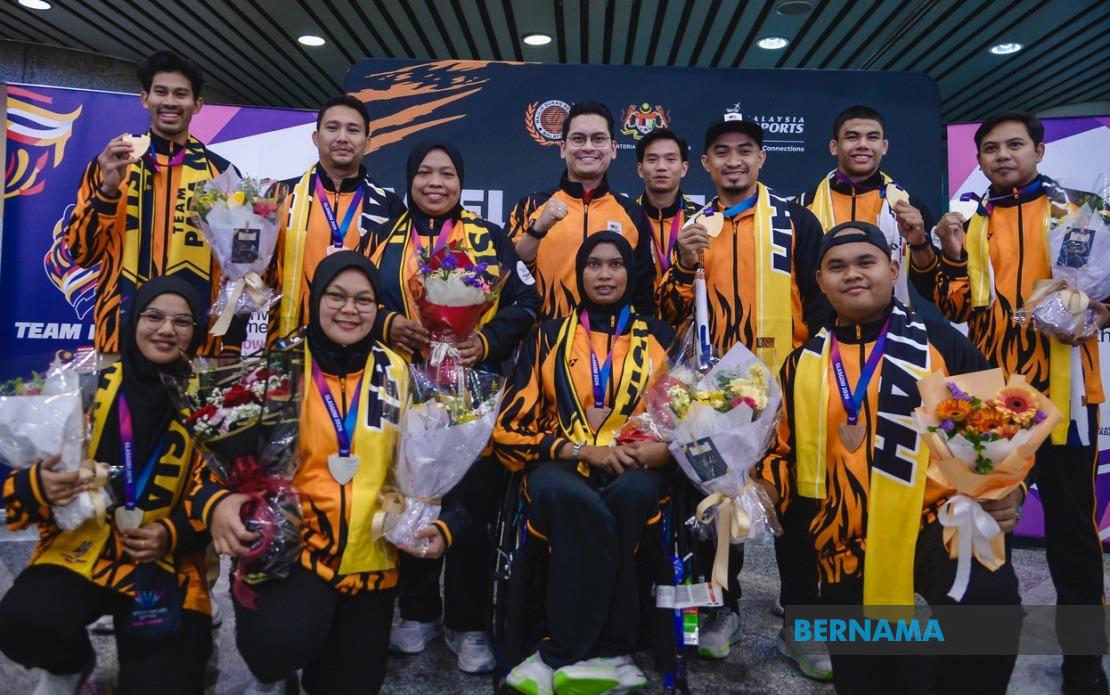
Malaysia has committed RM1.1 million in financial rewards for athletes who brought home medals from the 2026 Glasgow Commonwealth Games, marking a significant investment in recognising sporting excellence. Youth and Sports Minister Dr. Mohammed Taufiq Johari unveiled the incentive structure during a welcoming ceremony for returning medallists at Kuala Lumpur International Airport, framing the allocation as a tangible expression of gratitude for the dedication and sacrifices made by the national contingent.
The reward scheme, operating under the National Sports Incentive Scheme (SHAKAM), establishes a tiered payment structure that emphasises gold medal achievement. Gold medalists will receive RM80,000, with an additional RM10,000 bonus if they establish a new Commonwealth Games record in their respective discipline. Silver medalists are entitled to RM40,000, while those earning bronze will collect RM20,000. This differentiated approach reflects a deliberate policy shift aimed at elevating Malaysia's competitive ambitions on the international sporting stage.
Dr. Mohammed Taufiq indicated that the National Sports Council is currently in discussions with corporate partners to enhance the monetary incentives through supplementary funding. This collaborative approach signals the government's willingness to leverage private sector participation in supporting athletic achievement, potentially creating pathways for sustained investment in sports development beyond budgetary allocations. Such partnerships could prove instrumental for future Commonwealth Games participation and broader Olympic aspirations.
The Glasgow 2026 campaign yielded eight gold, three silver, and five bronze medals—a performance that comfortably surpassed the ministry's initial target of five gold medals. This outcome represents Malaysia's strongest showing since 2010, particularly noteworthy given that the national contingent comprised a relatively modest delegation size compared to previous Commonwealth Games editions. The disproportionate success relative to squad size underscores improved coaching quality, athlete selection rigour, and strategic event focus.
Central to this improved performance has been the adoption of colour-based medal targeting, a strategic methodology that Dr. Mohammed Taufiq emphasised represents a fundamental departure from previous approaches. Rather than pursuing medals indiscriminately across all colours, the ministry now concentrates resources and preparation on gold medal prospects, creating psychological and logistical incentive structures that align with long-term Olympic ambitions. This approach emerged from extensive consultation with sports associations, coaching personnel, and athletes themselves, ensuring that strategic targets reflected realistic assessments of competitive capability.
Dr. Mohammed Taufiq acknowledged initial concerns that such focused targeting might impose undue psychological burden on athletes, potentially undermining rather than enhancing performance. However, the Glasgow results suggest the opposite effect materialised—the clearly articulated golden-medal objective appeared to galvanise rather than constrain athlete motivation. This reframing of expectation demonstrates sophisticated understanding of sports psychology and the importance of translating government ambition into athlete-centric goal structures that inspire rather than paralyse performance.
The minister framed Malaysia's Glasgow success as foundational groundwork for achieving the nation's first-ever Olympic gold medal. This explicit connection between Commonwealth Games strategy and Olympic aspirations reveals the integrated thinking now governing Malaysia's sports policy apparatus. By establishing colour-based targeting mechanisms at Commonwealth level, the government creates an developmental pipeline through which gold-medal-winning experience and expertise can eventually translate into Olympic podium appearances, addressing a significant gap in Malaysia's international sporting record.
Chef de Mission Datuk Awalan Abdul Aziz, concurrently serving as President of the Malaysian Lawn Bowls Federation, provided supplementary perspective on strategic target-setting from ground level. He recounted that while the lawn bowls contingent harboured internal aspirations for gold medals, official targets deliberately avoided specifying golden-medal minimums. This nuanced distinction between aspirational objectives and binding performance metrics reflects sophisticated sports management, recognising that publicly announced targets function differently from internally cultivated ambitions in their psychological consequences.
The lawn bowls federation's Glasgow performance—two silver and two bronze medals—represented substantial improvement over the Birmingham 2022 Commonwealth Games outcome of one silver and one bronze. This trajectory of improvement across sequential Games editions demonstrates that Malaysia's sports development interventions are generating cumulative benefits, with coaching enhancement, athlete training protocols, and competitive preparation yielding measurable advancement. Such progressive improvement patterns suggest the strategic investments are functioning as intended.
Datuk Awalan credited the overall Glasgow success to the combined efforts of athletes and coaching personnel who sustained commitment through rigorous preparation schedules. His emphasis on the relational aspect of achievement—attributing outcomes to coordinated effort across the athlete-coach ecosystem—reinforces that medal success reflects systemic sporting development rather than isolated individual brilliance. This holistic framing carries implications for how Malaysia should continue investing in sports infrastructure, coaching education, and athlete support mechanisms.
The Glasgow 2026 outcome carries particular significance for Malaysian sporting ambitions because it demonstrates that strategic reorientation toward gold-medal targeting produces measurable results. The willingness to set challenging yet specific objectives, coupled with resource allocation aligned to those objectives, appears to have catalysed improved performance outcomes. This pattern suggests that Malaysia's sports policy establishment is developing more sophisticated approaches to competitive development compared to previous decades.
Looking forward, the implementation of SHAKAM rewards establishes financial recognition for medal achievement that extends beyond symbolic acknowledgment to tangible economic benefit. For athletes from middle-income and lower-income backgrounds, such financial incentives carry meaningful personal significance while simultaneously signalling that the government values their achievements substantively. This approach may encourage talent pipeline development by demonstrating that sporting excellence yields measurable economic returns.
The allocation of RM1.1 million, while substantial, represents modest expenditure relative to Malaysia's overall government budget, yet generates significant symbolic and practical value for the sporting community. The investments made in athlete preparation, coaching development, and facilities clearly yielded returns measurable in medal counts and international standing. Sustained commitment to similar strategic approaches, combined with enhanced corporate partnerships and refined targeting methodologies, positions Malaysia potentially to continue improving Commonwealth Games performance while progressively building toward Olympic competitiveness across additional sports disciplines.

