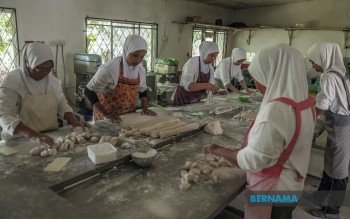
Malaysia is taking decisive action to transform its halal supply chains, with the government rolling out a comprehensive 23-initiative strategy designed to lower the country's reliance on imported halal ingredients. Announced through the Ministry of Investment, Trade and Industry (MITI), the coordinated effort operates under seven strategic pillars of the Halal Industry Master Plan 2030, with implementation progressing steadily since the plan's inception. By May 30, 2026, tangible progress has emerged across multiple fronts, signalling the government's commitment to building a more self-sufficient halal ecosystem that can buffer Malaysia against global supply chain disruptions and create new economic opportunities.
The breadth of the initiative underscores how seriously Malaysian policymakers view the challenge of ingredient dependency. Seven of the 23 programmes concentrate specifically on the foundational elements required for domestic ingredient production: fostering innovation through dedicated research and development, enabling small and medium enterprises to access capital through targeted financing schemes, cultivating skilled workers through talent development programmes, and translating innovations into marketable products via commercialisation pathways. This multifaceted approach recognises that import substitution cannot succeed through production capacity alone—it demands complementary investments in knowledge, funding, human resources, and market infrastructure.
The implementation strategy itself demonstrates careful sequencing and interconnection. MITI has structured the rollout in phases, beginning with a systematic mapping exercise to identify which ingredient categories carry strategic importance, present the greatest import dependency, and offer realistic potential for domestic manufacturing. This targeted triage prevents wasteful spread of resources across all halal ingredients and instead concentrates government support where the return on investment and strategic impact promise to be highest. Following this mapping phase, the initiatives progress through R&D activities, commercialisation pathways, investment facilitation mechanisms, and the intentional development of anchor companies capable of leading sectoral transformation.
A critical technological pillar supporting these efforts is the MyHALALINGREDIENTS platform, launched by JAKIM (the Department of Islamic Development Malaysia) beginning August 15, 2025. This data collection system serves as the nervous system for the entire initiative, enabling systematic recording and assessment of raw materials employed across the halal manufacturing sector. Rather than operating in isolation, MyHALALINGREDIENTS integrates seamlessly with the existing MYeHALAL certification platform, creating a unified digital infrastructure that reduces bureaucratic friction and accelerates the halal certification process. For manufacturers seeking approval, this integration dramatically simplifies compliance pathways—a crucial incentive for smaller producers who might otherwise struggle with cumbersome certification requirements.
The government's targeting philosophy reflects sophisticated economic thinking about where import substitution can realistically succeed. Rather than pursuing universal self-sufficiency across all halal ingredients—an unrealistic goal given global specialisation and comparative advantage—Malaysian authorities have identified specific ingredient categories that combine three critical attributes: they possess strategic value to the broader economy or security, Malaysia currently depends heavily on foreign suppliers for them, and domestic production capacity could realistically be developed. This selective approach maximises the probability of success while concentrating limited government resources on opportunities with genuine transformative potential.
Industry collaboration forms another essential component of the strategy. MITI emphasises that the government is actively facilitating partnerships and matching exercises between smaller producers and established leading companies within Malaysia's halal sector. These partnerships serve multiple functions simultaneously: they accelerate technology transfer from experienced to emerging producers, create supply chain relationships that incentivise use of domestic ingredients over imports, and distribute the financial burden of scaling new production across multiple industry actors rather than relying exclusively on government funding. For multinational halal ingredient suppliers currently serving Malaysian manufacturers, this collaboration framework signals a subtle but unmistakable shift toward localisation expectations.
The financing component of the initiative addresses one of the most significant barriers that small and medium enterprises face when attempting to enter ingredient production. By embedding MSME financing directly into the HIMP 2030 framework, the government acknowledges that capital constraints—not technical capability or market opportunity—often prevent qualified entrepreneurs from launching or scaling halal ingredient businesses. Targeted financing schemes can bridge this gap, enabling promising ventures to invest in equipment, facilities, and initial production runs while they develop market traction and generate revenue streams.
For Malaysia's broader economy, the implications of successful implementation would be substantial. Halal ingredients represent a significant trade deficit component for the country, with substantial foreign exchange flowing outward to secure supplies. Reducing import dependency would preserve ringgit reserves while creating domestic manufacturing employment and business opportunities. Simultaneously, Malaysia has long positioned itself as a global leader in halal certification, standards-setting, and industry governance. Demonstrating capacity to produce the ingredients that underpin halal manufacturing strengthens this claim and enhances Malaysia's credibility as a halal industry leader rather than merely a certifier of others' work.
The timing of the initiative carries regional significance as well. Throughout Southeast Asia, supply chain resilience has become increasingly important following pandemic-era disruptions and geopolitical tensions that have threatened ingredient availability. Malaysia's push toward self-sufficiency in halal ingredients could serve as a model for other Muslim-majority nations seeking to enhance their economic independence and supply chain resilience. Success could position Malaysian halal ingredient producers to export not only to domestic manufacturers but to halal-conscious producers throughout the region and globally.
Looking forward, the effectiveness of the HIMP 2030 strategy will ultimately depend on execution quality across all 23 initiatives. Government commitment through policy and financing must be matched by genuine industry uptake, with established companies demonstrating willingness to partner with emerging producers and ultimately to source domestically rather than imported ingredients. Consumer demand and international market access for Malaysian-origin halal ingredients will also prove critical—producers must not only develop capacity but find markets willing to purchase their outputs at competitive prices.
The government's response to parliamentary queries about halal ingredient import substitution demonstrates that this initiative enjoys political support across governance levels. By grounding the strategy in seven integrated pillars rather than pursuing ad hoc interventions, Malaysian authorities have attempted to create durable institutional frameworks capable of sustaining momentum beyond individual political cycles. Whether these frameworks prove sufficient to meaningfully reshape Malaysia's halal ingredient supply chains within the HIMP 2030 timeline will become clearer as the phased implementation progresses and measurable outcomes accumulate.

