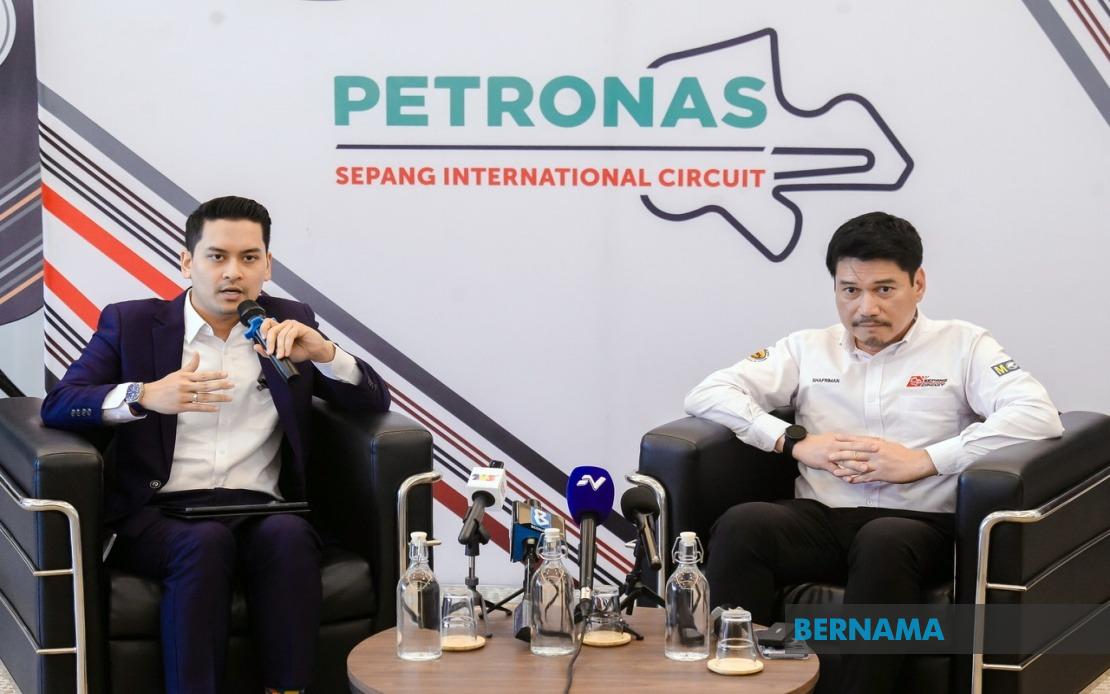
Malaysia has secured a fresh five-year commitment to host the Motorcycle Grand Prix, extending its contract through 2031 and reinforcing the country's standing in world motorsport. Youth and Sports Minister Dr Mohammed Taufiq Johari announced the extension at Sepang International Circuit on July 1, confirming that Cabinet approval has been granted for the arrangement to commence from next year. The current hosting agreement, which runs from 2024 through this year, will now be followed seamlessly by the newly negotiated period, ensuring continuity at the venue that has become synonymous with Asia's premier motorcycle racing event.
The decision reflects a deliberate strategic investment by the Malaysian government, positioning the biennial spectacle as more than simply a sporting fixture but rather as a cornerstone of national economic and competitive advantage. Dr Taufiq characterised the contract extension as fundamental to maintaining Malaysia's relevance and competitiveness within the increasingly crowded landscape of global motorsport destinations. This framing acknowledges the reality that multiple nations across Southeast Asia and beyond actively bid for prestigious international sporting events, recognising their capacity to drive tourism, investment, and global recognition.
Economic data underscores the tangible benefits accruing from the event's presence. The 2024 edition alone generated approximately RM694 million in overall economic impact, demonstrating the substantial ripple effects throughout the national economy. Beyond the headline figure, the event facilitated the creation of more than 4,400 job opportunities across various sectors, while delivering a return on investment multiplier of roughly 6.3 times, indicating that every ringgit invested yielded approximately six times that value in economic returns. These metrics provide quantifiable justification for government expenditure and demonstrate clear benefit to ordinary Malaysians through employment and business opportunities.
The motorsport ecosystem benefits extend well beyond the two-week spectacle itself. Hotel occupancy, restaurant patronage, transportation services, and retail commerce all benefit from the substantial influx of international visitors, media personnel, and team members. Small and medium enterprises, which form the backbone of Malaysia's entrepreneurial landscape, gain particular advantage through catering services, accommodation provision, merchandise sales, and transportation arrangements. The tourism sector receives perhaps the most direct benefit, with Malaysia gaining international exposure and establishing itself as a sophisticated destination capable of hosting world-class infrastructure and organisation.
Beyond immediate economic metrics lies a broader developmental imperative centred on cultivating local talent and technical expertise within Malaysia's motorsport ecosystem. The government has implemented a structured pathway through its Malaysian Motorsport Development programme, which has demonstrably produced internationally competitive riders including Hakim Danish and Qabil Irfan. Both riders have achieved recognition on the global stage, validating the investment in systematic talent identification and development. This represents a multiplier effect, whereby the presence of MotoGP creates pathways, opportunities, and aspirations for young Malaysians interested in motorsport careers.
The Sepang International Circuit, which has hosted the Malaysian round since 1999, has undergone continuous evolution to meet the exacting standards demanded by the FIM and Dorna Sports, the commercial rights holder. The venue's three-decade history reflects Malaysia's commitment to motorsport infrastructure development. The decision to extend hosting arrangements through 2031 signals confidence in the facility's continued relevance and competitiveness relative to emerging alternatives elsewhere in Asia. This commitment also sends a signal to private sector stakeholders and investors that the government is prepared to anchor long-term sporting tourism infrastructure within Malaysia.
For Malaysian motorsport enthusiasts and the broader regional sporting community, the extension provides assured access to watching the world's elite motorcycle riders compete at one of Asia's most challenging circuits. The Sepang layout has become recognised within the professional racing community for its technical demands and capacity to produce unpredictable outcomes. Teams and riders respect the circuit's ability to challenge their machinery and skills, ensuring that races held here consistently deliver compelling sporting drama rather than foregone conclusions.
Regionally, Malaysia's commitment to maintaining MotoGP presence demonstrates ambition within Southeast Asia's motorsport hierarchy. While Thailand, Indonesia, and Singapore have invested in automotive and motorcycle racing infrastructure, Malaysia's ability to retain a premier FIM World Championship event underscores its continued competitive positioning. The extension through 2031 represents a statement of intent regarding sporting infrastructure development and the government's recognition that such events function as economic and cultural ambassadors for the nation.
The contract extension also carries implications for Sepang International Circuit's broader strategic positioning and financial viability. The five-year commitment allows the facility to plan capital investments, negotiate supplier contracts, and schedule facility maintenance with greater certainty. This stability cascades through the local supply chain and workforce, supporting employment continuity and business planning for associated entities. Moreover, the certainty of hosting through 2031 enables Circuit management to invest in ongoing facility improvements that keep the venue competitive with newly constructed racing complexes elsewhere globally.
Looking forward, the Malaysian motorsport sector faces both opportunities and responsibilities emerging from this extended commitment. The government's structured talent development initiatives require consistent resourcing and programme evolution to maintain pipeline effectiveness. Similarly, technical infrastructure supporting motorcycle development and training must evolve alongside global standards and technological change. The extension through 2031 provides a planning horizon within which such investments can be strategically sequenced and justified through projected outcomes.

