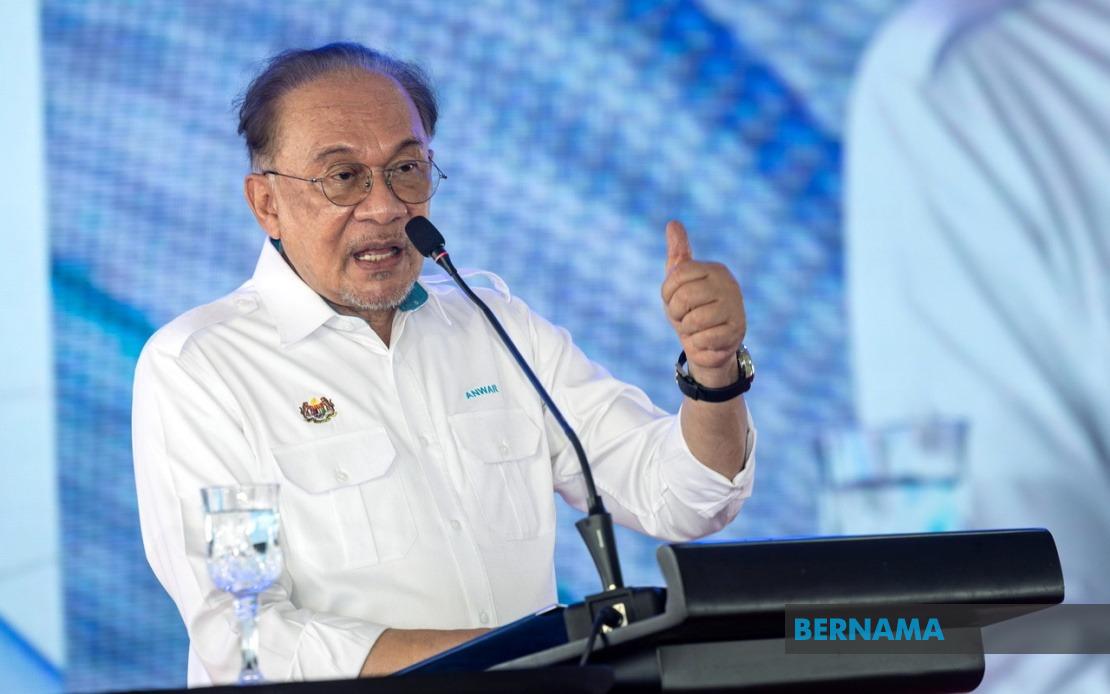
Prime Minister Datuk Seri Anwar Ibrahim announced that Malaysia has forged strategic energy partnerships with Russia and Turkmenistan designed to underpin the nation's fuel security for the next two decades and beyond. Speaking at the groundbreaking ceremony for Setia Fontaines Industrial Park in Kepala Batas on June 20, Anwar highlighted the significance of these bilateral arrangements in addressing Malaysia's long-term energy requirements as demand for power and resources continues to rise across Southeast Asia.
During recent discussions in Kazan, Russian President Vladimir Putin reportedly assured Malaysia of a comprehensive two-decade supply agreement covering crude oil, natural gas, and diesel products. This commitment, Anwar explained, emerged from substantive bilateral talks and demonstrates the deepening friendship and cooperation between Kuala Lumpur and Moscow. The longevity of the arrangement reflects both nations' interest in establishing predictable, stable energy trade relationships that transcend short-term market fluctuations and geopolitical volatility.
Equally significant is Malaysia's newly granted access to Turkmenistan's hydrocarbon sector. Anwar characterised the breakthrough as even more consequential than the Russian accord, given Turkmenistan's position as custodian of some of the world's largest proven natural gas reserves. This development emerged following Turkmenistan President Serdar Berdimuhamedov's December 2024 visit to Malaysia, where both leaders discussed deepening energy cooperation. The subsequent negotiations have now yielded concrete commercial access for Malaysian companies and state entities seeking to source gas from Central Asia's energy heartland.
The strategic rationale behind these deals extends well beyond Malaysia's domestic consumption needs. Anwar underscored that access to Turkmenistan's vast reserves creates significant export opportunities for Malaysia to supply major Asian economies with insatiable energy appetites. China, Japan, and South Korea represent particularly attractive markets for Malaysian energy re-exports, given their reliance on imported hydrocarbons and their willingness to secure supplies through trusted intermediaries. This middle-man positioning could enhance Malaysia's geopolitical leverage and create valuable economic rent-extraction opportunities across energy value chains.
For Malaysia, energy security ranks among the most pressing economic challenges facing the nation. Although Malaysia remains a net hydrocarbon exporter, domestic reserves have been gradually depleting over recent decades, compelling policymakers to diversify supply sources and establish secure import corridors. The traditional reliance on petronas-operated fields and regional suppliers has become increasingly insufficient to meet growing electricity demand driven by industrialisation, urbanisation, and rising living standards across the archipelago. These new agreements therefore represent a deliberate strategic recalibration toward Central Asian and Russian suppliers.
The timing of these energy partnerships carries additional geopolitical significance. Malaysia's enhanced ties with Russia and Turkmenistan signal the country's commitment to maintaining pragmatic relationships across the global order, rather than aligning exclusively with Western-led energy frameworks. This diversification approach acknowledges that Malaysia's prosperity depends on stable relationships with multiple energy-producing regions and reflects a broader Southeast Asian pattern of hedging between great powers.
Anwar framed these negotiations within a broader philosophy of leveraging international relations to advance Malaysia's national interests. Beyond energy, he emphasised that such bilateral arrangements create employment opportunities, attract foreign investment, and establish foundations for sustained economic development. Energy infrastructure projects, supply chain operations, and associated financial services generate employment across multiple sectors and skill levels, benefiting workers and communities throughout Malaysia.
The energy sector itself represents one of Malaysia's most strategically important industries, touching virtually every corner of the economy. Stable, affordable energy underpins manufacturing competitiveness, supports digital infrastructure expansion, enables transportation networks, and sustains household consumption. Long-term supply contracts with predictable pricing reduce macroeconomic uncertainty and allow businesses to make multi-year investment commitments with confidence. These benefits cascade throughout the broader economy, affecting inflation rates, productivity growth, and international competitiveness.
Central Asia's energy wealth, historically oriented toward European and Chinese markets, increasingly attracts interest from Asian economies seeking to diversify suppliers and reduce dependence on any single source. Malaysia's successful negotiation of access to Turkmenistan's reserves demonstrates the country's diplomatic capacity and commercial appeal to resource-rich nations. However, securing the contracts represents merely the first step; implementing complex transnational pipeline infrastructure, finalising technical specifications, and managing cross-border regulatory frameworks will require sustained high-level attention and considerable capital investment over coming years.
Looking ahead, these energy agreements may catalyse broader regional cooperation frameworks. A Malaysia increasingly confident in its energy security may pursue closer integration with other Southeast Asian nations seeking similar supply diversification. Coordinated regional approaches to Central Asian energy sources could enhance collective bargaining power and drive more favourable commercial terms. Similarly, enhanced Malaysia-Russia-Turkmenistan triangular cooperation could support technology transfer, training exchange, and joint ventures across multiple economic sectors beyond hydrocarbons.
%22%2F%3E%3C%2Fpattern%3E%3C%2Fdefs%3E%3Crect%20width%3D%22100%25%22%20height%3D%22100%25%22%20fill%3D%22url(%23ph4da0ug)%22%2F%3E%3Crect%20width%3D%22100%25%22%20height%3D%22100%25%22%20fill%3D%22url(%23ph4da0up)%22%2F%3E%3Ctext%20x%3D%2250%25%22%20y%3D%2250%25%22%20text-anchor%3D%22middle%22%20dominant-baseline%3D%22central%22%20fill%3D%22rgba(255%2C255%2C255%2C0.95)%22%20font-family%3D%22Georgia%2C%20'Times%20New%20Roman'%2C%20serif%22%20font-weight%3D%22700%22%20font-size%3D%22320%22%20letter-spacing%3D%22-0.02em%22%3ERare%3C%2Ftext%3E%3C%2Fsvg%3E)
%22%2F%3E%3C%2Fpattern%3E%3C%2Fdefs%3E%3Crect%20width%3D%22100%25%22%20height%3D%22100%25%22%20fill%3D%22url(%23phm749g)%22%2F%3E%3Crect%20width%3D%22100%25%22%20height%3D%22100%25%22%20fill%3D%22url(%23phm749p)%22%2F%3E%3Ctext%20x%3D%2250%25%22%20y%3D%2250%25%22%20text-anchor%3D%22middle%22%20dominant-baseline%3D%22central%22%20fill%3D%22rgba(255%2C255%2C255%2C0.95)%22%20font-family%3D%22Georgia%2C%20'Times%20New%20Roman'%2C%20serif%22%20font-weight%3D%22700%22%20font-size%3D%22320%22%20letter-spacing%3D%22-0.02em%22%3EPM%3C%2Ftext%3E%3C%2Fsvg%3E)
%22%2F%3E%3C%2Fpattern%3E%3C%2Fdefs%3E%3Crect%20width%3D%22100%25%22%20height%3D%22100%25%22%20fill%3D%22url(%23phgab1g)%22%2F%3E%3Crect%20width%3D%22100%25%22%20height%3D%22100%25%22%20fill%3D%22url(%23phgab1p)%22%2F%3E%3Ctext%20x%3D%2250%25%22%20y%3D%2250%25%22%20text-anchor%3D%22middle%22%20dominant-baseline%3D%22central%22%20fill%3D%22rgba(255%2C255%2C255%2C0.95)%22%20font-family%3D%22Georgia%2C%20'Times%20New%20Roman'%2C%20serif%22%20font-weight%3D%22700%22%20font-size%3D%22170%22%20letter-spacing%3D%22-0.02em%22%3EMalaysia%3C%2Ftext%3E%3C%2Fsvg%3E)