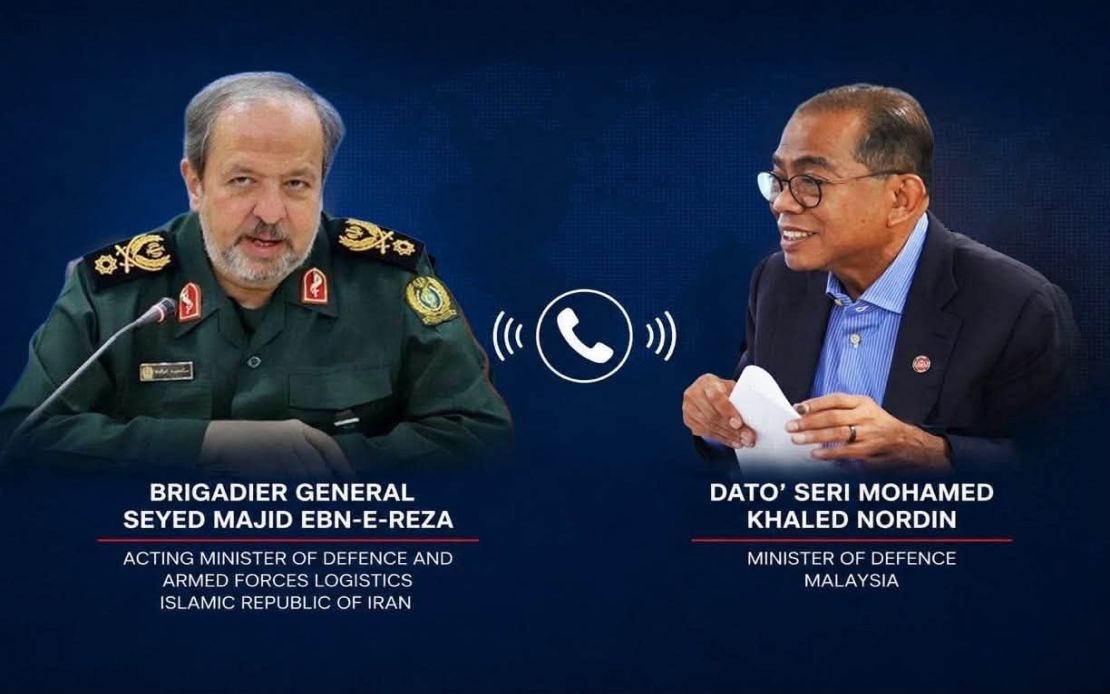
Malaysia is moving to solidify its defence relationship with Iran through expanded cooperation mechanisms, according to Defence Minister Datuk Seri Mohamed Khaled Nordin, who recently engaged with Tehran's military leadership on the matter. The initiative reflects Kuala Lumpur's broader strategic approach to cultivating deeper ties across the Middle East and strengthening its position within the Non-Aligned Movement, of which both nations are key members.
During a telephone conversation with Iran's Acting Minister of Defence and Armed Forces Logistics, Brigadier General Seyed Majid Ebn-e-Reza, Mohamed Khaled articulated Malaysia's interest in moving beyond symbolic gestures toward substantive military engagement. This discussion occurs at a time when regional dynamics in West Asia are increasingly complex, prompting nations like Malaysia to carefully calibrate their diplomatic and defence relationships with key players in the Middle East while maintaining their broader international commitments.
A critical element of Malaysia's outreach involves the pursuit of a formal Memorandum of Understanding on defence cooperation. Such an agreement would serve as a legal and institutional foundation for military exchanges, joint training programmes, and defence technology discussions. The finalisation of an MoU would represent a significant diplomatic milestone, transforming what are currently bilateral goodwill gestures into structured, long-term commitments that could encompass naval cooperation, airspace security, and intelligence sharing protocols relevant to regional maritime safety and stability.
Malaysia has simultaneously extended an invitation for Iran to participate in the Langkawi International Maritime and Aerospace Exhibition (LIMA), scheduled for next year. LIMA serves as one of Southeast Asia's premier defence and aerospace showcases, attracting military delegations, defence contractors, and government officials from across the globe. Iranian participation would provide an official platform for showcasing indigenous defence capabilities and exploring practical avenues for equipment acquisition, technology transfer, and joint defence industrial partnerships with Malaysian and regional companies.
Beyond institutional arrangements, Mohamed Khaled conveyed Malaysia's empathy regarding the human toll of ongoing conflicts affecting Iran, specifically acknowledging the deaths of Iranian military personnel, security forces, and civilians caught in West Asian hostilities. This expression of solidarity carries diplomatic weight in bilateral relations, particularly given Malaysia's historical emphasis on humanitarian concerns and civilian protection in international disputes. The gesture underscores Malaysia's commitment to humanitarian principles while engaging with Iran on military matters.
Malaysia has also reiterated its position that regional peace remains paramount, with Mohamed Khaled emphasising the importance of maintaining ceasefires and preserving space for diplomatic dialogue. This stance reflects Malaysia's broader foreign policy orientation, which consistently advocates for peaceful conflict resolution, dialogue-based solutions, and the rejection of military escalation as the primary mechanism for addressing regional tensions. In the context of West Asian instability, Malaysia's voice carries particular resonance as a respected Non-Aligned nation with credible connections across multiple regional blocs.
The defence minister specifically commended Iran's independent development of military capabilities, reflecting Malaysia's appreciation for technological self-sufficiency and defence innovation. This recognition is significant, as it signals Malaysian understanding of Iran's strategic imperative to develop indigenous defence systems amid international sanctions and geopolitical isolation. By acknowledging these achievements, Malaysia positions itself as a pragmatic partner willing to respect Iran's security interests and technological aspirations without prejudice.
Crucially, Malaysia highlighted Iran's cooperation in maintaining secure maritime passage during periods of heightened regional tension. The Strait of Hormuz, through which approximately one-third of the world's seaborne oil passes, directly affects global energy markets and has particular relevance for Southeast Asian economies highly dependent on stable oil supplies. Malaysia's emphasis on Iran's role in safeguarding these critical shipping routes reflects both practical economic interests and a shared understanding that regional maritime security requires responsible conduct from all parties involved.
The broader context of these defence overtures reveals Malaysia's sophisticated approach to managing its Middle East relationships. As a Muslim-majority Southeast Asian nation, Malaysia maintains relationships across the Arab world, with non-Arab Iran, and with Western powers, attempting to balance these connections while avoiding entanglement in regional proxy conflicts. Strengthening military ties with Iran does not represent ideological alignment but rather pragmatic engagement based on shared interests in regional stability, maritime security, and the principles of non-interference and sovereignty that underpin the Non-Aligned Movement.
For Malaysia specifically, deepening defence cooperation with Iran carries implications for its role as a potential mediator in regional disputes and reinforces its credibility as a bridge-building nation. The pursuit of defence MoU and LIMA participation demonstrates Malaysia's intention to engage substantively rather than symbolically, suggesting that bilateral relations will increasingly focus on practical military-to-military cooperation, defence procurement possibilities, and collaborative responses to transnational security challenges such as maritime piracy, shipping security, and counter-terrorism operations in the region.
The timing of this outreach is noteworthy, occurring amid broader efforts by Malaysia to diversify its defence partnerships and reduce dependency on traditional Western suppliers. This approach aligns with Malaysia's historical emphasis on South-South cooperation and the potential for technology transfer and cost-effective military solutions that cooperation with Iranian defence industries might facilitate. Such partnerships could eventually benefit Malaysian defence research institutions and domestic defence manufacturing capacity.

