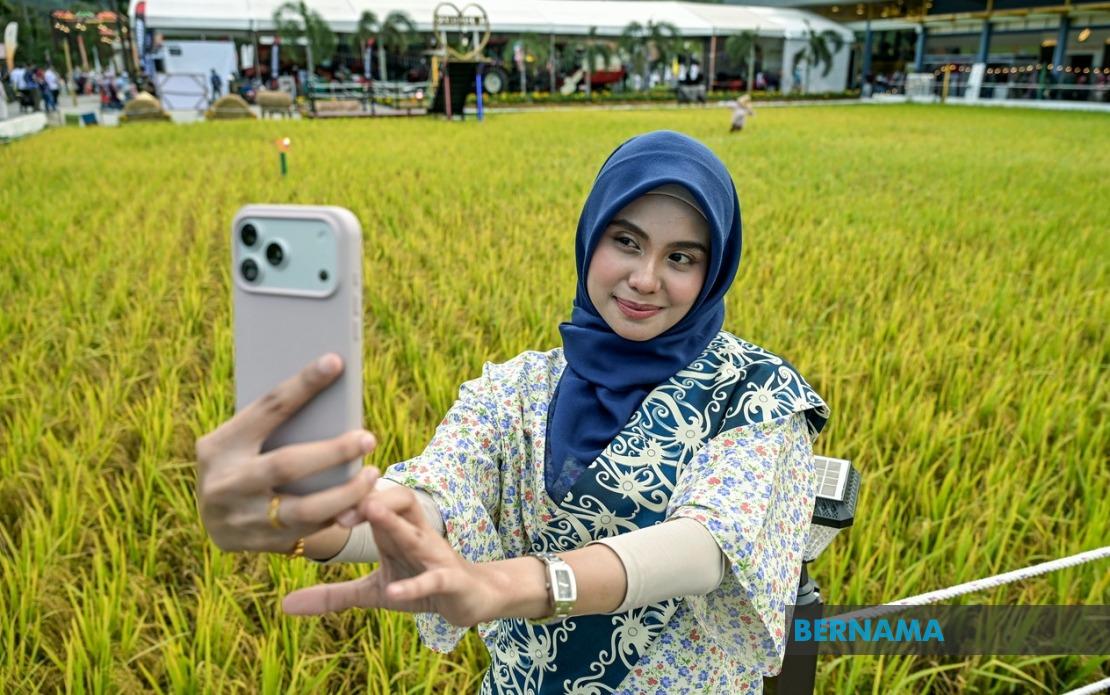
Malaysia's agricultural sector has achieved a novel milestone with the inauguration of Paddy Art at Laman Padi, a seven-acre showcase within the Malaysia Agriculture, Horticulture and Agrotourism Exhibition (MAHA) 2026 held at Malaysia Agro Exposition Park Serdang. The artwork has secured recognition from the Malaysia Book of Records as 'The Largest Paddy Art Formation', marking a significant convergence of traditional farming and contemporary creative expression that reflects changing attitudes toward rural innovation and cultural celebration.
The visual centerpiece of this record-breaking creation features the Jalur Gemilang national flag interwoven with symbolic motifs representing the heart and hand, alongside the word 'Jati' signifying national identity and heritage. The design was achieved through sophisticated staged planting techniques that leverage natural variations in crop maturity and pigmentation, demonstrating how agricultural science can serve aesthetic purposes while maintaining productive outcomes. The project utilised the MR284 paddy variety, a strain selected for its suitability to this innovative dual-purpose application that merges food production with visual storytelling.
Agriculture and Food Security Minister Datuk Seri Mohamad Sabu emphasised that this accomplishment represents far more than an artistic novelty—it symbolises the agricultural sector's capacity to generate economic value beyond conventional commodity production. Speaking at the official opening, the minister highlighted that Paddy Art emerged from strategic coordination between government agencies and private-sector partners, reflecting a broader ecosystem approach to agricultural development that extends into the realm of experiential tourism and cultural expression.
The minister articulated a fundamental reconceptualisation of paddy fields' role within Malaysia's economic and social landscape. Rather than viewing rice cultivation zones merely as production zones detached from broader community engagement, the initiative demonstrates how these spaces can function as integrated destinations combining education, employment, technological advancement, and revenue generation. This perspective addresses a critical challenge facing Southeast Asian agriculture—the declining cultural connection between urban populations and farming communities, particularly among younger generations who have limited direct exposure to agricultural practices and often undervalue farming as a career path.
Agrotourism, increasingly popular among city-dwelling Malaysians and international visitors, represents a strategic avenue for enhancing farmer incomes while simultaneously preserving agricultural land use. By introducing targeted attractions, amenities, and experiential activities within paddy field environments, these traditionally utilitarian landscapes transform into revenue-generating destinations that provide supplementary income streams for farming families and surrounding communities. This model proves particularly valuable in addressing rural economic challenges and creating diverse livelihood opportunities beyond commodity production.
Laman Padi itself spans a comprehensive seven-acre development incorporating seven distinct paddy plots alongside two information centres and galleries. Each section presents visitors with differentiated narratives and experiential pathways, enabling layered engagement with rice and paddy cultivation across historical, contemporary, and technological dimensions. The facility targets approximately 10,000 daily visitors throughout the ten-day MAHA 2026 exhibition period, having already recorded 4,000 visitors on its opening day—a promising indication of public appetite for agricultural and cultural attractions.
According to Paddy Industry Development Division secretary Shamsul Akbar Sulaiman, Laman Padi deliberately integrates traditional and modern elements to chronicle the rice industry's evolution spanning historical cultivation methods through present-day mechanised systems and technological innovations. This temporal narrative serves educational objectives, particularly for schoolchildren with limited farm exposure. The facility has engaged approximately ten schools in hands-on paddy planting activities, providing students with practical understanding of agricultural processes that classroom instruction alone cannot convey. Such immersive learning experiences prove crucial for cultivating informed citizens who appreciate food systems and their environmental complexities.
The exhibition employs what organisers term an 'infotainment approach'—a deliberate pedagogical strategy that balances information delivery with entertainment value, recognising that contemporary audiences, especially younger demographics, require engaging presentation formats to sustain attention and interest. Beyond static displays, Laman Padi incorporates demonstrations, interactive showcases, and promotional activities that encourage active participation rather than passive observation. This methodology reflects modern understanding of learning psychology while acknowledging practical realities of sustaining visitor engagement across extended exhibition periods.
Laman Padi functions simultaneously as a strategic collaboration platform uniting governmental authorities with private-sector enterprises positioned across the paddy and rice value chain. Major industry players including BERNAS, alongside numerous smaller operators, utilise the exhibition to promote and demonstrate their products, technologies, and services directly to consumers and industry stakeholders. This integrated approach strengthens value-chain connectivity while enabling integrated marketing and brand-building for Malaysia's rice sector at a single focal point.
The facility's culinary offerings reflect Malaysia's agricultural and regional diversity, presenting food experiences derived from rice and paddy cultivation traditions spanning the country. This gastronomic dimension acknowledges that agricultural tourism cannot succeed through visual and educational components alone—visitors increasingly expect multisensory experiences encompassing taste and cultural food practices. By showcasing regional culinary specialties grounded in rice cultivation heritage, Laman Padi reinforces connections between agricultural production, cultural identity, and contemporary dining experiences.
For Malaysian policymakers and regional observers, this achievement demonstrates viability of innovative agrotourism models that simultaneously address multiple policy objectives: supporting farmer incomes through diversified revenue streams, engaging urban populations with agricultural realities, preserving farming land use within development pressures, and celebrating national identity through creative public expressions. The Malaysia Book of Records recognition validates this approach at a symbolic level while generating promotional momentum that extends the initiative's reach and influence far beyond immediate MAHA 2026 participants.
Laman Padi's success trajectory also carries implications for Southeast Asian agricultural development more broadly. As regional economies mature and face comparable challenges of agricultural sector sustainability, generational engagement with farming, and rural economic diversification, Malaysia's Paddy Art model offers a replicable framework adaptable to other crop systems and regional contexts. The convergence of traditional agricultural knowledge with contemporary creative industries and tourism infrastructure suggests pathways through which developing nations can enhance agricultural sector resilience while maintaining cultural continuity and generating meaningful employment opportunities.

