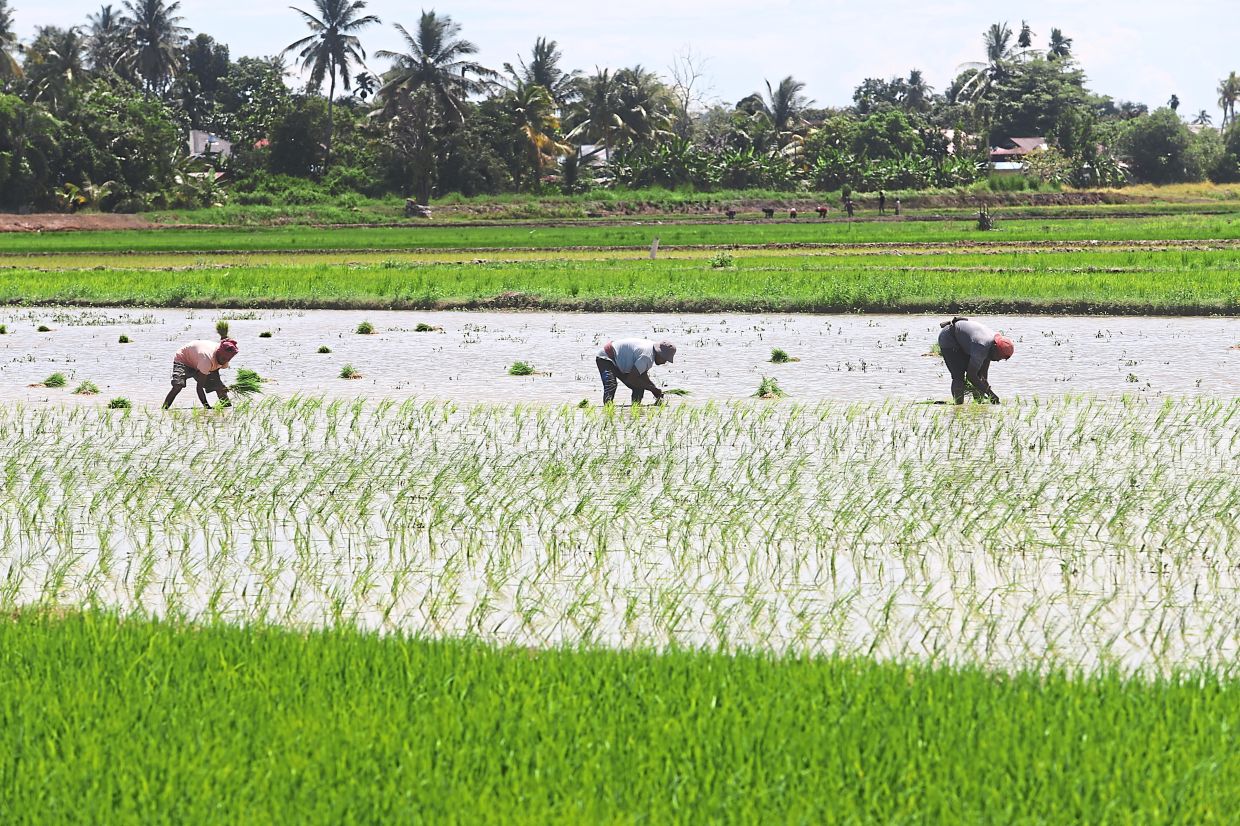
When tensions between the United States and Iran threatened to choke off global shipping lanes, Malaysia's food sector faced a potential crisis. The Strait of Hormuz disruption endangered supplies of oil—a vital ingredient in fertiliser production—and the plastics needed for food packaging. Consumer anxiety rippled through the market as people braced for empty shelves and soaring costs. Instead, Malaysia's food prices have remained surprisingly resilient, a testimony to preemptive government intervention that has kept households from bearing the worst of the global shock.
The government's response centred on direct financial relief to farmers, understanding that production-side support translates into price stability for consumers. In April, the Ministry of Finance announced a substantial boost to Budi Agri-Komoditi, the diesel subsidy programme for agricultural machinery, lifting it from RM300 to RM400 monthly—a 33 percent increase designed to cushion farmers against swelling fuel costs. Simultaneously, the ploughing incentive (Insentif Pembajakan kepada Pesawah, or IPKP) received an even more dramatic overhaul, nearly doubling from RM160 to RM300 per hectare for the 2026 planting season. Peninsular farmers were handed an additional RM200-per-hectare advance payment to prepare their land before sowing, injecting cash flow when it mattered most.
These measures address a specific vulnerability in Malaysia's agricultural model. As input costs climbed due to international energy prices, smallholder farmers—who produce much of the nation's food—faced pressure to either absorb losses or reduce output. By targeting diesel and labour costs directly, the subsidies removed a major pinch point. Prof Datuk Dr Nasir Shamsudin, an agricultural economist at Putra Business School and professor emeritus at Universiti Putra Malaysia's Faculty of Agriculture, emphasises that the timing proved critical. The RM400 monthly assistance under Budi Agri-Komoditi offset not just fuel but the cascading transportation costs that ripple through farming, while the IPKP increase bolstered farmer cash reserves before the intensive labour of planting season. These short-term measures worked, he argues, because they addressed immediate cash constraints rather than imposing price controls that might have throttled supply.
Evidence of effectiveness emerged quickly. Malaysia's food inflation remained subdued at 1.4 percent year-on-year in May 2026, barely ticking up from 1.2 percent in April. The subsidies prevented the kind of sudden price shock seen in other nations experiencing supply chain stress. Prime Minister Datuk Seri Anwar Ibrahim framed the extension of Budi Agri-Komoditi as recognition that global uncertainty and rising living costs demanded action, yet the initiative itself transcends temporary crisis management. Under Budget 2026, the government committed RM2.62 billion to an array of agricultural support programmes covering paddy price stabilisation, crop cultivation, fertiliser, seeds and production incentives. The fishing sector received RM160 million earmarked for living allowances up to RM300 monthly and catch incentives, while fruit growers benefited from RM55 million in support for pineapples, soursop, water apple and pomelo production and infrastructure.
Beyond subsidies, Malaysia pursued the equally vital strategy of building physical reserves. Government assurances point to sufficient stocks of essential protein sources—chicken, eggs, fish and milk—to sustain the nation for at least a month. The rice buffer, perhaps most critical given its cultural and nutritional centrality, covers five to six months of consumption. Fertiliser supplies stretch across nine months of anticipated demand. This stockpiling represents a conscious choice to absorb supply chain volatility rather than passing shocks to consumers. The Ministry of Agriculture and Food Security has simultaneously initiated a philosophical shift away from price-vulnerable chemical fertilisers toward organic alternatives and Effective Microorganisms (EM) products. A RM5.5 million project under the 13th Malaysia Plan converts agri-food waste into compost and fertiliser, building a circular economy that reduces dependence on imported inputs subject to global price swings.
Yet beneath Malaysia's surface stability lies a structural vulnerability that no subsidy programme can entirely resolve. The nation remains a substantial net food importer, a reality starkly illustrated by the RM39.34 billion agri-food trade deficit recorded in 2024. Malaysia imports significant portions of its rice, wheat, dairy and meat requirements, meaning that global logistics disruptions and price movements inevitably transmit into domestic markets. This exposure extends beyond obviously imported categories; even sectors appearing self-sufficient in domestic production rely heavily on imported inputs such as breeding stock, feed, seeds and equipment. The Middle East conflict spotlighted this dependence when upstream global supply chains faltered. Subsidies cushion the impact but cannot eliminate the underlying fragility.
Prof Nasir argues that the question of how effectively government support translates into consumer benefits depends on supply chain transmission. Savings achieved at farm level must flow through processors, distributors and retailers without excessive markup, a coordination challenge that requires ongoing vigilance. More fundamentally, long-term food price stability cannot rest indefinitely on subsidy programmes; doing so would create fiscal strain and resource misallocation. The genuine pathway forward demands structural transformation. Investment in mechanisation, precision agriculture, climate-adapted farming techniques, high-yield seed varieties, efficient irrigation systems, post-harvest infrastructure and integrated logistics networks can permanently reduce production costs rather than masking them through government cheques. Such investments enhance competitiveness and diminish the sector's reliance on continuous state support.
Malaysia's experience during the US-Iran tensions illustrates both the value and limits of policy intervention. Government actions kept food accessible and prices moderate when external shocks might have triggered spiralling costs and social stress. The combination of direct farmer support and strategic reserves proved more effective than passive reliance on market mechanisms. Yet the underlying exposure to global supply disruption remains, and a nation with Malaysia's import dependence cannot indefinitely shield itself through subsidies alone. The challenge ahead lies in sustaining food affordability while building productive capacity that reduces vulnerability. This requires patient investment in agricultural innovation and supply chain resilience alongside the immediate stabilisation measures that have proven their worth. For Malaysian policymakers and consumers alike, the Middle East crisis offers a valuable lesson: planning for shocks matters, but so does preparing to need fewer shocks in the future.

