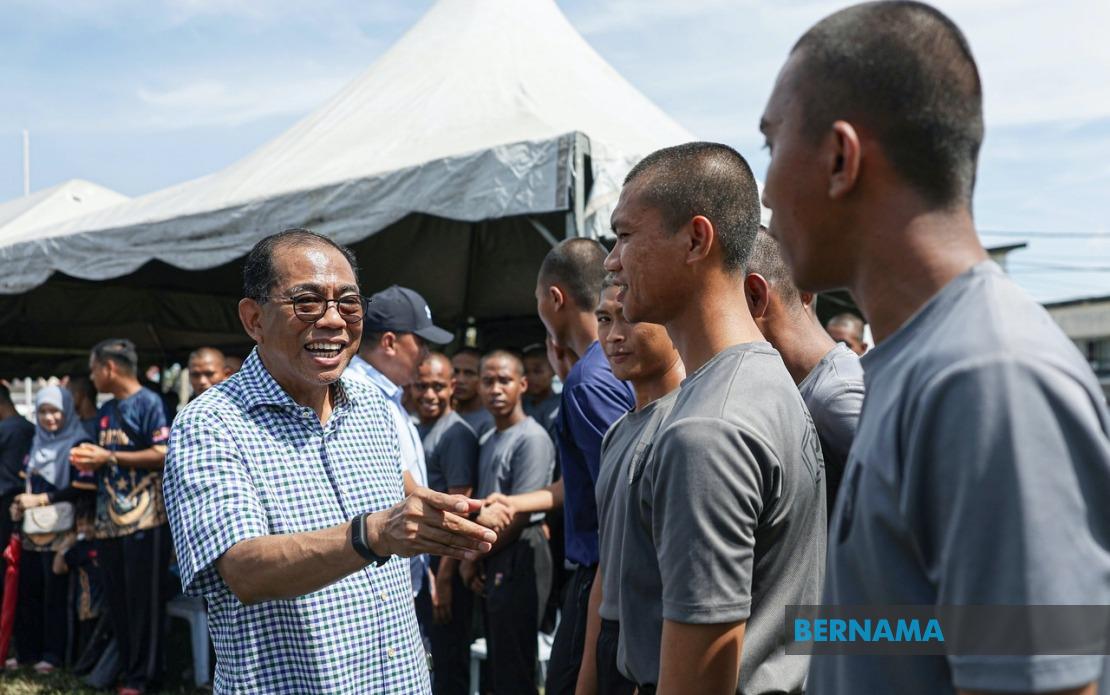
Malaysia has formalised a significant shift in its defence procurement strategy by entering into government-to-government agreements with Turkiye and South Korea, signalling a broader reorientation of how the country sources military equipment and systems. Defence Minister Datuk Seri Mohamed Khaled Nordin announced the signing of these memoranda of understanding while addressing military officials in Port Dickson, framing the arrangement as part of a modernised approach designed to streamline acquisitions for carefully selected projects rather than opening all defence contracts to competitive public tender.
The new G2G mechanism represents a deliberate departure from Malaysia's traditional procurement model, which has long permitted original equipment manufacturers, authorised agents, and other commercial entities to bid openly for defence contracts. Under the revised framework, specified projects will now be negotiated directly between governments, eliminating the middleman layer that has historically inflated procurement costs. This restructuring has already yielded tangible results, with Prime Minister Datuk Seri Anwar Ibrahim citing a 15 per cent cost reduction on Littoral Mission Ships through direct negotiations between Malaysian and Turkish authorities, demonstrating the financial appeal of bilateral state-to-state dealings.
Mohamed Khaled emphasised that the approach carries broader strategic objectives beyond mere cost savings. By dealing exclusively with governments deemed trustworthy and technologically collaborative, Malaysia aims to forge partnerships that facilitate technology transfer and bolster domestic defence industry development. This consideration reflects a maturing defence policy that looks beyond immediate procurement requirements to build indigenous capability and reduce long-term technological dependence on external suppliers. Italy and France have reportedly also expressed interest in similar arrangements, suggesting that multiple defence-capable nations see potential in this bilateral model.
The elimination of intermediaries stands at the core of the government's rationale. Agents and distributors have historically inserted themselves into defence supply chains, extracting margins that translate directly into higher final costs for acquiring nations. By negotiating state-to-state, Malaysia gains direct visibility into pricing, supply chain logistics, and production timelines. Mohamed Khaled underscored that this transparency extends throughout the procurement process, creating accountability mechanisms that traditional open tenders sometimes obscure behind layers of commercial confidentiality and competitive bidding opacity.
Essentially, the G2G approach also locks in supply guarantees backed by the supplier nation's diplomatic credibility and governmental commitment. When a foreign government pledges to deliver defence equipment, the commitment carries weight beyond contractual obligation; it reflects bilateral relations and national honour. This distinction matters profoundly in defence matters, where supply interruptions or delays can compromise operational readiness. Turkiye and South Korea, as established defence manufacturers with significant export portfolios, can credibly underwrite such commitments.
Crucially, this new procurement philosophy does not mean the Malaysian Armed Forces lose input into specifications and requirements. Rather, Mohamed Khaled clarified that the Army, Navy, and Air Force continue to define their operational needs and technical requirements, ensuring that acquisitions remain demand-driven rather than opportunity-driven. The government's role shifts from managing open competitions to negotiating with vetted partner nations whose offerings already align with Malaysian military specifications. This collaborative approach between civilian defence leadership and uniformed service branches represents a maturation in defence procurement governance.
The timing of these announcements reflects Malaysia's broader strategic recalibration in an increasingly multipolar regional security environment. Southeast Asia faces mounting pressures from great power competition, territorial disputes, and transnational security challenges. Building deeper defence partnerships with capable nations like Turkiye and South Korea—both significant military powers outside traditional Western and Chinese spheres—provides Malaysia with diversified sourcing options and hedges against overreliance on any single supplier relationship. These partnerships also carry subtle diplomatic messaging about Malaysia's independent foreign policy orientation.
Beyond equipment procurement, Mohamed Khaled's remarks on hybrid security threats underscore the evolving nature of challenges confronting modern states. Traditional military conflict represents only one dimension of contemporary national security. Cyber attacks targeting critical infrastructure, disinformation campaigns exploiting social media, and disruptions to essential services like water and electricity supply constitute existential threats that conventional defence acquisition alone cannot address. The Defence Minister's articulation of these hybrid threats signals official recognition that national security increasingly depends on whole-of-society resilience rather than military capability in isolation.
This perspective has crystallised into the Whole-of-Nation Defence concept, abbreviated as HANRUH, which the government is cultivating to instil collective responsibility for national security among the civilian population. Rather than treating defence as the exclusive domain of military institutions, HANRUH seeks to embed defence consciousness throughout Malaysian society, from critical infrastructure operators to ordinary citizens. This cultural shift necessitates sustained public education and engagement, transforming defence from a top-down governmental function into a distributed responsibility requiring participation at all societal levels.
The implications for Malaysia's defence industrial base deserve consideration. By prioritising technology transfer and domestic industry development in partnership selection criteria, the government signals intention to nurture Malaysian enterprises capable of manufacturing, maintaining, and eventually innovating in defence sectors. Such capability would reduce future import dependence and create high-skilled employment while building strategic autonomy. Turkiye itself has successfully leveraged defence partnerships to develop indigenous military production capacity, offering a potential model for Malaysian emulation.
Regionally, Malaysia's embrace of G2G defence procurement with Turkiye and South Korea may encourage other Southeast Asian nations to explore similar bilateral arrangements, potentially reshaping defence commerce patterns across the region. As ASEAN members increasingly diversify defence partnerships beyond historical relationships with Western and Chinese suppliers, a proliferation of state-to-state procurement mechanisms could fragment the region's defence supply architecture while offering individual nations greater negotiating leverage and strategic flexibility.
Looking ahead, the success of this procurement model hinges on effective management of partner relationships and realistic expectation-setting regarding timelines and costs. G2G arrangements, while potentially offering savings and transparency benefits, introduce diplomatic dimensions absent from purely commercial transactions. Disputes over specifications, delivery schedules, or technology transfer terms acquire political significance that could strain bilateral relations. Malaysia's defence establishment will need sophisticated mechanisms for managing these complexities while maintaining the strategic partnerships that undergird this new procurement philosophy.

