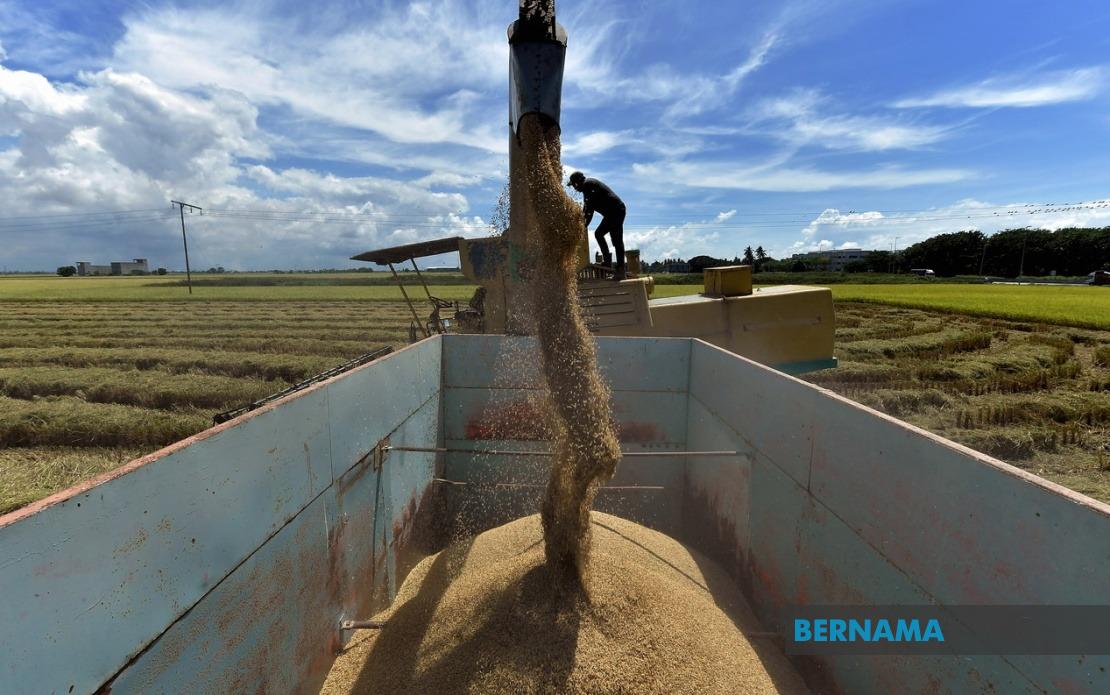
Malaysia's parliament has given its seal of approval to legislation designed to tighten control over the nation's rice sector, with lawmakers from government and opposition ranks supporting the Control of Padi and Rice (Amendment) Bill 2026 through a majority voice vote. The passage represents a decisive step to fortify food security safeguards and establish more effective mechanisms to regulate what has become a critical pillar of Malaysia's agricultural and nutritional sovereignty, particularly at a time when rice supply chains face mounting pressures from both local and cross-border disruptions.
The centrepiece of the legislative package involves a substantial overhaul of the penalty structure governing violations within the padi and rice industry. Under the amended Section 22 of the principal Act (Act 522), individuals convicted of breaching regulations now face maximum fines of RM250,000, while companies and corporate entities can be penalised up to RM1 million. These figures dwarf the previous penalty ceilings, which had remained frozen since the Act's enactment in 1994—a gap spanning more than three decades during which the padi and rice industry has expanded substantially in both scale and complexity.
Deputy Minister of Agriculture and Food Security Datuk Chan Foong Hin articulated the government's rationale during debate, emphasising that the escalated penalties address a fundamental imbalance between the profits derived from illicit activities and the consequences imposed for such transgressions. Enforcement records reveal that seizures linked to rice smuggling and the illegal diversion of domestically-produced white rice represent considerable sums, yet the existing financial penalties had proven inadequate as deterrents given their nominal value relative to the turnover in the multi-billion-ringgit industry. By recalibrating the fine structure to reflect contemporary economic realities, policymakers aim to introduce genuine deterrent effects that will discourage misconduct across both wholesale and retail segments of the supply chain.
The amendment package also incorporates protections designed to shield padi farmers from predatory market practices and price manipulation schemes that have historically undermined farm-gate revenues and destabilised rural livelihoods. Rice cultivation remains a cornerstone of Malaysia's agricultural economy, particularly in states like Selangor, Kedah, and Terengganu, where farming communities depend on stable market conditions and fair pricing mechanisms to remain economically viable. By strengthening enforcement capacity and imposing credible penalties for cartels and anticompetitive behaviour, the legislation signals commitment to preserving the structural integrity of domestic production systems and ensuring farmers receive equitable compensation for their output.
During parliamentary deliberations, opposition and government lawmakers alike raised substantive considerations regarding implementation. Datuk Idris Ahmad of Perikatan Nasional, representing Bagan Serai, advocated for enforcement frameworks underpinned by explicit prosecution guidelines capable of reliably protecting the supply chain from disruption and contamination. He further proposed that prosecutors receive specialised training to ensure that sentences sought in court appropriately reflect the gravity of each violation, preventing situation where inadequate courtroom advocacy results in penalties that fall short of statutory maximums and thereby diminish deterrent capacity.
Tan Hong Pin from the Pakatan Harapan bloc representing Bakri moved the discussion toward regulatory performance accountability, urging the agriculture ministry to undertake a comprehensive review of the proposed penalty rates and to establish an independent oversight committee tasked with periodically assessing Padiberas Nasional Berhad (BERNAS) operations. BERNAS, as Malaysia's primary rice monopoly, wields substantial influence over domestic procurement, milling, and distribution channels, and questions have periodically surfaced regarding whether the entity adequately prevents cartel formation and anticompetitive practices among its contracted suppliers and distribution partners.
Technology adoption emerged as a secondary but significant theme within parliamentary discussion, with multiple legislators emphasising the potential of digital systems to enhance supply chain transparency and reduce opportunities for adulteration or diversion. Azli Yusof from Shah Alam stressed the necessity of implementing comprehensive digital traceability frameworks capable of tracking padi and rice movements through every stage of the production and distribution pipeline, from farm to retail outlet. Such systems would create auditable records enabling rapid identification of supply disruptions, leakages, and unauthorised stock movements that frequently precede market shortages or price volatility.
Manndzri Nasib, representing Tenggara under the Barisan Nasional banner, advanced a complementary proposal involving the affixation of QR codes to individual rice bags, enabling both consumers and enforcement authorities to instantaneously verify product origins, authenticity, and distribution pathways through smartphone scanning. This granular approach would substantially complicate the logistics of rice smuggling operations and mislabelling schemes, as each package would become individually traceable within the formal supply network. Hoarding—a perennial concern during supply crunches—would become readily detectable through systematic QR code scanning by regulatory agents, potentially nipping incipient shortages in the bud before panic purchasing distorts market dynamics.
The bill's passage reflects broader regional and global anxieties regarding food security vulnerability, particularly as climate disruption threatens harvests across Southeast Asia and geopolitical tensions periodically disrupt trade flows. Malaysia, despite producing approximately 70 percent of its domestic rice consumption, remains partially dependent on imports from regional suppliers including Thailand and Vietnam. Strengthening internal regulatory frameworks therefore constitutes a prudent risk-mitigation strategy, reducing the likelihood that domestic supplies become subject to manipulation, loss, or misallocation at moments when international sourcing becomes constrained or prohibitively expensive.
For Malaysian consumers, the legislation's implications extend beyond abstract regulatory improvements. Rice constitutes a dietary staple for the vast majority of the population, and price volatility or supply disruptions generate immediate household budget pressures, particularly among lower-income demographics spending substantial portions of household income on food. By establishing credible enforcement mechanisms and penalty structures capable of genuinely deterring industry misconduct, policymakers aim to maintain price stability and consistent retail availability that depend fundamentally on the integrity of wholesale market operations and the trustworthiness of actors throughout the value chain.
The cross-party support demonstrated during the parliamentary debate, encompassing government, opposition, and appointed senators, underscores broad political consensus that rice sector governance requires strengthening. Agricultural issues often transcend party lines in Malaysia given their fundamental importance to both urban food security and rural constituency livelihoods, and the bill's passage without significant partisan contention suggests that stakeholders across the political spectrum recognise the necessity of legislative modernisation to address contemporary challenges.
Looking forward, successful implementation will depend substantially on the quality of enforcement operations, prosecutorial capacity, and the coordination mechanisms established between the agriculture ministry, BERNAS, local authorities, and police units responsible for investigating suspected violations. The legislation provides the statutory foundation and penalty structure necessary to deter misconduct, but administrative capacity, resource allocation, and inter-agency cooperation will ultimately determine whether the law achieves its intended protective effects on behalf of farmers, consumers, and the broader national interest in maintaining food security resilience.

