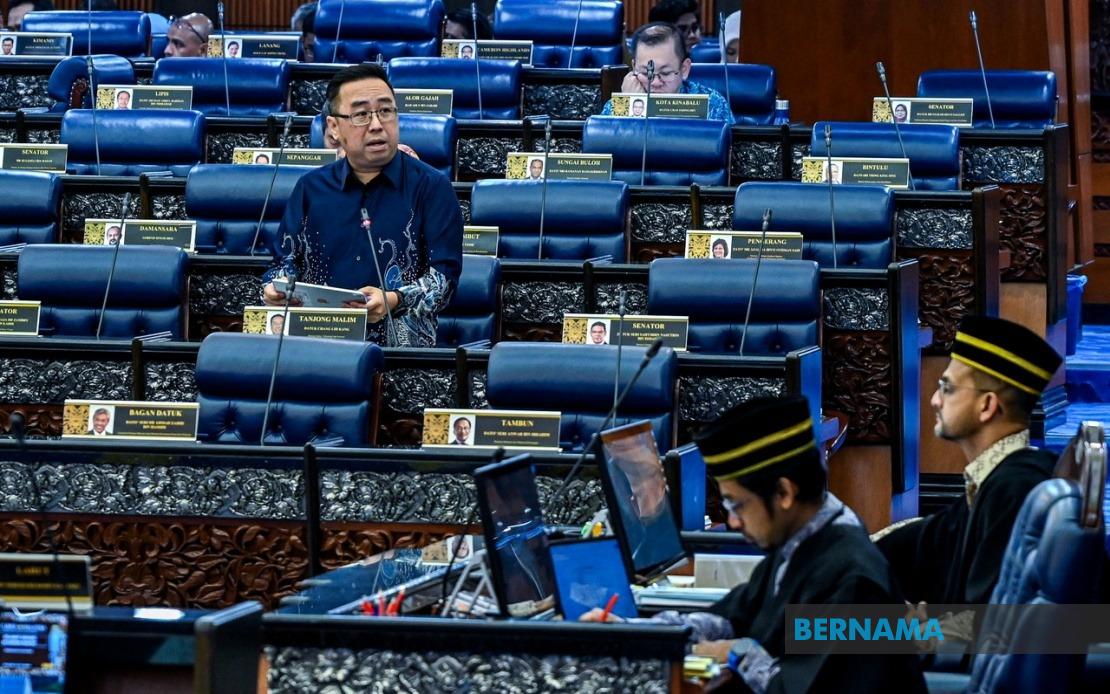
Malaysia is positioning itself to launch locally-developed advanced semiconductor packaging technology onto the commercial market within two years, according to Science, Technology and Innovation Minister Datuk Chang Lih Kang. Speaking in Parliament, he outlined an ambitious roadmap to transform research breakthroughs into industry-ready products, marking a significant step in elevating the country's technological capabilities within the global semiconductor value chain.
The initiative centres on a RM185 million pilot project administered through the Malaysia Science Endowment (MSE), a government mechanism designed to bridge the gap between laboratory innovations and market-ready solutions. The programme brings together five local companies and government research institutions in a collaborative consortium structure, pooling resources and expertise to accelerate technology development. This coordinated approach reflects growing recognition that Malaysia's semiconductor ambitions cannot be realised through isolated corporate or institutional efforts alone, but rather through strategically-aligned partnerships that combine commercial acumen with research capability.
At the heart of the project lies a technical progression framework known as Technology Readiness Level (TRL), a standardised international metric for assessing how mature a technology has become. The government's grant funding is specifically allocated to elevate the advanced packaging technology from TRL 5—the stage where laboratory prototypes have been validated—to TRL 9, representing full commercial readiness. This two-step advancement requires not merely perfecting the technology itself, but establishing the manufacturing processes, quality assurance systems, and production infrastructure necessary for mass-market deployment. The gap between these stages encompasses critical work in scaling production, reducing costs, and ensuring consistent product performance across commercial volumes.
The two-year capacity-building window represents a deliberate transition phase where government support intensifies rather than extends indefinitely. During this period, consortium members will undertake extensive workforce training, establish manufacturing protocols, and develop the operational capabilities required to sustain advanced packaging operations independently. Minister Chang emphasised that this boundary is crucial to preventing long-term dependency on government subsidies, a concern that has historically constrained the development of commercially viable technology sectors in developing economies. By establishing a clear endpoint for direct government investment, the strategy forces consortium partners to develop business models and market relationships that can sustain operations through private sector financing.
Once the technology achieves TRL 9 status and transitions to commercial phase, responsibility shifts entirely to the industry partners. They will assume full ownership of securing customer contracts, managing supply chains, and obtaining financing from capital markets and private investors. This handover mechanism embeds accountability into the consortium structure, ensuring that companies cannot rely on perpetual government backing to absorb losses or inefficiencies. It also reflects a modern approach to industrial policy where government acts as a catalyst and enabler rather than a permanent operator.
The strategic significance of this advanced packaging initiative extends well beyond Malaysia's borders. Semiconductor packaging—the process of housing and protecting silicon chips in protective enclosures with electrical connections—represents a high-value segment of chip manufacturing. Advanced packaging technologies enable smaller, faster, more power-efficient devices essential for contemporary applications including artificial intelligence systems, data centre infrastructure, high-performance computing clusters, intelligent automotive systems, fifth-generation telecommunications networks, and emerging quantum technologies. By developing indigenous capability in this domain, Malaysia positions itself to capture greater value from semiconductor manufacturing and reduce dependency on foreign technology providers for critical steps in the chip production process.
The initiative serves a broader structural purpose within Malaysia's semiconductor industry transformation. Historically, the country has concentrated on lower-value assembly and testing operations, while advanced design and packaging functions remain concentrated in developed economies. This advanced packaging programme directly challenges that positioning by creating the technological foundation and industrial capacity for Malaysia to undertake next-generation manufacturing activities. Success would fundamentally alter the country's role within global semiconductor supply networks, elevating it from a contract manufacturer dependent on foreign intellectual property to a technology innovator with proprietary capabilities and competitive advantages.
Minister Chang framed the MSE investment explicitly as strategic preparation for semiconductor industry evolution. The technology and intellectual property developed through this programme will enable Malaysian companies to compete in high-value applications requiring cutting-edge packaging solutions. The government recognises that artificial intelligence adoption, cloud computing expansion, autonomous vehicle development, and quantum technology advancement all depend fundamentally on packaging innovations that integrate multiple chips, improve thermal management, and enable higher data throughput in smaller physical spaces. By developing these capabilities domestically, Malaysia gains leverage to attract multinational semiconductor firms seeking advanced manufacturing partners.
The consortium approach embedded within the project structure reflects lessons learned from previous technology development initiatives globally. Rather than establishing a single government-controlled entity, distributing responsibility across multiple private companies creates competitive dynamics, encourages innovation, and reduces concentration of risk. Each consortium member brings specialised capabilities—some may excel in manufacturing engineering, others in process innovation or supply chain management—and the collaborative structure facilitates knowledge sharing while maintaining competitive intensity. This hybrid public-private mechanism has proven effective in other Southeast Asian contexts where governments have successfully nurtured technology sectors.
The timing of this initiative coincides with significant geopolitical shifts affecting semiconductor supply chains. Trade tensions between major powers, regional supply chain vulnerabilities exposed by pandemic disruptions, and growing recognition of semiconductor manufacturing as a strategic national interest have prompted many countries to develop domestic advanced packaging capabilities. Malaysia's MSE programme positions the country to benefit from this global reorientation, potentially attracting multinational partnerships and investment from foreign semiconductor companies seeking geographically diversified manufacturing bases. Successful commercialisation could establish Malaysia as a regional hub for advanced packaging, drawing both direct investment and supply chain integration opportunities.
The broader implications for Malaysia's innovation ecosystem merit consideration. Success in commercialising this advanced packaging technology would validate the government's approach to bridging research-to-market gaps and demonstrate that Malaysian institutions can develop globally-competitive semiconductor technologies. This validation effect could catalyse additional private investment in related technology domains and attract talent to semiconductor innovation careers. Conversely, commercialisation failure would require honest assessment of where the programme encountered obstacles, whether in manufacturing scale-up, market acceptance, or competitive positioning, informing adjustments to future technology development strategies.

