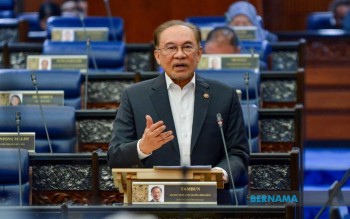
Prime Minister Datuk Seri Anwar Ibrahim has outlined how the Malaysia-Thailand Border Economic Zone will transform regional trade patterns, potentially unlocking significant commercial opportunities for Malaysian businesses seeking access to Southeast Asian markets beyond Thailand's borders. Speaking in Parliament during Minister's Question Time, Anwar indicated that the initiative promises to address longstanding logistics challenges that have constrained Malaysian exports, particularly in the fisheries and agricultural sectors, from reaching consumers in Laos, Cambodia and Vietnam through Thai territory.
The core challenge facing Malaysian traders has been navigating Thai customs procedures, which have historically imposed restrictive requirements on goods in transit. Anwar confirmed that Bangkok has moved to streamline these bureaucratic obstacles, signalling a pragmatic shift toward facilitating smoother cross-border movement of merchandise. This concession from Thailand's administration represents a significant diplomatic achievement, as it removes a friction point that has dampened bilateral commerce and limited Malaysian exporters' ability to capitalize on growing demand across the broader Indochina region.
The Border Economic Zone concept extends beyond the dual port infrastructure at Sadao and Bukit Kayu Hitam, which were formally inaugurated with Thailand's Prime Minister Anutin Charnvirakul in recent days. Anwar revealed that planners envision the framework encompassing Rantau Panjang as well, with the Kelantan state government positioned to accelerate implementation of commercial facilities and logistics infrastructure at this additional gateway. The inclusion of Rantau Panjang signals recognition that multiple crossing points will be essential to distributing traffic volumes and ensuring equitable regional distribution of economic benefits.
Malaysia-Thailand bilateral commerce retains considerable untapped potential despite decades of trade relations. Anwar acknowledged that while the two nations maintain robust commercial ties, the relationship has not yet matured into a relationship reflecting the true scale of market complementarity and production networks spanning the peninsula and the Thai border regions. The Border Economic Zone initiative appears designed as a structural intervention to correct this underperformance by reducing transactional costs and creating dedicated mechanisms for cross-border value chains to flourish organically.
The strategy explicitly prioritizes inclusion of smaller enterprises within the economic ecosystem. Anwar stressed that the initiative will channel resources toward small and medium-sized enterprises operating in border communities, recognizing that trade liberalization often concentrates gains among large corporations unless deliberately structured to distribute opportunities. Job creation and vocational skills development form complementary pillars, intended to ensure that localized populations share in productivity gains rather than experiencing economic displacement or marginalization.
The East Coast Rail Link emerges as critical infrastructure underpinning the Zone's functionality. Federal authorities have committed to extending this railway corridor to Rantau Panjang, transforming it from a primarily domestic connectivity project into a transnational logistics spine. Anwar indicated that discussions with the Thai counterpart have explored the prospect of extending the rail network across the border into Thailand itself, suggesting an ambitious vision of coordinated infrastructure development transcending conventional bilateral arrangements.
The implications for Malaysian exporters are substantial. Agricultural products and fisheries goods have historically faced time-consuming regulatory clearances when transiting Thailand toward Indochina terminals, eroding product quality and inflating delivery costs. Expedited customs processing should compress these delays, allowing perishable goods to reach terminal markets within commercially viable timeframes. For producers in Peninsular Malaysia's northern states and East Malaysia, this represents a tangible avenue toward market expansion without necessitating expensive alternative shipping routes or supply chain restructuring.
The initiative also carries broader geopolitical significance within the Southeast Asian context. By facilitating deeper commercial integration across the Malaysia-Thailand frontier while simultaneously extending market reach toward Laos, Cambodia and Vietnam, the Zone contributes to regional cohesion and interdependence. It demonstrates that ASEAN member states continue investing in physical infrastructure and regulatory harmonization to enhance intra-regional commerce, even amid global economic uncertainties and competing development priorities.
However, success will depend on implementation quality and sustained political commitment from both governments. Customs harmonization requires detailed procedural alignment and training across border agencies to translate policy directives into operational reality. The rail extension into Thailand necessitates complex financing negotiations and technical coordination between Malaysian and Thai railway authorities. These execution challenges are not trivial and have historically derailed ambitious trade initiatives across Southeast Asia, making the coming months crucial for assessing whether the Zone moves from blueprint to tangible commercial activity.
For Malaysian policymakers, the Zone represents a pragmatic response to regional economic competition and the imperative to consolidate Malaysia's position as a trade hub. As Vietnam and Thailand develop their own transnational corridors through China and broader Indochina connections, Malaysia risks marginalization unless it actively cultivates regional connectivity advantages. The Border Economic Zone strategy acknowledges this reality and positions the northern border not as a periphery but as a vital commercial frontier, capable of generating growth that radiates across the broader Malaysian economy.

