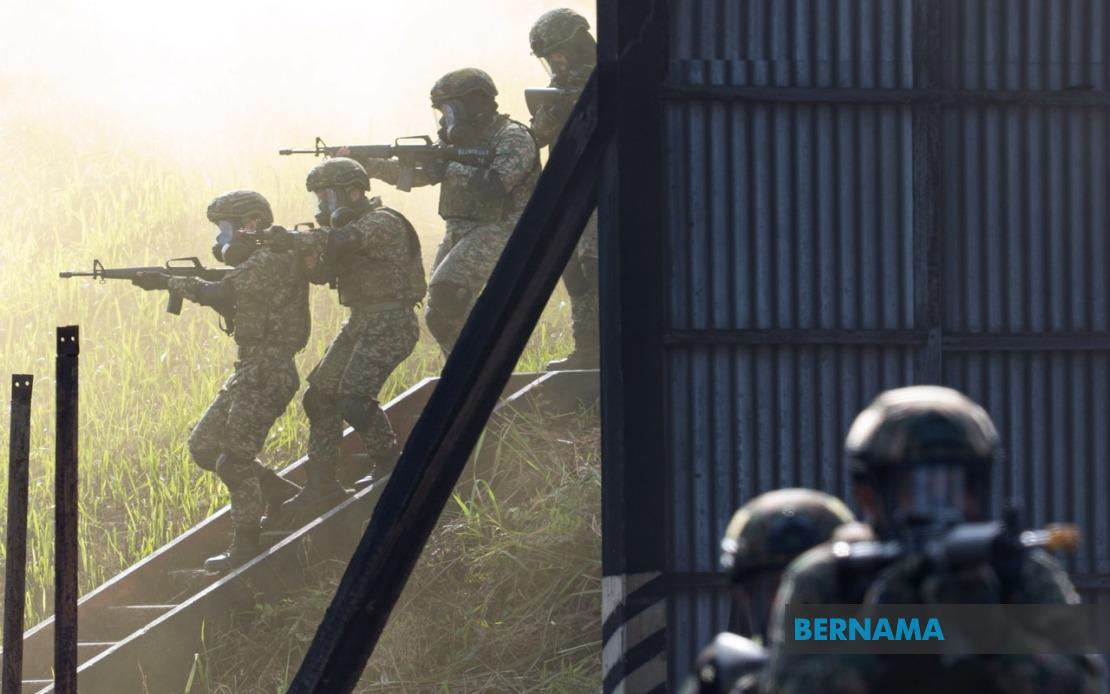
Prime Minister Datuk Seri Anwar Ibrahim has signalled the government's intention to substantially raise defence expenditure in the 2027 budget, underscoring Putrajaya's commitment to ensuring the Malaysian Armed Forces remain operationally prepared while bolstering the welfare of military personnel. Speaking in Melaka, Anwar—who holds the dual portfolio of Prime Minister and Finance Minister—framed the budgetary increase as essential to protecting what he termed the nation's most invaluable asset: domestic peace and stability. The announcement comes as the government prepares to table Budget 2027 in the Dewan Rakyat on October 9, marking a continuation of elevated defence spending priorities established under the MADANI administration.
Anwar articulated a strategic perspective on national security that emphasizes proactive military capability development rather than reactive crisis response. His assertion that "defence readiness must be maintained at all times because conflicts do not occur when expected" reflects regional geopolitical realities, particularly given strategic competition and maritime security challenges across Southeast Asia. The Prime Minister stressed the impracticality of waiting for external military threats to materialize before initiating preparedness measures, a position that resonates with broader concerns about maintaining credible deterrence in a fluid security environment.
The proposed budget increase will address multiple dimensions of military modernization and personnel support. Enhanced living accommodations for service members, construction of a new military hospital facility, and sustained investment in essential infrastructure including water supply systems represent tangible commitments to improving conditions for armed forces personnel. These welfare improvements acknowledge longstanding challenges within the military establishment and demonstrate recognition that force readiness depends not only on equipment sophistication but also on personnel morale and operational environment quality.
Transparency in procurement emerges as a defining concern within Anwar's defence framework. The Prime Minister explicitly cautioned against systemic inefficiencies arising from excessive commissions to external agents and profit-seeking arrangements that inflate costs without corresponding capability gains. This emphasis on streamlined, transparent acquisition processes addresses historical vulnerabilities in Malaysian defence procurement, where opaque contracting has occasionally generated controversy. By coupling increased budgetary allocations with stricter procedural standards, the government signals intent to maximize defence investment returns and minimize financial waste.
The MADANI administration's track record on defence spending provides context for the proposed 2027 increase. Over the preceding three years, the Defence Ministry's allocation had grown by more than 35 percent—a substantial expansion that Anwar acknowledged remains insufficiently publicized domestically. This communication gap between budgetary commitment and public awareness suggests the government recognizes a need for enhanced narrative framing around defence policy, particularly as spending levels rise and public scrutiny intensifies regarding resource allocation priorities.
Macroeconomic conditions have created fiscal space for elevated defence expenditure. Anwar attributed the government's capacity to contemplate higher military spending to improving economic fundamentals: a strengthening ringgit, expanding foreign investment inflows, and controlled inflation trajectories. These factors collectively suggest that increased defence allocation need not occur at severe opportunity cost to other budgetary priorities, a politically significant consideration in a developing economy where competing demands for government resources remain substantial.
Regional security dynamics implicitly underpin the defence budget enhancement. Southeast Asia faces multifaceted challenges spanning maritime disputes, transnational terrorism, cybersecurity threats, and great power competition. Malaysia's geographic position—straddling major shipping lanes and the South China Sea—necessitates credible military capabilities to protect national interests and support international maritime security norms. While Anwar did not explicitly detail specific security concerns driving the budgetary increase, the timing and rhetoric suggest awareness of evolving regional threat assessments.
The announcement occurred during an official engagement in Melaka attended by senior defence and government officials, including Deputy Defence Minister Adly Zahari, Chief Secretary to the Government Tan Sri Shamsul Azri Abu Bakar, and Army chief General Tan Sri Azhan Md Othman. This high-level attendance underscored institutional alignment on defence priorities across military and civilian government structures. Additionally, Anwar announced complementary allocations including RM147,000 for the Armed Forces Family Welfare Association and RM1 million for mosque and prayer hall maintenance at four military installations across Melaka, reflecting the government's multidimensional approach to military welfare and religious facility provision.
The timing of the defence budget announcement—several months before formal presentation to parliament—allows space for public deliberation and budget preparation within defence agencies. With October 9 as the parliamentary tabling date, military leadership and procurement specialists can begin preliminary planning for anticipated expenditure increases while the government refines specific allocation targets. This advance signalling also demonstrates transparency regarding fiscal priorities, enabling stakeholders to adjust expectations and planning horizons accordingly.
For Malaysian stakeholders and regional observers, Anwar's commitment reflects continued prioritization of security investments despite competing fiscal demands. The defence enhancement sits within broader MADANI governance objectives emphasizing economic stability, institutional integrity, and strategic modernization. As Malaysia navigates increasingly complex security environments and domestic economic challenges simultaneously, the defence budget trajectory will likely remain subject to political negotiation and public debate. The government's emphasis on transparency and efficiency in defence procurement will determine whether increased spending translates into meaningful capability improvements or becomes mired in familiar controversies that have periodically undermined public confidence in military modernization initiatives.

