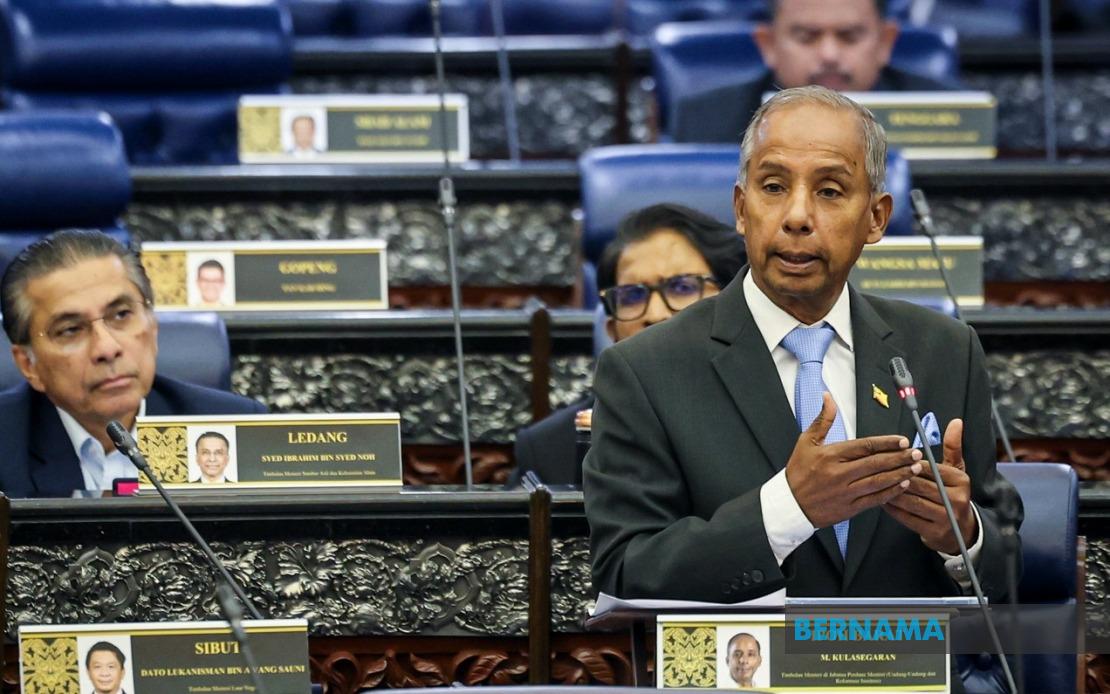
The Malaysian government is moving to strengthen legal frameworks governing the detention of individuals convicted as children, with Deputy Minister M. Kulasegaran announcing that a dedicated committee is examining Section 97 of the Child Act 2001 (Act 611) to establish more defined imprisonment terms. The initiative addresses longstanding ambiguities in how Malaysian courts handle cases involving minors, particularly following the 2023 abolition of mandatory death sentences and life imprisonment for child offenders.
Currently, Section 97 mandates that courts cannot impose capital punishment on individuals who were children at the time of their offence. Instead, the courts order detention at the pleasure of the King or the relevant Yang di-Pertua Negeri, an arrangement that has historically created uncertainty about release dates and sentence lengths. This discretionary approach, while initially designed to protect young offenders, has resulted in prolonged incarceration periods without transparent timelines—a situation that conflates juvenile justice with adult sentencing frameworks.
The urgency of reform became evident through prison visits conducted by Kulasegaran, who encountered individuals detained under this provision for extraordinarily long periods. One inmate, arrested at age 17, has spent nearly 25 years in custody without knowing fundamental aspects of modern life, such as contemporary technology. These cases underscore how the absence of defined detention periods can trap individuals in perpetual legal limbo, effectively creating indefinite sentences despite the theoretical possibility of release at the sovereign's discretion.
According to government figures presented during parliamentary questioning, 40 individuals currently remain detained under Section 97 nationwide. While this number appears modest compared to the broader prison population, the cases represent a unique cohort whose circumstances demand particular attention. Many have spent formative decades behind bars, raising questions about rehabilitation prospects and reintegration capacity after release. The psychological and social toll of such extended detention without clear objectives or projected release dates complicates the already challenging transition to civilian life.
Malaysia's commitment to international human rights standards provides critical context for this legislative review. The Convention on the Rights of the Child, to which Malaysia is a signatory, establishes that detention of children should be used only as a last resort and for the shortest appropriate time. Additionally, international juvenile justice standards emphasize rehabilitation over punitive approaches for young offenders. The current Section 97 framework, by permitting indefinite detention, potentially conflicts with these obligations and creates vulnerability to international scrutiny regarding Malaysia's compliance with child protection commitments.
The special committee tasked with reforming Section 97 has convened multiple times since its establishment following the 2023 amendments to sentencing provisions. These deliberations reflect a broader governmental pivot toward aligning domestic legislation with contemporary understandings of juvenile justice. The proposed amendment introducing fixed detention periods represents a departure from the historical reliance on discretionary sentencing, moving instead toward transparent, measurable timelines that provide both child offenders and victims' families with clarity about judicial outcomes.
Balancing competing interests remains the central challenge confronting reform efforts. Victims and their families require assurance that serious crimes are appropriately punished and that public safety receives priority consideration. Simultaneously, recognizing that child offenders possess greater capacity for reformation than adults—due to developmental neurological factors and the malleability of adolescent character—supports rehabilitation-focused approaches. Malaysian policymakers must construct a framework that respects victim dignity, maintains public confidence in the justice system, and acknowledges the different developmental trajectory of young offenders compared to adults.
The proposed fixed detention framework will likely incorporate mechanisms linking sentence length to offence severity, age at commission, and demonstrated rehabilitation progress. International comparisons offer instructive precedents. Some jurisdictions employ tiered sentencing ranges for juvenile cases, establishing minimum and maximum periods while permitting judicial discretion within defined boundaries. Others implement mandatory review processes at set intervals, allowing judicial reassessment of detention necessity as offenders mature and demonstrate behavioral change. Malaysia's committee must evaluate which approach aligns with constitutional frameworks, existing sentencing jurisprudence, and victim advocacy principles.
Implementation will require coordination between multiple agencies beyond the legislature. Prison authorities must develop age-appropriate rehabilitation programming tailored for long-term child offenders and young adults. Social welfare services require strengthening to facilitate post-release reintegration, addressing educational deficits, employment barriers, and psychological trauma accumulated during extended detention. The judiciary needs updated guidelines for interpreting new provisions and conducting reviews, ensuring consistency across different states and Federal Territories where sentencing decisions occur.
Regional implications merit consideration as well. Southeast Asian jurisdictions increasingly examine juvenile justice reform, and Malaysia's approach will likely influence policy discussions throughout the region. Demonstrating that fixed detention frameworks can simultaneously protect public interests and enable genuine rehabilitation would contribute to broader regional shifts toward evidence-based, developmentally informed approaches to young offenders. Conversely, implementation failures would reinforce skepticism about alternatives to indefinite discretionary sentencing.
The committee's timeline for completing recommendations remains unspecified, though Kulasegaran indicated progress toward parliamentary amendments. The deliberate pace reflects the complexity of legislative reform affecting fundamental justice principles. Beyond establishing detention periods, the revision must address collateral consequences—access to education, healthcare, family contact, and psychological services during imprisonment—that ultimately determine whether detention genuinely facilitates rehabilitation or merely postpones confrontation with underlying criminogenic factors.
For Malaysian civil society and human rights organizations monitoring this reform, the amendment represents both opportunity and accountability moment. Advocacy groups emphasizing child offender rehabilitation can leverage this legislative window to advocate for progressive safeguards. Simultaneously, they must remain vigilant that reform does not dilute public safety protections or minimize victim considerations. The outcome will substantially define Malaysia's judicial treatment of youth offenders for decades, establishing precedents that extend beyond current affected individuals to shape how future child offenders experience the justice system.
The government's acknowledgment that current arrangements require rectification signals recognition that law must evolve to address practical injustices created by textual ambiguities. Whether the resulting amendments achieve genuine balance—protecting public safety while enabling meaningful rehabilitation—will determine whether this reform constitutes meaningful progress or merely reshuffles existing problems within modified structures.

