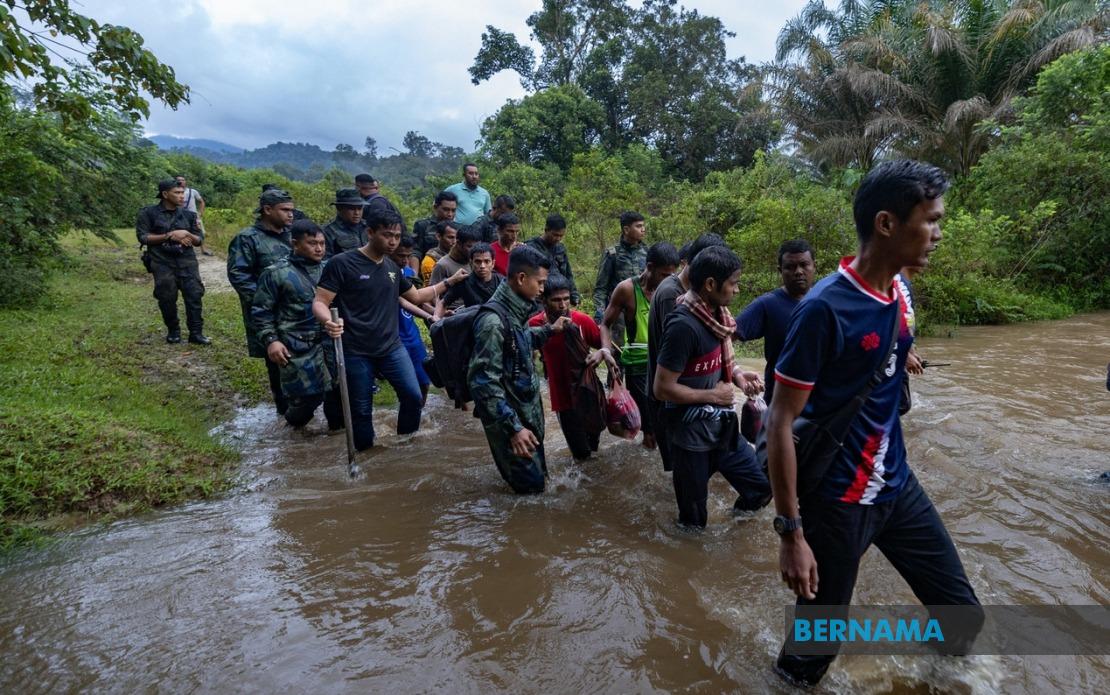
Malaysia intends to intensify its collaborative efforts with ASEAN partners and the United Nations High Commissioner for Refugees to chart a more sophisticated pathway through the Rohingya displacement crisis, according to remarks made by the Deputy Foreign Minister during parliamentary proceedings. The initiative reflects Kuala Lumpur's determination to leverage regional mechanisms and international partnerships to address a humanitarian challenge that has profoundly affected Southeast Asia since the Myanmar military campaign escalated conditions for the persecuted minority population.
Datuk Lukanisman Awang Sauni articulated Malaysia's dual-track approach when discussing the government's strategy during a Dewan Rakyat sitting on July 7. On one hand, Malaysia continues advocating within ASEAN forums for a peaceful settlement of the underlying Myanmar crisis. Simultaneously, the country maintains operational partnerships with the UNHCR to deliver on-the-ground protection mechanisms and essential humanitarian services for Rohingya populations currently residing within Malaysian territory. This combined engagement recognises that addressing symptoms through aid provision must occur alongside efforts to resolve root causes.
The strategic rationale underpinning Malaysia's commitment extends beyond immediate humanitarian considerations. The Deputy Foreign Minister emphasised that the refugee and asylum seeker phenomenon, particularly involving Rohingya communities, generates cascading transnational consequences that directly threaten Malaysia's own security architecture. Irregular maritime migration, sophisticated human trafficking networks, and associated criminal enterprises exploit the displacement crisis as cover for operations. These downstream effects underscore why Malaysia views the Rohingya question not merely as a charitable concern but as a pressing national interest intertwined with border security and public order.
Yet the Deputy Foreign Minister's parliamentary statement contained a candid assessment of the structural constraints limiting current interventions. ASEAN's foundational commitment to non-interference in member states' internal affairs, combined with its requirement for consensus-based decision-making, fundamentally restricts the bloc's capacity to impose pressure on Myanmar's military-dominated administration. This institutional architecture, designed to preserve regional sovereignty norms, ironically prevents the organisation from mounting sufficiently robust collective action. The Myanmar government consequently faces limited diplomatic or economic consequences for policies affecting the Rohingya, a dynamic that perpetuates the underlying political crisis.
Beyond ASEAN's limitations, the Deputy Foreign Minister noted that the UNHCR's operational mandate, while essential, remains inherently circumscribed. The international refugee organisation possesses authority to furnish protection services and humanitarian assistance but lacks mechanisms to address the political grievances, security concerns, and governance failures that generated displacement initially. This institutional separation of labour means the UNHCR effectively treats symptoms rather than causes, delivering emergency provisions without capacity to influence Myanmar's state behaviour or national policies. The gap between these institutional competencies and the crisis's fundamental drivers creates a humanitarian intervention ceiling.
Currently, available efforts concentrate predominantly on defensive humanitarian operations—safeguarding individual rights and delivering essential aid packages—rather than pursuing comprehensive political settlements that might resolve the underlying displacement trigger. Malaysia recognises this imbalance and acknowledged during parliamentary discussion that achieving genuinely durable solutions requires escalating ambition beyond what existing frameworks facilitate. The country's position reflects sophisticated understanding that indefinite humanitarian management of refugee populations remains neither sustainable nor ultimately responsive to either the displaced communities' aspirations or the region's stabilisation requirements.
Moving forward, Malaysia signalled openness to implementing several interconnected regional strategies. Foremost among these is strengthening burden-sharing mechanisms across ASEAN that would distribute refugee population management responsibilities more equitably among member states rather than concentrating populations in frontline nations like Malaysia and Bangladesh. Such responsibility-sharing arrangements acknowledge that displacement represents a collective regional challenge demanding collective responsibility rather than an issue for affected countries to manage unilaterally. This principle, while straightforward conceptually, requires significant political will to implement given competing domestic pressures within ASEAN capitals.
Simultaneously, Malaysia emphasised the necessity of catalysing political solutions enabling Rohingya populations to achieve voluntary, secure and dignified repatriation to Myanmar. This formulation carefully incorporates international standards around refugee return—insisting on voluntary participation rather than coerced deportation, ensuring safety guarantees protecting returnees from persecution, and preserving individual dignity throughout transition processes. Such returns remain contingent on transformative political changes in Myanmar creating conditions where Rohingya communities can genuinely be reintegrated without facing renewed threats. The emphasis on dignity reflects recognition that humanitarian interventions must respect displaced populations' agency and fundamental human rights rather than treating them merely as administrative populations requiring management.
Malaysia's articulated approach ultimately positions the country as a diplomatic bridge-builder pursuing realistic incrementalism. Rather than abandoning ASEAN platforms or dismissing UNHCR partnerships as inadequate, Kuala Lumpur proposes working within existing structures while gradually expanding their scope and effectiveness. This strategy aligns with Malaysia's broader international standing as a responsible regional actor balancing humanitarian commitments with diplomatic pragmatism. The country's role as host to substantial Rohingya populations grants it particular standing to shape regional conversations around burden-sharing and durable solutions.
The Deputy Foreign Minister characterised Malaysia's evolving position as reflecting deeper commitments to regional stability, global peace principles, and humanitarian standards. By strengthening coordination mechanisms, Malaysia signals that addressing displacement crises constitutes an essential dimension of contemporary international responsibility rather than peripheral charity work. This framing positions the Rohingya question within Malaysia's broader strategic interests in maintaining Southeast Asian security architecture while upholding the international humanitarian norms that legitimate regional order. The convergence of these interests—security and humanitarianism—increasingly characterises Malaysia's foreign policy orientation toward complex humanitarian emergencies.

