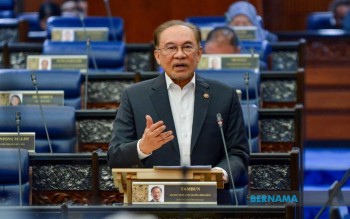
Prime Minister Datuk Seri Anwar Ibrahim has directed the government to undertake a comprehensive examination of establishing a national petroleum reserve as part of broader efforts to fortify Malaysia's energy independence and shield the country from potential global supply disruptions. The directive emerged from the National Energy Council Meeting No. 1 2026, which Anwar chaired and which focused on accelerating the nation's energy transition agenda in a controlled and effective manner aligned with the National Energy Transition Roadmap (NETR).
The decision to explore a strategic petroleum stockpile reflects growing recognition within policymaking circles of the vulnerabilities inherent in depending entirely on real-time energy markets, particularly as geopolitical tensions persist and international supply chains remain unstable. Malaysia's geographic position in a region prone to shipping disruptions and its substantial energy consumption relative to domestic production make such preparedness measures increasingly relevant for medium and long-term planning. The study will examine not only the necessity of such a reserve but also the practical logistics and financial implications of implementing and maintaining strategic stock levels.
An encouraging development highlighted during the council meeting is the substantial progress Malaysia has achieved in renewable energy adoption. As of December 2025, renewable energy sources now account for 31 percent of the country's installed generation capacity, marking tangible progress toward reducing reliance on coal-fired power plants. This shift represents a deliberate pivot away from fossil fuel dependency that has characterised Malaysia's energy mix for decades, aligning domestic energy policy with international climate commitments and technological advancement in clean energy sectors.
The government's Corporate Renewable Energy Supply Scheme (CRESS) has emerged as a critical mechanism driving this transition, particularly following the integration of Battery Energy Storage System (BESS) technology. The addition of storage capacity addresses a fundamental challenge with renewable energy sources: their intermittency and variability. By pairing renewable generation with advanced battery systems, Malaysia can smooth energy supply fluctuations and maintain grid stability even as wind and solar contributions grow, making renewable integration more technically feasible and economically competitive against conventional generation.
On the transportation front, Malaysia is simultaneously pursuing multiple pathways toward sustainability. The widespread rollout of B15 biodiesel demonstrates immediate practical action to reduce petroleum consumption in the transport sector, which remains one of the economy's largest energy consumers. The fuel blend, which contains 15 percent biodiesel sourced from renewable feedstock, requires minimal adaptation to existing vehicle infrastructure while delivering measurable emissions reductions. This transition will gain momentum through Petronas' planned biofuel production hub in Pengerang, Johor, which will localise supply chains and create downstream industrial opportunities in the southern state.
Electrification of public transport infrastructure represents the longer-term transformation strategy. Currently, 250 electric buses are operational nationwide with plans for expansion, while rail network electrification has extended to 800 kilometres across the country. These investments reduce urban air pollution and improve public health outcomes in major cities, while simultaneously cutting transport sector energy demand from the national grid. The systematic replacement of diesel-powered public vehicles with electric alternatives requires substantial capital investment but distributes costs across multiple budget cycles and operational savings accumulate over decades of service.
A particularly notable initiative involves hydrogen energy development in Sarawak. The Autonomous Rapid Transit (ART) system hydrogen hub, scheduled for Phase 1 completion by year-end 2026, positions Malaysia at the frontier of hydrogen technology implementation in Southeast Asia. Hydrogen offers distinct advantages in heavy industry and long-distance transport where battery electric solutions face limitations. Sarawak's abundant hydroelectric power supplies the electricity needed to produce green hydrogen through electrolysis, creating a locally sustainable fuel production ecosystem.
These interconnected energy initiatives must be understood within the context of Malaysia's medium-term economic strategy. The country faces pressure to maintain competitive electricity costs for manufacturing sectors while simultaneously transitioning away from carbon-intensive energy sources. International investors increasingly scrutinise corporate carbon footprints and supply chain emissions, making Malaysia's energy transition increasingly relevant to foreign direct investment decisions. Companies with sustainability commitments prefer to establish operations in jurisdictions with clean energy credentials.
The announcement of a petroleum reserve study also signals acknowledgement that renewable transition timelines extend across decades, not years. Even as Malaysia accelerates clean energy adoption, petroleum will remain essential for transportation, petrochemistry, and backup generation for the foreseeable future. Strategic reserves provide insurance against temporary supply disruptions while longer-term technological transformation occurs. This pragmatic approach balances idealistic energy transition goals with realistic assessment of economic and technical constraints.
For regional observers, Malaysia's coordinated approach to energy security, renewable integration, and emerging technology deployment offers a model for middle-income developing economies balancing growth imperatives with environmental responsibility. The National Energy Council's systematic consideration of multiple supply-side and demand-side interventions demonstrates integrated planning rather than single-solution reliance. Success in implementing these initiatives will require sustained political commitment beyond election cycles, substantial private sector investment alongside public funding, and regional cooperation on energy trading and technology transfer that could benefit other Southeast Asian nations pursuing similar transitions.

