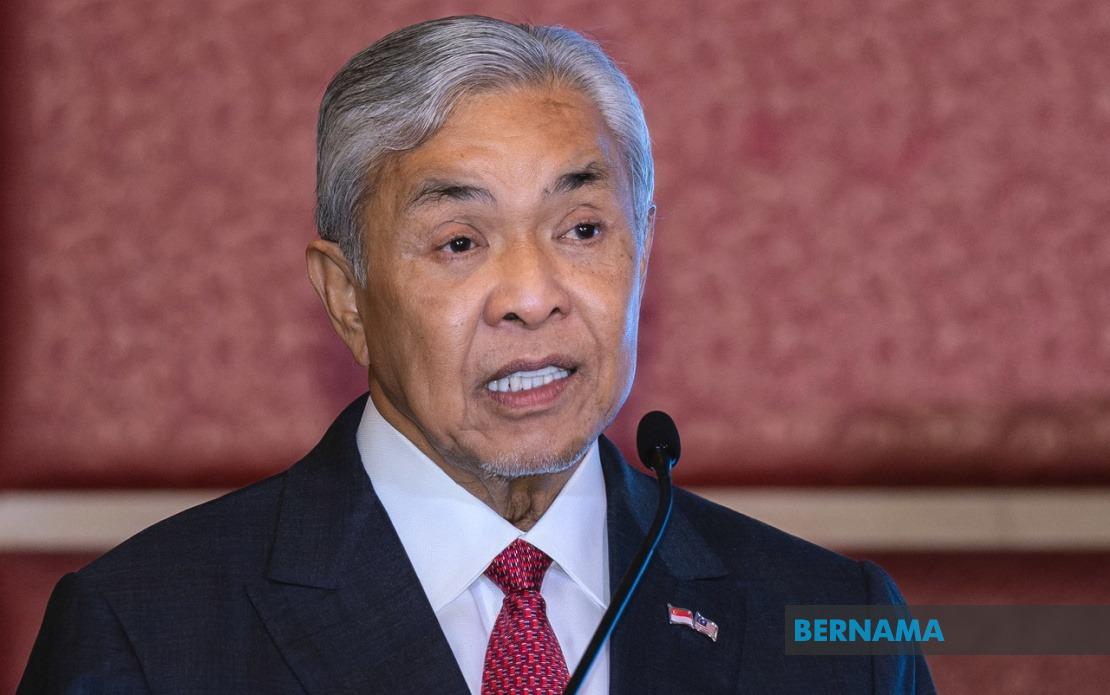
Malaysia has committed to developing a self-reliant administrative framework for managing its refugee and asylum seeker populations, signalling a shift towards independent governance of this complex policy area. Deputy Prime Minister Datuk Seri Dr Ahmad Zahid Hamidi announced the initiative during a parliamentary response, emphasising that the approach would eliminate dependence on foreign entities whilst maintaining strict standards around national security and sovereignty. The framework is anchored in National Security Council Directive No. 23, which was formally endorsed by Prime Minister Datuk Seri Anwar Ibrahim on June 14, 2023, and subsequently revised in 2023 to reflect evolving operational requirements.
The directive represents a comprehensive recalibration of how Malaysia approaches one of Southeast Asia's most pressing humanitarian challenges. With more than 126,000 registered Rohingya refugees currently residing in the country, alongside additional populations of asylum seekers from various nations, Malaysia faces mounting pressures to balance humanitarian obligations with resource constraints and security considerations. The new mechanism tackles this tension by establishing clear protocols across multiple government agencies, each assigned specific roles and responsibilities in the management continuum. This coordinated approach aims to eliminate gaps that have historically permitted unauthorised activities and inconsistent treatment of vulnerable populations.
A cornerstone of the revised policy involves extending targeted social services to refugees deemed eligible under Malaysian criteria. Ahmad Zahid outlined that the framework would guarantee access to essential healthcare and educational facilities, alongside regulated employment opportunities, provided recipients comply with domestic regulations. This represents a deliberate pivot towards recognising refugees as temporary residents requiring basic services rather than purely security threats. The inclusion of employment pathways acknowledges economic realities in host communities whilst attempting to formalise arrangements that currently operate in informal markets, where exploitation and undocumented work proliferate.
Crucially, Ahmad Zahid identified a systemic weakness that has persistently undermined enforcement efforts: the existence of local enablers who facilitate irregular refugee arrangements for personal financial gain. Landlords who profit from overcrowded accommodation, employers seeking below-market wages, and middlemen extracting commissions from desperate migrants have collectively created parallel systems that frustrate official management. By acknowledging this dynamic in parliamentary debate, the Deputy Prime Minister signalled recognition that refugee management failures stem not merely from inadequate policy frameworks but from structural incentive problems embedded within Malaysian communities themselves. Addressing this requires not only regulatory strengthening but also community compliance and cultural shifts regarding complicity in irregular arrangements.
The directive's approach integrates enforcement with social responsibility frameworks, attempting to move beyond purely punitive mechanisms towards collaborative models. Rather than positioning refugees solely as subjects of control, the policy contemplates their integration into broader social structures with defined rights and obligations. This distinction matters significantly for Malaysia's international standing and domestic cohesion. Refugee populations that exist entirely outside formal systems become more vulnerable to trafficking, labour exploitation, and radicalisation—outcomes that ultimately threaten the security objectives that strict enforcement seeks to achieve. By bringing populations into regulated frameworks, Malaysia theoretically enhances visibility and reduces spaces where criminal networks operate.
The coordination mechanisms embedded in NSC Directive No. 23 represent institutional innovation within Malaysian governance. Multiple ministries and government agencies must now operate under unified protocols rather than pursuing fragmented approaches based on departmental mandates. This requires significant bureaucratic recalibration and investment in training, data systems, and inter-agency communication infrastructure. The Prime Minister's Department, through the NSC, assumes coordinating authority, positioning refugee management as a national security issue requiring centralised oversight rather than allowing it to drift across disparate agencies. Such structural changes often encounter resistance from established institutions protective of their operational autonomy, suggesting implementation challenges ahead.
For Malaysia's regional standing, this initiative carries implications beyond refugee management per se. The decision to establish independent mechanisms signals confidence in domestic institutional capacity whilst subtly reducing reliance on UNHCR and other international bodies that have historically played mediating roles. This reflects broader Malaysian preferences for national solutions to transnational challenges, consistent with sovereignty-conscious foreign policy orientations. However, regional cooperation remains essential—neighbouring countries including Bangladesh, Indonesia, and Thailand host significantly larger refugee populations and face similar management challenges. How Malaysia's framework interfaces with regional approaches and whether it encourages neighbouring states towards similar structures remains to be seen.
The Rohingya situation particularly shapes this policy context. Myanmar's civil conflict has produced one of the world's largest refugee crises, with Bangladesh hosting nearly one million Rohingya in sprawling camps. Malaysia's 126,000 registered Rohingya constitute only a fraction of the broader displacement but represent the highest proportion relative to national population in any non-contiguous country. The introduction of Refugee Registration Documents (DPP) provides better documentation and identification systems compared to previous informal arrangements, enhancing authorities' capacity to monitor movements and verify status. Yet documentation simultaneously creates anxieties among host communities fearful of permanent settlement, necessitating careful communication about the temporary nature of Malaysia's refugee presence and commitments.
Implementation success depends substantially on resource allocation and bureaucratic commitment. Creating genuinely functional mechanisms across health, education, employment, and security domains requires sustained funding, training of officials, and establishment of transparent appeal processes. Malaysian government agencies frequently face capacity constraints and competing priorities that can delay implementation of policy directives. Additionally, local-level enforcement often diverges from central directives, with police and immigration officials maintaining considerable discretionary authority. Whether NSC Directive No. 23 achieves its stated objectives largely depends on whether compliance with protocols becomes institutionalised rather than treated as optional guidance.
The policy also reflects recognition that refugee management cannot succeed through enforcement alone. Effective governance requires cooperation from receiving communities, legitimate pathways for refugee activities, and mechanisms addressing legitimate anxieties around resource competition and cultural integration. Malaysian society remains substantially divided on refugee presence, with segments viewing refugeeism through humanitarian lenses whilst others emphasise security risks and labour market competition. Creating functional systems that most Malaysians perceive as reasonable requires transparency about decision-making processes and demonstrable effectiveness in balancing competing interests. Public confidence in refugee management ultimately influences compliance with protocols and social stability in areas with refugee concentrations.

