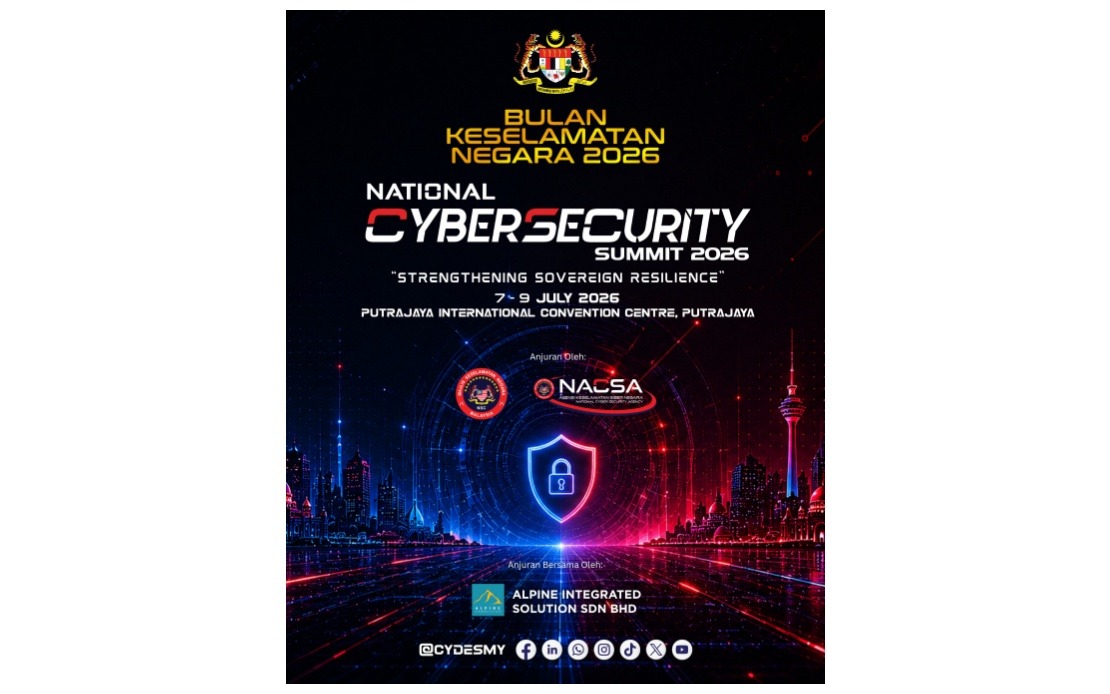
Malaysia will convene the National Cyber Security Summit 2026 at the Putrajaya International Convention Centre from July 7 to 9, marking a critical gathering for the country's digital security establishment. The three-day event, organised by the National Cyber Security Agency under the National Security Council within the Prime Minister's Department, will assemble a diverse coalition of policymakers, corporate executives, security practitioners and academic specialists focused on advancing Malaysia's cyber resilience capabilities in an increasingly hostile threat environment.
The timing of the summit carries particular significance following the Dewan Rakyat's passage of the Cybercrimes Bill 2026 on July 1, which represents a major legislative milestone in Malaysia's ongoing efforts to establish a comprehensive legal framework for addressing cyber threats. This new legislation emerges from the government's implementation of the Malaysian Cyber Security Strategy 2025-2030, a strategic blueprint that provides the foundational direction for the nation's multi-year approach to digital security. The convergence of legislative action and this high-profile summit demonstrates the government's determination to position cybersecurity as a central pillar of national policy rather than a purely technical concern.
Under the theme "Strengthening Sovereign Resilience", the summit will concentrate on constructing a more fortified, dependable and shock-resistant cyber security infrastructure across Malaysia. This framing reflects international best practices that recognise cyber resilience as extending beyond defensive technology to encompass organisational preparedness, human capabilities and cross-sector coordination. By emphasising sovereignty and resilience together, the summit's organisers signal Malaysia's commitment to protecting national digital assets from external interference while building institutional capacity to respond to and recover from cyber incidents.
The summit's programming reflects an ambitious scope, featuring 41 substantive discussion tracks and working sessions. These include forums dedicated to the Malaysian Cyber Security Strategy implementation, dedicated discussion space for cyber crime investigations and prosecution, a convention specifically for information and communications technology security officers, thematic streams addressing women's participation in the cyber security workforce, technical cryptography sessions, specialist presentations and restricted access workshops for advanced practitioners. This structured variety ensures that attendees across different sectors and expertise levels can engage with material directly relevant to their operational contexts.
The speaker roster assembled for the event demonstrates the summit's institutional weight and reach. A combined total of 96 speakers and panel experts will represent stakeholder groups spanning government agencies, multinational technology corporations, police and defence authorities, technology service providers, university research institutions and professional cyber security associations. This cross-institutional representation facilitates knowledge transfer and relationship-building across traditional silos that often impede effective cyber security collaboration. The participation footprint extends internationally as well, with 122 exhibiting companies attending, including 78 Malaysian firms and 44 international organisations originating from seven countries, reflecting the globalised nature of cyber security supply chains and threat intelligence sharing.
Expectations for event participation indicate substantial interest from Malaysia's security and technology communities. The organisers anticipate welcoming approximately 3,000 participants encompassing both registered conference attendees and walk-in trade visitors, alongside 250 specially invited distinguished guests comprising senior government officials, corporate board members and thought leaders. This mass participation distinguishes the summit as more than an elite policy forum, instead positioning it as a significant networking opportunity for security practitioners throughout the country to access expert knowledge and establish professional relationships that will extend beyond the conference dates.
The summit will serve as the launching platform for three major policy and technical initiatives developed under the purview of the National Security Council and National Cyber Security Agency. The National Security Policy 2026-2030 will articulate the government's overarching approach to protecting national interests across multiple security domains with cyber dimensions. Additionally, the National Cryptography Policy, branded as MyKriptografi, alongside its accompanying implementation roadmap through 2030, will establish standards for encryption technologies across government and critical infrastructure. Most significantly, the Artificial Intelligence Systems Cybersecurity Framework addresses the emerging challenge of securing artificial intelligence deployments against compromise and misuse, an issue that has gained urgency as Malaysian organisations accelerate AI adoption.
Prime Minister Datuk Seri Anwar Ibrahim is scheduled to formally launch these three strategic documents, underscoring the priority the highest levels of government attach to cyber security governance. Such ceremonial leadership presence serves multiple functions beyond symbolic value, including demonstrating political commitment to constituencies both domestically and internationally, providing media attention that helps communicate cyber security importance to the broader public, and signalling to private sector investors that the government treats digital security as central to national competitiveness and stability.
The summit occurs within the broader context of National Security Month, an awareness and engagement campaign that amplifies the government's messaging around protective and resilience-building activities. This integration ensures that cyber security awareness reaches audiences beyond the specialist practitioner community, helping to embed security consciousness into public-sector operations and corporate governance more broadly. For Malaysia specifically, this coordinated approach to national security messaging addresses the challenge that cyber threats remain relatively abstract to many citizens and mid-level managers despite their growing operational consequences.
For Malaysian organisations and security professionals, the summit provides immediate practical value through exposure to international best practices, regulatory intelligence regarding emerging compliance expectations, and opportunities to assess emerging technology solutions and service providers operating in the local market. The closed workshops enable deeper technical knowledge transfer for advanced security teams managing complex hybrid infrastructure environments. For government officials, the gathering permits assessment of private sector readiness to implement new policies and regulations while enabling direct dialogue with technology leaders regarding feasibility and implementation timelines.
The international participation element carries particular strategic importance for Southeast Asia's regional security architecture. As cyber threats increasingly originate from and target multiple countries simultaneously, Malaysia's investment in convening regional and global expertise strengthens the information-sharing relationships essential for collective defence. The presence of companies and experts from seven countries creates opportunities for establishing cooperation frameworks that extend beyond Malaysia's borders, contributing to regional cyber security resilience more broadly.
Beyond immediate event outcomes, the summit's establishment as an annual or regular gathering mechanism could institutionalise high-level dialogue between Malaysia's government, technology sector and international partners on cyber security matters. This would position Malaysia as a convening authority within Southeast Asia for digital security policy development and best practice sharing, potentially amplifying the nation's influence in regional and international cyber security standard-setting processes. The success of this 2026 iteration will likely determine whether the summit becomes an enduring fixture in Malaysia's policy calendar or remains a one-time major event.

