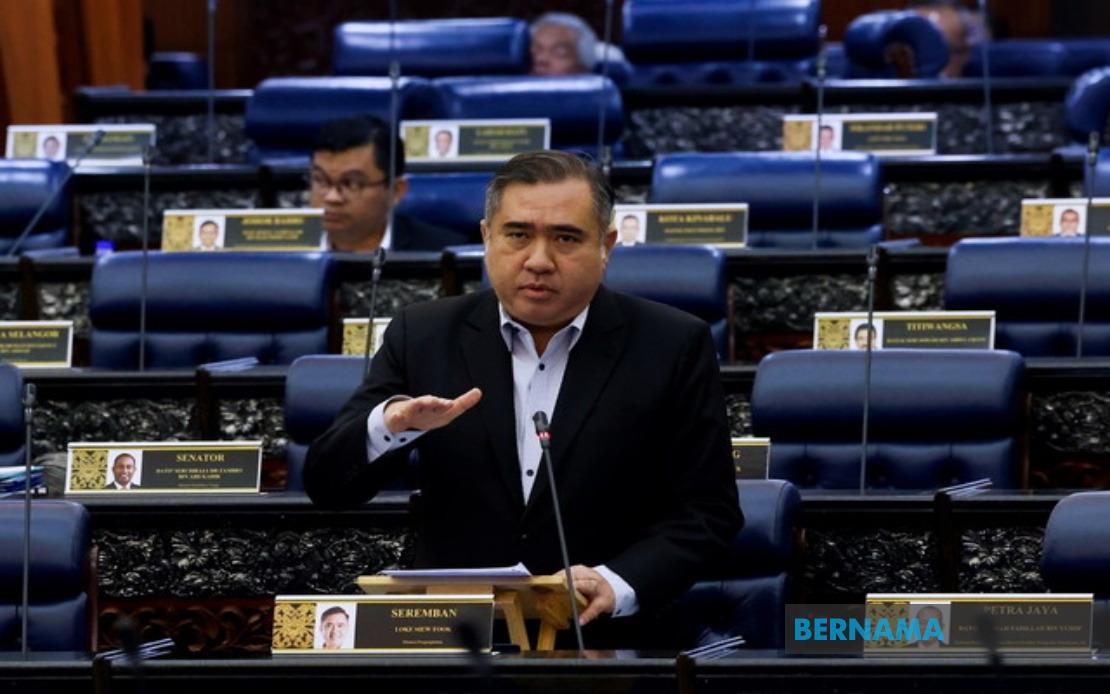
Malaysia's Transport Ministry is moving to establish a formal compensation framework for victims of serious road accidents and their families, marking a fundamental shift in how the country addresses the human cost of traffic fatalities. Minister Anthony Loke announced the initiative in Parliament on July 14, revealing that proposed amendments to the Road Transport Act 1987 would grant courts the power to order convicted offenders to pay damages based on the severity of injuries, financial losses incurred, and the perpetrator's capacity to settle such claims. This represents a departure from treating dangerous drivers as standard traffic violators, instead positioning them as subjects of more rigorous legal accountability.
The compensation mechanism reflects growing recognition that Malaysia's persistently high road death toll demands more comprehensive remedies than traditional criminal penalties alone. With over 6,000 lives claimed annually on Malaysian roads, the government acknowledges that grieving families left without breadwinners or with disabled relatives require material support beyond the satisfaction of seeing offenders imprisoned. The proposed framework allows judges discretion to evaluate each case individually, considering factors such as the gravity of permanent disabilities, the economic impact on surviving dependents, and whether the convicted person possesses genuine means to make restitution. This approach aligns with evolving international best practices where criminal justice systems incorporate restorative elements benefiting victims directly.
Parallel to compensation reforms, the ministry has substantially tightened its assault on illegal street racing, a phenomenon that has transformed Malaysian neighbourhoods into dangerous informal speedways and claims a disproportionate share of young lives. The Road Transport (Amendment) Bill 2026, already passed by the Dewan Rakyat, introduces Section 42A as a dedicated legal tool targeting racing activities specifically. First-time offenders face fines ranging from RM2,000 to RM10,000 alongside potential imprisonment up to two years, while repeat offenders confront escalated consequences of RM5,000 to RM20,000 in fines or up to five years incarceration. Critically, authorities can now prosecute racers before any collision occurs, eliminating the previous requirement to wait for an accident to establish grounds for prosecution.
This preventive dimension carries substantial operational implications across Malaysian police forces and traffic authorities. Previously, law enforcement struggled with prosecutorial bottlenecks, unable to act against organised racing groups until fatalities or severe injuries materialised. The legislative change removes that constraint, enabling proactive intervention at racing venues or on identified corridors without awaiting tragedy. Recent enforcement sweeps demonstrate the ministry's seriousness: a single operation in Johor resulted in 16 arrests and seizure of 260 motorcycles engaged in illegal racing. Such operations, now unfolding nationwide, signal an intensified posture that may eventually deter participation in street racing by raising certainty of detection and punishment.
The June 1 incident at Kilometre 27 of Jalan Renggam-Simpang Renggam in Johor, which killed five people, exemplifies why these legislative measures gained political momentum. The Attorney-General's Chambers' decision to pursue investigations under Section 302 of the Penal Code, which addresses culpable homicide, underscores government determination to treat racing-related deaths as serious criminal matters rather than unfortunate accidents. Such prosecutorial choices, channelled through the compensation amendments, promise grieving families some pathway to financial recovery alongside the state's criminal accountability mechanisms. For those investigating similar high-casualty incidents, the expanded legal framework provides prosecutors with more sophisticated instruments to extract accountability from those whose recklessness destroys families.
Implementing these changes successfully requires institutional coordination extending well beyond the Transport Ministry's traditional remit. Minister Loke explicitly rejected proposals for a separate cross-ministerial task force, instead framing road safety as requiring society-wide participation rather than bureaucratic silos. This stance acknowledges that sustainable reduction in accident mortality depends far more on cultural transformation and public behaviour modification than legislative prescriptions alone. A nation averaging over 6,000 annual road deaths faces an epidemic dimension that law enforcement and compensation schemes alone cannot resolve; genuine progress demands that Malaysians fundamentally reassess their attitudes toward speed, reckless driving, and the value of human life within their immediate communities.
The minister's emphasis on avoiding politicisation of road safety matters carries particular significance for Malaysia's multi-party political environment. Road deaths affect all communities and constituencies regardless of political affiliation, yet the temptation to weaponise road safety as an electoral issue remains persistent. Loke's appeal for national consensus on this agenda suggests an attempt to elevate road safety above partisan dispute, recognising that competing political narratives about enforcement competence or regulatory effectiveness ultimately serve no one when traffic fatalities remain stubbornly elevated. This framing positions road safety as a shared national interest transcending the usual political fault lines, though whether political actors will respect such boundaries remains uncertain.
For Malaysian motorists and families, these legislative changes promise tangible but incremental improvements rather than transformative shifts in road safety outcomes. The compensation mechanism addresses a genuine gap in Malaysian law by providing financial remedies when court systems previously offered none, yet remains constrained by the offender's ability to pay—many serious traffic offenders lack resources to satisfy substantial damages awards. Similarly, the enhanced penalties for illegal racing target a particularly dangerous subset of road users whose activities generate outsized casualty rates relative to their proportion of total drivers. However, the vast majority of Malaysia's road accidents involve ordinary drivers committing ordinary traffic violations at excessive speeds or under impaired conditions, problems that criminal penalties and compensation schemes address only obliquely.
Regional dimensions of these reforms warrant consideration, as illegal racing and aggressive driving constitute transnational phenomena within Southeast Asia. Malaysia's experience with street racing culture parallels challenges across Thailand, the Philippines, and Indonesia, where young men from comparable socioeconomic backgrounds gravitate toward similar high-risk activities. Should Malaysia's legal innovations prove effective in deterring participation, neighbouring nations may study and adapt these approaches. Conversely, if the reforms fail to substantially reduce racing-related fatalities, the region may conclude that legislative solutions alone cannot overcome deeper cultural factors driving such dangerous behaviour. Either outcome will inform regional policy discourse around road safety for years.
The Transport Ministry's legislative agenda ultimately represents a commitment to treating road fatalities with the seriousness they deserve as a public health catastrophe. By introducing victim compensation alongside toughened enforcement and preventive prosecution capabilities, the government signals that those who kill or maim through dangerous driving will face consequences extending beyond imprisonment. Yet sustaining this momentum requires the society-wide behavioural commitment that Minister Loke emphasised, a transformation that no legislative amendment can mandate. Whether Malaysian communities embrace this challenge remains the crucial variable determining whether these reforms generate meaningful improvements in the nation's road safety performance or join the extensive catalogue of well-intentioned policies whose impacts fade without complementary social change.

