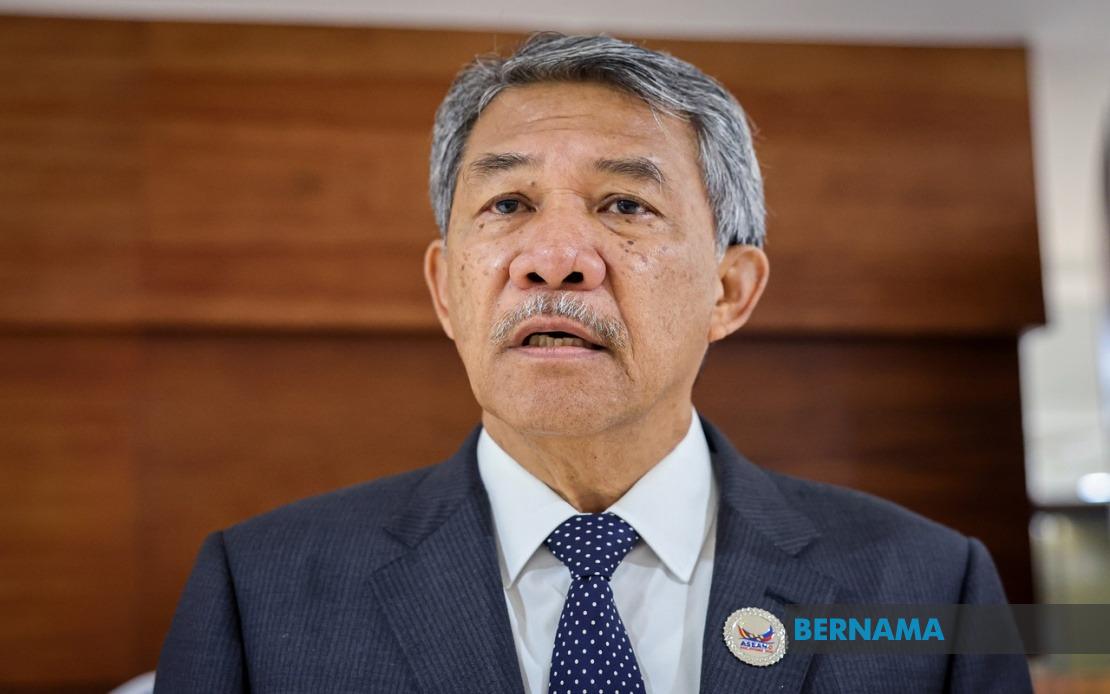
Malaysia has been designated as the country coordinator for ASEAN-Türkiye relations after regional member states formally agreed to admit Türkiye as a new Dialogue Partner during the 59th ASEAN Foreign Ministers' Meeting held in Manila on July 21. Foreign Minister Datuk Seri Mohamad Hasan confirmed the dual approval, which came during the plenary session and related discussions that brought together senior diplomatic representatives from across Southeast Asia.
The acceptance of Türkiye marks a significant expansion of ASEAN's diplomatic footprint beyond the Asia-Pacific region, reflecting the bloc's strategic intent to deepen engagement with key powers in Europe and the Middle East. Mohamad explained that the decision to admit Türkiye followed a rigorous evaluation process conducted across multiple institutional levels, including the ASEAN secretariat, foreign ministry officials, and ministerial forums. This methodical approach underscores ASEAN's commitment to maintaining stringent standards for new partnerships, particularly given an existing moratorium on accepting additional members or Dialogue Partners.
Antecedents to this development trace back to Malaysia's tenure as ASEAN Chair in 2025, when the country formally proposed Türkiye's admission as a Dialogue Partner. The proposal gained traction among member states, each of whom signalled approval during the consensus-building process that characterises ASEAN decision-making. By positioning Malaysia as the coordinating country, ASEAN has entrusted Kuala Lumpur with the responsibility of managing bilateral dialogue mechanics, facilitating communication channels, and overseeing engagement frameworks between the bloc and Ankara.
Beyond the Türkiye development, ASEAN's 59th Foreign Ministers' Meeting produced additional diplomatic outcomes that reinforce the bloc's expansionist engagement strategy. The member states also voted to accept the United Kingdom as a new participant in the ASEAN Regional Forum, further broadening the institutional mechanisms through which the region interfaces with major global powers. These parallel admissions reflect ASEAN's deliberate positioning as a diplomatic hub capable of convening dialogue across geographic and ideological boundaries.
Central to discussions during the plenary session was the concept of ASEAN centrality, which Foreign Minister Mohamad highlighted as the regional bloc's core strategic asset. In an increasingly fractious geopolitical environment, where great powers compete for influence and alignment across the Indo-Pacific and beyond, ASEAN's ability to maintain its position as an independent arbiter and convening forum has become more valuable than ever. The member states reiterated their determination to preserve this centrality against efforts that might undermine ASEAN's institutional autonomy or force member countries into geopolitical camps.
An associated agenda item examined ASEAN's evolving role within an uncertain geopolitical and geo-economic landscape characterised by trade tensions, technological competition, and shifting strategic alignments. The discussions acknowledged that ASEAN faces mounting pressure from multiple directions, with major powers seeking to deepen partnerships and expand their influence within the region. By accepting new Dialogue Partners like Türkiye and expanding forums like the ASEAN Regional Forum to include the United Kingdom, member states are attempting to preserve their collective agency and prevent any single power or bloc from monopolising Southeast Asian strategic orientation.
For Malaysia specifically, assuming the country coordinator role for ASEAN-Türkiye relations carries significant diplomatic weight and responsibility. The appointment reflects confidence in Kuala Lumpur's diplomatic acumen and its ability to serve as a bridge between the Southeast Asian regional organisation and Ankara's ambitions for expanded engagement with Asia. As coordinator, Malaysia will likely shepherd initiatives spanning trade facilitation, educational exchanges, cultural programmes, and defence cooperation, creating pathways for Turkish institutional participation in ASEAN mechanisms.
An important dimension of the meeting involved presentations on the ASEAN Community Vision 2045 framework, delivered by ASEAN Secretary-General Dr Kao Kim Hourn. This long-term strategic blueprint articulates the region's aspirations for economic integration, social progress, and political stability across the coming decades. The Vision 2045 discussions underscored the necessity for ASEAN member states to maintain focus on internal consolidation and capacity-building, even as the bloc expands its external diplomatic engagement. Balancing intra-regional cohesion with outward-looking diplomatic initiatives remains a persistent challenge for ASEAN policymakers.
The diplomatic process that culminated in Türkiye's acceptance as a Dialogue Partner illuminates ASEAN's internal consensus-building mechanisms. The initial proposal underwent scrutiny at secretariat level, proceeded to formal review by foreign ministry officials, and ultimately arrived at the ministerial forum for final adjudication. This multi-tiered approach, while sometimes cumbersome, ensures that all member states voice their perspectives and retain meaningful influence over strategic decisions. The moratorium on new admissions, which several member states referenced during deliberations, serves as a safety mechanism preventing hasty expansions that might dilute ASEAN's institutional coherence.
For Malaysia and other Southeast Asian nations, the expansion of ASEAN's Dialogue Partner network reflects a calculated strategy to maintain relevance and influence within broader global power structures. Rather than allowing regional affairs to be dictated by distant powers, ASEAN leadership—with Malaysia now serving as the institutional bridge to Türkiye—endeavours to shape the terms of engagement with international partners. This approach acknowledges geopolitical realities while preserving the autonomy that has historically characterised the bloc's decision-making processes.
Looking forward, Malaysia's appointment as country coordinator for ASEAN-Türkiye relations will require sustained diplomatic engagement, institutional coordination, and strategic vision. The role extends beyond ceremonial functions to encompass substantive facilitation of dialogue, resolution of potential friction points, and expansion of functional cooperation across sectors ranging from trade to education to security. The success of this coordination mechanism will partly determine whether the Dialogue Partner arrangement with Türkiye yields tangible benefits for both ASEAN and the Turkish nation, potentially serving as a template for future partnerships.
The cumulative effect of ASEAN's decisions at the 59th Foreign Ministers' Meeting—accepting Türkiye and the United Kingdom, reinforcing commitment to ASEAN centrality, and advancing Vision 2045 discussions—demonstrates the bloc's determination to maintain its strategic importance in an increasingly complex world. Malaysia's designation as Türkiye coordinator embeds Kuala Lumpur within this larger framework, elevating its diplomatic profile while tasking it with concrete responsibilities for relationship management and institutional coordination that extend well beyond ceremonial acknowledgment.

