Malaysia's government is moving swiftly to tighten security protocols at its international entry points, with Home Minister Datuk Seri Saifuddin Nasution Ismail set to present a wide-ranging security enhancement plan to Cabinet in collaboration with Transport Minister Anthony Loke. The initiative represents a coordinated governmental response to recent embarrassing incidents that have raised concerns about the effectiveness of existing border controls and the nation's security reputation on the international stage.
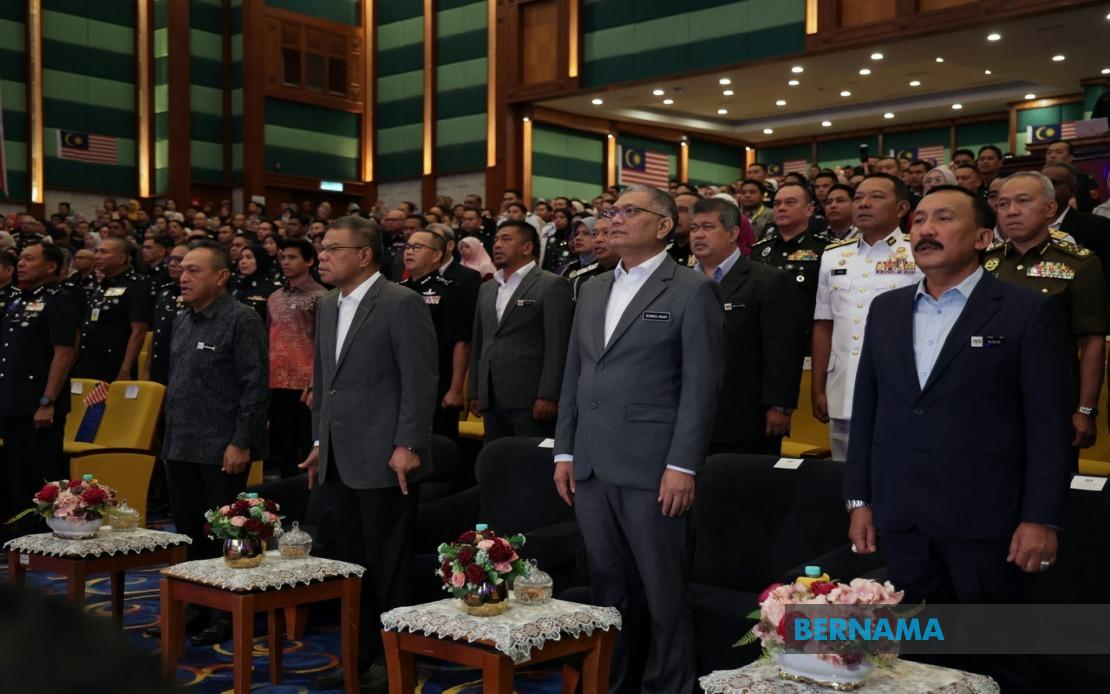
The comprehensive proposal has been developed within just two weeks of a Cabinet directive ordering the Home Ministry and Transport Ministry to jointly devise strengthened security measures. This rapid turnaround reflects the government's recognition that vulnerabilities at key entry points require urgent attention. Saifuddin Nasution emphasised at a Home Ministry assembly in Putrajaya that the plan encompasses multiple jurisdictional areas, necessitating the collaborative approach between the two ministerial portfolios to ensure a holistic and integrated solution.
A significant catalyst for this initiative was the recent detention of a Malaysian commercial pilot in Indonesia, during which authorities seized approximately 25 kilogrammes of MDMA at Soekarno-Hatta International Airport. This incident, alongside other recent cases involving Malaysian nationals, prompted immediate Cabinet action driven by concerns that continued security lapses could damage Malaysia's international standing and create perceptions of systemic weaknesses in border management. The government views such occurrences not merely as isolated criminal matters but as potential threats to the nation's global image and credibility.
The security enhancement blueprint addresses several critical operational dimensions. Key focus areas include upgrading the professional competency of personnel assigned to border control duties, evaluating and upgrading physical infrastructure, expanding closed-circuit television surveillance systems, procuring advanced scanning equipment, and implementing comprehensive training programmes for staff operating sophisticated detection machinery. These elements collectively represent an effort to move beyond piecemeal improvements toward a systematically overhauled border security apparatus.
Crucially, the plan aims to eliminate what Saifuddin Nasution termed the "silo approach" that has historically characterised Malaysian border control. Rather than allowing individual agencies to operate independently with minimal coordination, the new framework prioritises seamless inter-agency collaboration. This structural shift acknowledges that effective border security depends less on isolated improvements and more on integrated systems where information, resources, and authority flow smoothly among the Home Ministry, Transport Ministry, customs, immigration, police, and airport operators.
The formulation of this plan involved synthesising the collective knowledge, operational experience, and technical expertise of multiple government bodies. This collaborative development process itself represents an important institutional shift toward breaking down bureaucratic silos that have previously hindered coordinated responses to security challenges. By drawing on diverse agency perspectives from the outset, the plan is designed to be more comprehensive and implementable than solutions developed within single ministerial or departmental frameworks.
Investigations into the pilot case are proceeding with support from Indonesian authorities, who have demonstrated constructive cooperation in what appears to be an international dimension to the smuggling attempt. Malaysian police are conducting detailed interviews with the suspect to determine whether this represents an isolated criminal act or part of a larger organised syndicate network. The distinction carries significant implications for border security strategy, as organised trafficking networks require different preventive approaches than opportunistic individual smugglers.
Insights gleaned from the pilot investigation are expected to illuminate vulnerabilities within Malaysia's exit and entry point systems. By understanding how contraband moved through detection systems and identifying gaps exploited by smugglers, authorities can refine their operational protocols and resource allocation. This investigative learning process exemplifies how individual criminal cases, properly analysed, can yield actionable intelligence for systemic security improvements.
For Malaysia and the broader Southeast Asian region, this development carries several implications. As a major regional aviation and maritime hub, Malaysia's border security effectiveness influences perceptions of the entire region's capacity to manage transnational crime, particularly drug trafficking. Enhanced security at Malaysian entry points may create positive spillover effects, raising baseline standards across Southeast Asia and complicating smuggling routes that previously relied on perceived weaknesses in Malaysian controls. Conversely, continued vulnerabilities could undermine regional security cooperation and international confidence in Malaysia's ability to serve as a secure transport hub.
The timing of this initiative also reflects Malaysia's apparent determination to move beyond reactive, incident-driven policy responses toward proactive, systematically grounded security governance. Rather than waiting for additional embarrassing incidents, the government has seized the opportunity to conduct a comprehensive review and implement structural improvements. This forward-looking approach, if successfully executed and sustained, could establish a model for how developing nations address emerging security challenges at critical infrastructure points.
Success will depend critically on follow-through beyond the Cabinet presentation stage. Security plans frequently encounter implementation challenges related to budget constraints, training capacity, inter-agency coordination difficulties, and resistance to operational changes. The government's ability to resource this initiative adequately, train personnel effectively, and maintain political commitment to the coordinated approach will ultimately determine whether the security architecture improves meaningfully. Malaysian stakeholders and international partners will be watching closely to assess whether this represents a genuine institutional transformation or another policy announcement that fades once initial attention subsides.

