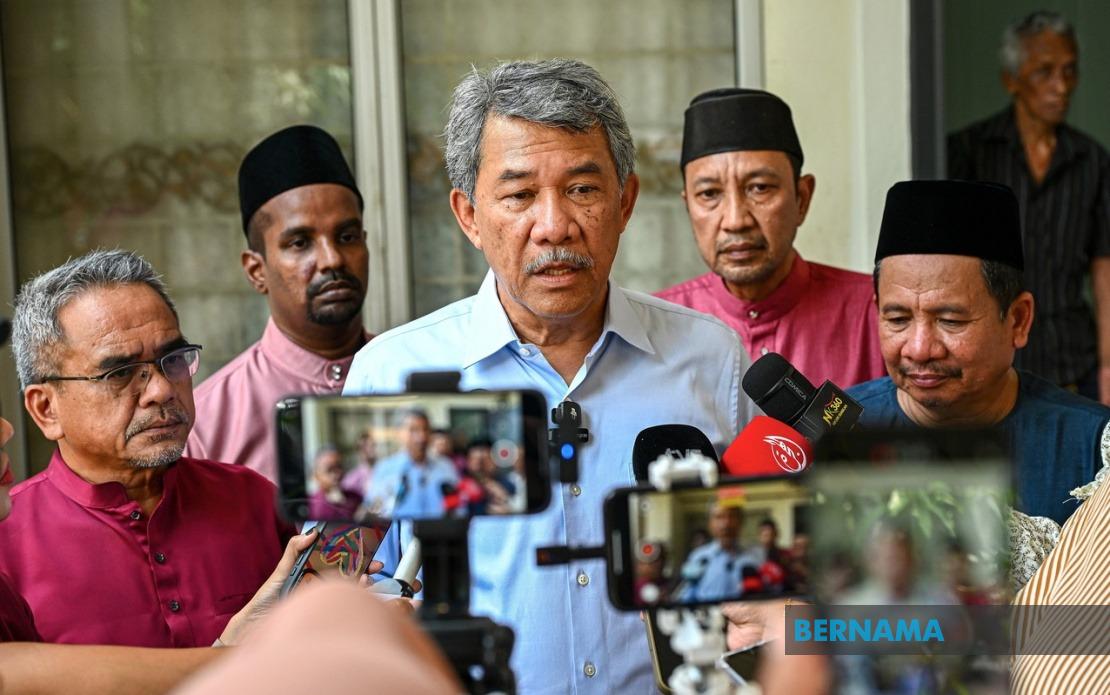
Malaysia has committed to safeguarding the welfare of Myanmar refugees before facilitating their return home, with Foreign Minister Datuk Seri Mohamad Hasan emphasising that the repatriation process will remain conditional upon verified security guarantees. Speaking after attending a Ziarah Kasih programme in Seremban on August 14, Hasan rejected any rushed approach to returning the estimated Myanmar national population residing in Malaysia, signalling instead a methodical framework designed to protect vulnerable individuals from potential persecution or harm.
The Foreign Minister outlined a structured cooperation model involving the United Nations High Commissioner for Refugees and Malaysia's Home Ministry, tasked with authenticating each refugee's legal status and independently assessing the security environment they would encounter upon arrival in Myanmar. This multi-layered verification process reflects international best practices in refugee protection and acknowledges the complex humanitarian dimensions of the Myanmar crisis, where returnees risk facing political reprisals, ethnic violence, or military targeting depending on their background and prior activities. The involvement of UNHCR underscores Malaysia's recognition that unilateral decisions without international oversight could expose vulnerable populations to severe consequences.
Median reports had suggested Myanmar's government was prepared to organise a maritime repatriation operation transporting approximately 5,000 of its nationals from Malaysian territory by ship. However, Hasan clarified that Malaysia views this proposal as indicative rather than binding, and would instead execute returns incrementally based on readiness metrics rather than population quotas. He stressed that the country is prepared to send back the 1,000 individuals already identified and cleared for repatriation without awaiting the accumulation of larger numbers, thereby demonstrating flexibility within a security-conscious framework.
This graduated approach reflects Malaysia's broader diplomatic positioning on the Myanmar question, where the government has sought to balance humanitarian responsibilities with practical constraints and regional diplomatic considerations. By processing smaller cohorts through verified channels, authorities can better manage logistical challenges, conduct thorough security screenings, and maintain transparency with international observers. The incremental model also reduces the operational burden on Myanmar's receiving infrastructure, potentially increasing the likelihood that returnees receive adequate orientation and support services rather than facing chaotic absorption into communities disrupted by ongoing conflict.
Hasan emphasised that Malaysia's strategy aligns with the Association of Southeast Asian Nations' collective approach to the Myanmar crisis, which increasingly recognises refugee repatriation as a component of broader regional stabilisation efforts. He reiterated ASEAN's commitment to the Five-Point Consensus established during earlier regional engagement with Myanmar, framing refugee issues within this institutional mechanism rather than as isolated humanitarian concerns. This positioning suggests that Malaysia views refugee management not merely as a domestic security matter but as integral to ASEAN's credibility and coordinated response to one of Southeast Asia's most significant contemporary political emergencies.
The Foreign Minister instructed the Secretary-General of the Ministry of Foreign Affairs to establish direct diplomatic channels with Myanmar through its embassy in Kuala Lumpur to facilitate orderly coordination between both governments. This bureaucratic infrastructure aims to prevent unilateral actions or miscommunications that could compromise either nation's security interests or expose returnees to unforeseen dangers. By institutionalising communication pathways, Malaysia attempts to reduce risks inherent in ad-hoc arrangements and establish precedents for transparent cooperation on population movements.
Myanmar's ongoing political turbulence, including the military junta's consolidation of power since the 2021 coup and intensifying conflicts between government forces and armed resistance movements, creates an ambiguous security landscape for potential returnees. Individuals previously involved in pro-democracy activism, civil disobedience, or minority advocacy may face targeted persecution, whilst those lacking documented identity or background verification present unknowable risks to receiving communities. Malaysia's insistence on individual security assessments acknowledges these complexities and reflects institutional learning from previous regional migration crises where rapid repatriations resulted in documented human rights abuses.
The repatriation initiative also occurs against Malaysia's own demographic and fiscal pressures, with the country hosting one of Southeast Asia's largest refugee populations. Coordinating returns through verified channels addresses domestic political constituencies demanding resolution of the refugee question whilst maintaining international humanitarian standing. The phased approach enables Malaysia to demonstrate commitment to burden-sharing within the regional system without appearing to abandon vulnerable populations to uncertain circumstances.
International refugee protection standards, articulated through UNHCR conventions and protocols, establish that states cannot return individuals to situations where they face persecution or serious harm, a principle known as non-refoulement. Malaysia's emphasis on security verification before repatriation reflects alignment with these established norms, even as the country has historically maintained ambiguous legal relationships with formal refugee conventions. By centering individual case assessment and international coordination, Hasan's statements signal institutional commitment to protecting vulnerable migrants whilst managing complex geopolitical relationships with Myanmar.

