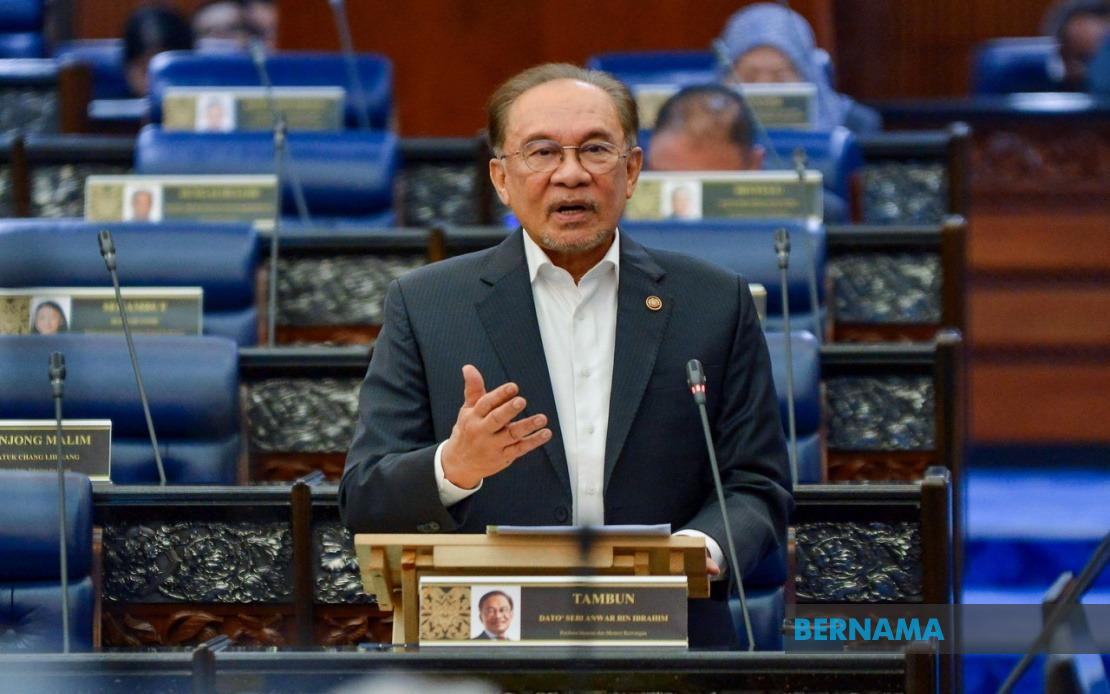
Prime Minister Datuk Seri Anwar Ibrahim has reaffirmed that Malaysia will continue anchoring its approach to maritime boundary disputes in the framework of the 1982 United Nations Convention on the Law of the Sea (UNCLOS) and sustained diplomatic engagement with neighbouring states. Speaking in Parliament on July 14, Anwar emphasised that negotiations remain the preferred pathway for Malaysia to address territorial matters affecting its vast maritime interests across multiple borders in Southeast Asia and the South China Sea region.
The government's position reflects a mature recognition that while UNCLOS provides an essential legal architecture for maritime governance, the convention's provisions require careful interpretation and contextual application. Anwar acknowledged that different nations read UNCLOS through distinct lenses shaped by their own strategic interests and historical claims, making the treaty alone insufficient as a comprehensive solution to complex boundary disagreements. This nuanced understanding informs Malaysia's pragmatic diplomacy, which seeks to balance firm adherence to international legal principles with the flexibility needed to achieve workable outcomes through dialogue.
ANWAR highlighted Malaysia's support for the International Maritime Organization's role in maritime affairs, though he noted that even the IMO itself operates within UNCLOS constraints. This positioning demonstrates Malaysia's multilateral orientation—the government recognises that regional maritime stability requires coordination among international bodies, national governments, and affected states. However, the Prime Minister made clear that technical expertise from bodies like the IMO, while valuable, cannot substitute for the political will required to negotiate settlements that address underlying sovereignty questions and practical resource-sharing arrangements.
Regarding the South China Sea specifically, Anwar outlined how ASEAN member states have collectively agreed to use UNCLOS as the negotiating framework while coordinating with China on finalising a Code of Conduct designed to manage regional tensions. This multilateral approach reflects a desire to establish binding protocols that transcend bilateral disputes and create a common understanding of acceptable behaviour. The Prime Minister acknowledged, however, that discussions involving the Philippines present particular complications owing to the unresolved Sabah issue—a reference to the Philippines' historical territorial claim to parts of Malaysian Sabah, which adds layers of complexity to broader regional maritime diplomacy.
ANWAR's parliamentary remarks underscored Malaysia's preference for iterative dialogue over confrontation, even when negotiations prove lengthy and demanding. He described a cycle of engagement, adjournment, and return to the negotiating table whenever discussions encounter impasses, suggesting that Malaysia views maritime disputes as chronic management challenges rather than problems amenable to final, definitive resolution. This patient approach contrasts with more assertive stances some regional actors have adopted, reflecting Malaysia's calculation that preserving stability and economic cooperation serves the country's long-term interests better than escalatory tactics.
The Prime Minister cited Malaysia's experience with Joint Development Authorities involving Thailand and Vietnam as models demonstrating the feasibility of economic collaboration without requiring countries to surrender sovereignty claims. Under such arrangements, disputed maritime zones remain contested in legal terms while being jointly exploited for mutual benefit, allowing both parties to maintain their positions while capturing value from the contested area. With Vietnam specifically, Anwar noted that the disputed zone was established without prejudice to either nation's sovereignty claim, yet Malaysia and Vietnam successfully created institutional mechanisms enabling coordinated resource development. This pragmatic framework has allowed the two countries to separate the intractable question of final maritime boundaries from the productive question of how to cooperate in practice.
As a maritime nation intersecting with multiple neighbours' territorial interests, Malaysia confronts boundary questions involving Brunei, Thailand, Indonesia, Singapore, the Philippines, and China. This complex web of overlapping and contested claims would render any unilateral or confrontational strategy untenable. Instead, the government has consistently elected to contain disputes through diplomatic channels, regarding escalation as a threat to Malaysia's broader strategic position and economic wellbeing. The Strait of Malacca question raised in parliament exemplifies how Malaysia's maritime security concerns intersect with its boundary disputes—maintaining safe passage through the strategic waterway depends partly on stable relationships with littoral states.
ANWAR reported measurable progress in boundary negotiations with Brunei, where only a handful of issues remain outstanding, many of them involving the Sarawak state government rather than federal authorities. This suggests that some maritime disputes respond well to patient diplomacy, particularly when the disputing parties possess similar capabilities and compatible interests. The advancement of Malaysia-Brunei talks contrasts with more intractable situations, illustrating that dispute resolution outcomes depend on multiple factors beyond legal frameworks and negotiating techniques.
With Indonesia, maritime negotiations focus on areas affecting Sabah and are conducted in close consultation with the state government, reflecting Malaysia's federal structure and the need to align federal foreign policy with state-level interests. This consultative approach can complicate diplomacy but also ensures that agreements command domestic political support. The emphasis on state involvement in boundary negotiations affecting Sabah and Sarawak acknowledges that these states have legitimate interests in maritime resources and security within their jurisdiction.
Anwar's parliamentary intervention amounts to a comprehensive restating of Malaysian maritime policy at a moment when regional tensions over the South China Sea have periodically escalated. By anchoring Malaysia's position in UNCLOS and emphasising negotiation over other approaches, the Prime Minister signals continuity in Malaysia's strategic orientation while reaffirming commitment to rules-based regional order. The approach reflects Malaysia's assessment that it benefits from stable, law-governed maritime relationships more than from zero-sum competition with larger powers, making patient diplomacy the logical strategic choice despite its frustrations and limited guarantees of final resolution.

