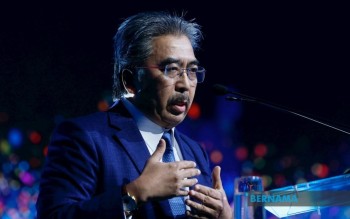
The Malaysian government is embarking on a comprehensive reassessment of its import requirements with the intention of recalibrating policy frameworks to decrease reliance on foreign sources and cultivate a more robust domestic industrial base. Minister of Investment, Trade and Industry Datuk Seri Johari Abdul Ghani outlined this strategic pivot during remarks at RHB Bank Bhd's RHB Progress Series 2026 conference in Kuala Lumpur on August 5, emphasizing that the nation must transition beyond passive consumption of external goods and services. The broader objective centres on maximizing the economic returns generated through Malaysia's substantial trading and investment activities, ensuring that prosperity gained through international commerce translates into tangible benefits for ordinary Malaysians rather than enriching foreign supply chains.
Johari underscored the imperative of constructing homegrown technological capacity and generating authentic economic value within Malaysian borders. His remarks reflected growing recognition within government circles that sustained trade volumes alone do not guarantee developmental progress unless accompanied by deliberate industrial deepening and technological advancement. The minister articulated a vision wherein Malaysia harnesses its trading relationships not merely to acquire finished goods or raw materials, but rather to facilitate technology transfer, skill development, and the emergence of competitive local enterprises capable of serving regional and global markets.
The urgency of this strategic shift becomes apparent when examining Malaysia's recent economic performance. During the previous year, the nation achieved a historic milestone with aggregate trade reaching RM3 trillion, surpassing this threshold for the first time. Merchandise exports expanded by 6.5 per cent to RM1.61 trillion, whilst imports increased marginally slower at 6.2 per cent to RM1.45 trillion, generating a trade surplus of RM151.8 billion. These figures demonstrate Malaysia's continued competitiveness in global commerce, yet they simultaneously underscore the substantial import bill that the nation carries annually—a financial leakage that could partially be arrested through domestic substitution.
Central to Malaysia's long-term development trajectory is the aspiration to attain high-income nation status, a designation that remains tantalizingly within reach yet demands substantial productivity improvements. The World Bank establishes the contemporary threshold for high-income economies at a gross national income per capita of US$14,375, a figure Malaysia currently falls short of by approximately 16 per cent at US$12,380. Critically, this benchmark continuously adjusts upward as global economic conditions evolve, meaning Malaysia cannot remain stationary but must continuously elevate its economic productivity and sectoral complexity to maintain convergence toward this target.
Johari cautioned against complacency and business-as-usual economic management, warning that such an approach would prove inadequate for closing Malaysia's development gap within a reasonable timeframe. Instead, government and industry must demonstrate strategic adaptability, capable of rapidly recalibrating business models and policy settings in response to shifting global circumstances. The minister stressed that Malaysia must deliberately cultivate diverse international partnerships rather than remaining dependent on a narrow range of trading partners, thereby reducing vulnerability to external shocks and geopolitical disruptions whilst safeguarding broader national economic interests.
A central element of the government's emerging strategy involves systematic evaluation of which products and capital goods warrant continued importation versus which sectors should expand domestic production given existing local technological and manufacturing capabilities. Johari cautioned that an excessive reliance on imported goods at artificially low prices may produce short-term consumer benefits but ultimately erodes the competitive strength of Malaysia's domestic industrial base, threatening long-term employment and technological sophistication. The government therefore intends to develop policy mechanisms that actively incentivize local manufacturing and the development of indigenous technological prowess, creating an investment climate wherein Malaysian entrepreneurs can build internationally competitive enterprises.
Johari illustrated this principle through Malaysia's iron and steel sector, once a cornerstone of national industrial might and characterized by domestic self-sufficiency. However, the entry of large international steelmakers producing comparable products catalyzed a gradual decline in Malaysia's domestic capacity, with local companies gradually displaced or absorbed into foreign-controlled supply chains. This historical trajectory reveals the dangers of passive industrial policy and the necessity of proactive intervention to maintain strategic manufacturing capabilities. The minister articulated a more selective foreign investment framework wherein multinational corporations would be welcomed specifically for introducing products, technologies, and capabilities that do not yet exist within Malaysia, thereby complementing rather than substituting for domestic industry.
Simultaneously, RHB Bank unveiled a significant financial technology initiative designed to strengthen Malaysia's domestic digital payment ecosystem. RHB Pay represents the nation's first banking-sector-owned unified online payment gateway, providing merchants across the economic spectrum with consolidated infrastructure for accepting digital transactions and obtaining immediate fund access. The platform operates under entirely domestic banking control and custody, eliminating reliance on foreign payment processors for core transaction infrastructure. This approach resonates with the broader government agenda of reducing external technological dependence while strengthening domestic financial system resilience.
RHB Pay's functionality encompasses card payments, FPX fund transfers, and DuitNow Pay integration through a singular application programming interface, streamlining the technical complexity that previously deterred small and medium enterprises from adopting multiple payment systems. The platform emphasizes bank-grade security architecture and automated reconciliation capabilities, features particularly valuable for mid-sized businesses managing complex cash flows. Notably, the system provides enhanced visibility into payment settlement timelines and faster access to transaction proceeds, addressing chronic cash flow constraints that impede Malaysian business competitiveness. Additional payment mechanisms including e-wallet integration, QR-code based payments, direct debit facilities, and automated recurring payment capabilities are scheduled for introduction during Phase Two, targeted for the fourth quarter of 2026.
The platform architecture specifically targets mid-market enterprises, commercial operations, large corporate entities, and government-linked institutions seeking scalable, domestically-controlled payment acceptance infrastructure. This positioning reflects recognition that Malaysia's development requires strengthening the operational capabilities of enterprises throughout the economic spectrum, not merely multinational corporations. By providing sophisticated payment processing tools previously available only to large international companies, RHB Pay effectively democratizes access to advanced financial infrastructure. This initiative exemplifies the government's broader industrial strategy: leveraging domestic financial expertise and technological capacity to construct economic infrastructure that reduces reliance on foreign intermediaries whilst generating domestic employment and intellectual property development.
Together, the government's import review initiative and RHB Bank's payment gateway launch represent complementary dimensions of a coherent development strategy. Both initiatives target the reduction of Malaysia's dependence on external economic actors whilst building indigenous technological and industrial capacity. The government's policy framework operates at the sectoral level, identifying manufacturing opportunities where domestic substitution remains feasible, whilst the financial technology initiative strengthens the operational infrastructure underpinning all Malaysian enterprises. Malaysia's path to high-income status ultimately depends on such systematic strengthening of domestic economic foundations, moving beyond simple trade surpluses toward the creation of genuinely competitive, technology-intensive industries capable of generating sustained prosperity.

