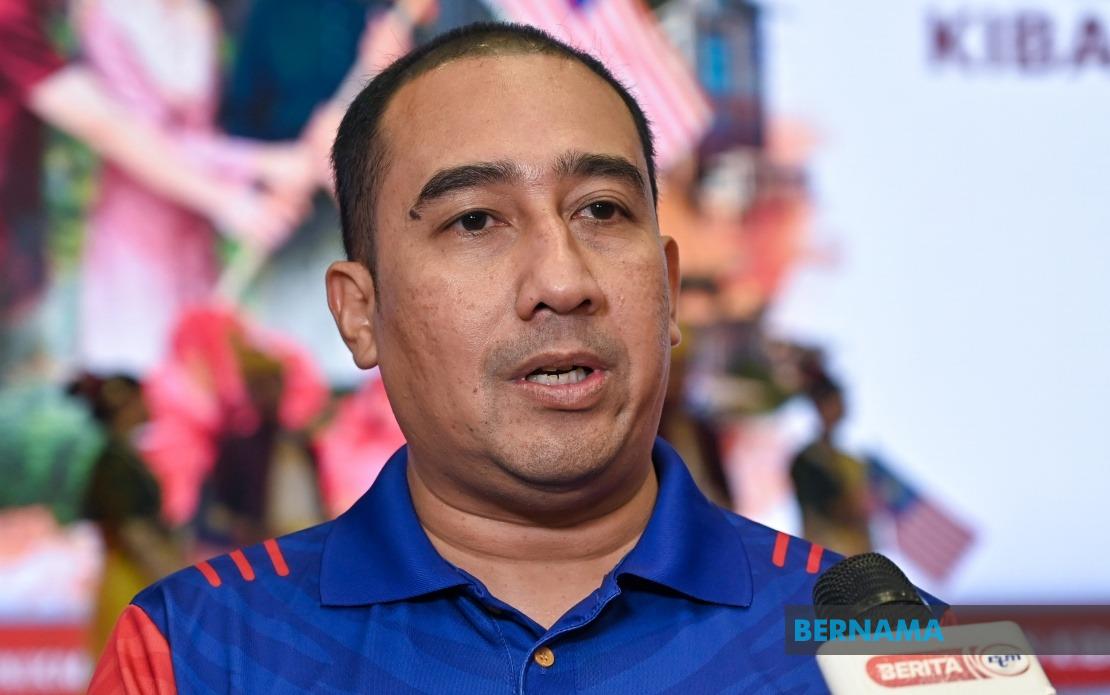
The Department of Information (JAPEN) is preparing a series of community-focused activities to mark the 2026 National Month and Malaysia Day celebrations, signalling a shift towards grassroots engagement in national observances. While organisers have deliberately adopted a more modest scale than previous years, JAPEN's Communication Services and Community Development Division director Muhammad Najmi Mustapha emphasised that the upcoming festivities will still feature compelling activities designed to foster patriotic sentiment across the nation. The initiative reflects a strategic recalibration in how government agencies approach national celebrations, moving away from large-scale spectacles to more intimate, widespread community participation.
Central to this year's approach is the deployment of JAPEN's mobile units to multiple locations nationwide, transforming selected checkpoints, religious sites, and sporting facilities into hubs of national celebration. This decentralised model permits broader geographic coverage and allows communities in less-urbanised areas to participate meaningfully in National Month commemorations. Muhammad Najmi, who recently oversaw rehearsals for the official launch ceremony at the Sultan Azlan Shah Institute's training facility in Tanjung Rambutan near Ipoh, indicated that these mobile units will serve as distribution points and activity centres, bringing the festivities directly to citizens rather than requiring travel to centralised venues.
A cornerstone of this year's campaign is the expanded 1 House 1 Jalur Gemilang (1R1JG) initiative, which has been broadened to encompass two new clusters beyond its original seven sectoral groupings. Places of worship and sports premises now join industry, education, security, health, government agencies, higher education, and community organisations as designated campaign clusters. This expansion carries symbolic significance for a multicultural nation, as incorporating houses of worship acknowledges the diverse religious fabric of Malaysian society whilst promoting national unity through the Jalur Gemilang flag. The initiative thus extends beyond secular patriotic expression to embrace communities across different faith traditions.
Under the 1R1JG framework, JAPEN will distribute specially curated Jalur Gemilang kits to participants, enabling households and organisations to display the national flag during the two-month observance period. At religious institutions that participate, the department will provide financial contributions alongside invitations to engage in flag-hoisting ceremonies. Mohd Haizul Hod, director of JAPEN's Media and Corporate Communication Division, explained that this expansion was designed to ensure more comprehensive national flag-flying across diverse institutional settings, reflecting a deliberate effort to weave patriotic symbols into the everyday spaces where Malaysians gather for worship and recreation.
The official launch ceremony is scheduled for July 19 at 10 am, with Prime Minister Datuk Seri Anwar Ibrahim set to officiate proceedings at Dewan Sri Perdana in Ipoh. The ceremony represents a public reaffirmation of national identity at a time when Malaysia continues navigating complex domestic and regional dynamics. Notably, the event will feature the resumption of Jalur Gemilang hoisting by security forces, a tradition that had been suspended for two years. The symbolic restoration of this practice carries weight, signalling governmental recommitment to ceremonial expressions of national pride and institutional display of patriotic symbols.
The launch day's activities will encompass a morning Merdeka Patriot Run, a participatory element that transforms patriotic observance from passive spectatorship to active physical engagement. This combination of ceremonial and grassroots components reflects contemporary thinking about national celebrations—that authentic patriotic feeling emerges through community participation rather than top-down proclamation. The event anticipates approximately 3,000 attendees, predominantly drawn from the MADANI Community membership across Malaysia, suggesting that government intends to mobilise existing civic networks to amplify the campaign's reach and credibility.
A dedicated theme song will be unveiled during the launch, serving as an additional cultural touchstone for the 2026 National Month campaign. National anthems and theme songs function as unifying cultural products, providing shared sonic symbols that citizens encounter repeatedly across media platforms throughout the celebration period. The song's composition and lyrics will likely emphasise contemporary Malaysian values and aspirations, tailoring the message to resonate with current national discourse and younger demographics who increasingly consume patriotic content through digital platforms.
The ceremony will receive unprecedented digital amplification through simultaneous live broadcast across multiple platforms operated by Radio Televisyen Malaysia (RTM), the Malaysian National News Agency (Bernama), Merdeka360 Facebook Live, the Ministry of Communications, and JAPEN itself. This multimedia distribution strategy democratises access to the launch event, permitting citizens without physical attendance capability to participate virtually. For Malaysians in rural areas, those with mobility constraints, and diaspora members, these broadcast options ensure symbolic inclusion in the national celebration. The choice to stream across both traditional broadcasting channels and social media platforms reflects recognition that contemporary civic engagement transcends conventional media boundaries.
The 2026 observance period carries particular significance as Malaysia continues consolidating its identity post-pandemic and navigating evolving regional relationships in Southeast Asia. National Month celebrations serve instrumental purposes beyond ceremonial expression—they function as periodic opportunities for government to communicate policy priorities, reinforce national narratives, and recalibrate public sentiment around shared symbols and values. By scaling back to a moderate, community-centric approach rather than mounting elaborate centralised festivities, JAPEN appears to be cultivating a more distributed, participatory form of patriotism that engages citizens as active contributors rather than passive audiences.
The decision to expand the 1R1JG campaign into religious institutions particularly merits attention in Malaysia's multicultural context. By inviting mosques, churches, temples, and other houses of worship to participate in Jalur Gemilang displays, the government explicitly frames the national flag as a symbol capable of unifying communities across religious divides. This represents an implicit statement that patriotic identity and religious identity need not compete for citizen allegiance, but can coexist and reinforce one another. For a nation where religious and ethnic sensitivities remain politically salient, such inclusive framing of national symbols carries both practical and symbolic importance.
As Malaysia approaches the 2026 celebrations, the approach outlined by JAPEN suggests a maturing conception of how modern nation-states foster civic bonds. Rather than relying primarily on spectacular public events, the government is investing in grassroots distribution networks that penetrate community organisations, religious institutions, and recreational spaces. This strategy assumes that patriotic sentiment grows through repeated, comfortable encounters with national symbols within familiar community contexts, rather than through orchestrated displays of state power. The success of this approach will be measurable not merely in attendance figures at the launch ceremony, but in whether Jalur Gemilang flags appear extensively across Malaysian households and institutions throughout the two-month celebration period, and whether participating communities report genuine engagement rather than perfunctory compliance.

