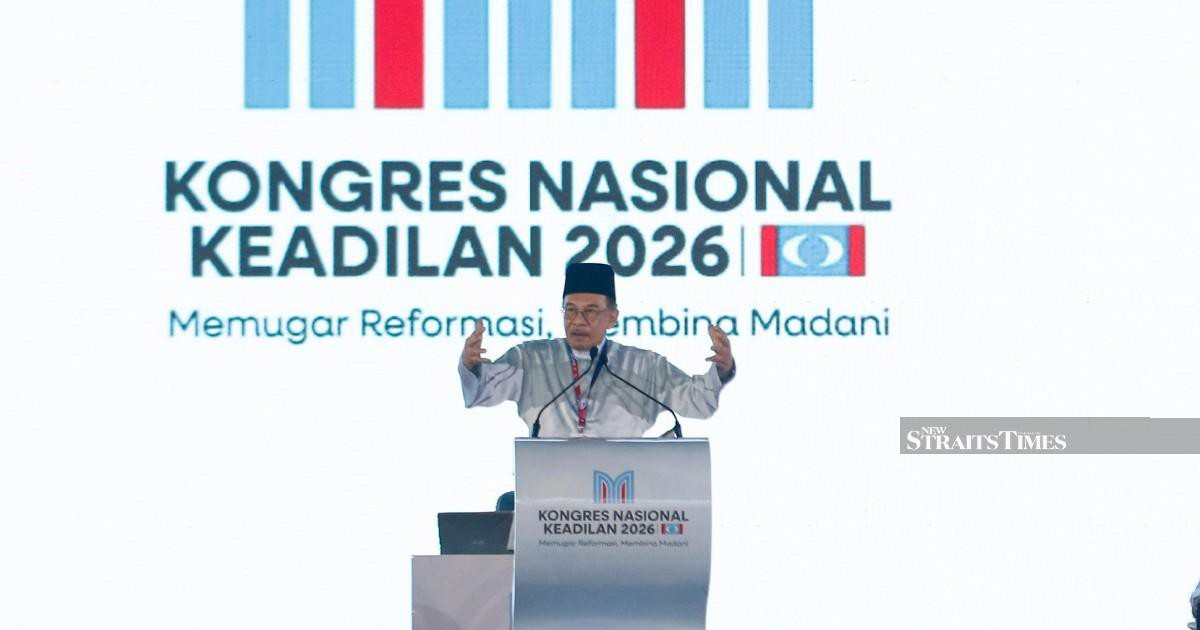
Prime Minister Datuk Seri Anwar Ibrahim unveiled a landmark decision at Ayer Keroh today: his administration intends to dismantle the Universities and University Colleges Act 1971 (Act 30), a legislative pillar that has governed Malaysian public tertiary institutions for more than half a century. The announcement signals a fundamental reimagining of how the government approaches higher education policy and the relationship between the state and its universities.
The 1971 Act has long served as the constitutional framework binding Malaysia's network of public universities, establishing their operating parameters, governance structures, and the extent of academic and administrative autonomy they may exercise. By proposing its repeal, the government appears intent on modernising legislative mechanisms that many analysts argue have become outdated in addressing contemporary challenges facing the sector, including internationalisation, research competitiveness, and institutional flexibility.
Under the current Act, public universities operate within constraints that have historically limited their independent decision-making authority. The legislation contains provisions that enable government oversight of institutional operations, personnel appointments, and financial management. For decades, academics and university administrators have voiced concerns that these regulatory mechanisms impede institutional innovation and reduce Malaysian universities' ability to compete effectively on the global stage. Removing this legislative straightjacket could potentially unlock greater operational latitude for Malaysia's tertiary institutions.
The timing of this announcement reflects broader policy priorities outlined by the Anwar administration since assuming office. The government has consistently signalled its intention to strengthen Malaysia's education ecosystem as a cornerstone of economic competitiveness and social development. Higher education reform has featured prominently in this vision, with particular emphasis on enhancing research output, attracting international academic talent, and positioning Malaysian universities as regional knowledge hubs capable of rivalling institutions across the Asia-Pacific.
The proposed abolition carries significant implications for Malaysia's position within the regional higher education landscape. Neighbouring countries including Singapore and Thailand have undertaken substantial reforms to grant their universities greater autonomy, resulting in measurable improvements in international university rankings and research impact metrics. Malaysia's persistent struggle to maintain university positions in global rankings has intensified pressure on policymakers to consider structural reforms that might level the competitive playing field.
However, the complete repeal of the Act raises complex questions that policymakers must carefully navigate. Removing the legislative framework entirely necessitates replacement mechanisms to govern institutional accountability, financial stewardship, and public interest protection. Universities receiving substantial government funding require transparent governance structures and performance frameworks ensuring public resources are deployed efficiently and responsibly. The government will need to articulate clearly how universities will remain answerable to taxpayers whilst enjoying increased operational independence.
The announcement also carries implications for university governance models. Public universities currently operate under centralised management structures reflecting the Act's regulatory philosophy. Greater autonomy could potentially enable institutions to experiment with alternative governance arrangements, including different board compositions, decision-making processes, and resource allocation mechanisms. These changes might attract experienced professionals from private sector and international backgrounds to university leadership roles, potentially infusing management expertise from diverse sectors.
Academic freedom represents another dimension deserving careful consideration. Universities function most effectively when scholars and researchers enjoy substantial latitude in intellectual pursuits without excessive bureaucratic interference. The current Act contains provisions that some have interpreted as limiting institutional independence in curriculum development and research direction. Repealing the legislation might create space for universities to exercise greater control over academic matters, though new legislative frameworks will need explicit protections for academic freedom regardless.
From a student perspective, changes to university governance might eventually translate into improved educational experiences. Greater institutional autonomy could enable universities to update curricula more rapidly in response to labour market demands, establish partnerships with international institutions more expeditiously, and implement innovative teaching methodologies without navigating lengthy approval hierarchies. However, transitional periods often create uncertainty, and students may initially experience disruption as institutions adapt to new governance arrangements.
The Malaysian higher education sector encompasses numerous institutions beyond public universities, including private universities and technical institutions, which operate under different legislative frameworks. Any comprehensive overhaul should consider how these various segments interact and complement one another. Establishing coherent policy frameworks across the entire higher education ecosystem rather than addressing public universities in isolation would strengthen overall sectoral development.
International benchmark comparisons suggest that successful university systems balance autonomy with accountability through contractual arrangements specifying performance expectations rather than detailed regulatory prescription. Malaysia might explore this approach, wherein government negotiates multi-year agreements with individual universities establishing performance targets whilst granting substantial operational freedom regarding how institutions achieve these objectives. This model has proven effective in countries including the United Kingdom and Australia.
The practical implementation of Act 30's abolition will likely require extensive consultation with stakeholders including university administrators, academic staff, students, employers, and international partners. Developing replacement legislation or governance frameworks will demand technical expertise and philosophical clarity regarding the government's vision for Malaysian higher education. This process, whilst potentially lengthy, offers opportunities for broad-based input ensuring resulting frameworks reflect diverse perspectives and institutional needs.
As Malaysia positions itself for future economic challenges requiring innovation, research capacity, and skilled human capital, the higher education sector's effectiveness becomes increasingly critical. Dismantling legislative structures that many perceive as constraining institutional development signals government commitment to systemic reform. However, successful transformation depends less on legislative abolition than on the quality of alternative frameworks implemented subsequently, making careful planning and stakeholder engagement essential to realising the potential benefits of this significant policy shift.

