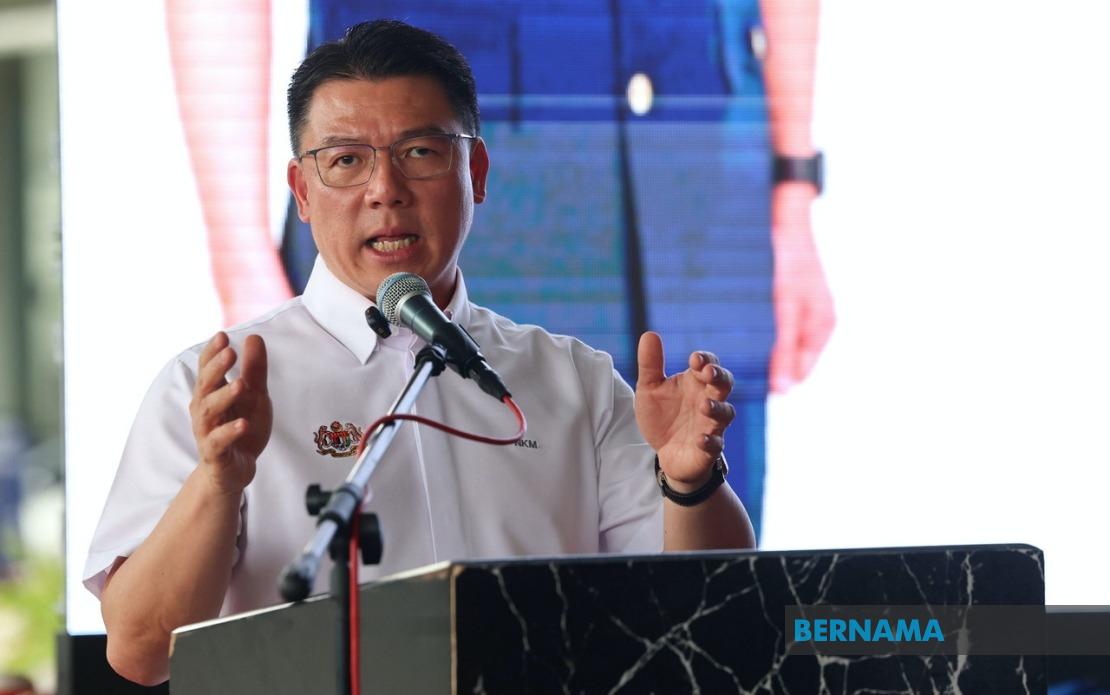
Malaysia has set its sights on Japan's proven waste management systems as a blueprint for transforming the nation's approach to environmental sustainability and building a genuinely circular economy. Housing and Local Government Minister Nga Kor Ming outlined the initiative during a recent meeting with Japanese Ambassador to Malaysia Noriyuki Shikata, emphasising that Japan's experience in waste reduction and material recovery offers a compelling model that Malaysian policymakers can adapt to local contexts.
At the core of Japan's waste management success lies a deceptively simple but culturally embedded practice: source separation. By sorting waste at the point of generation—whether at home, in offices, or at commercial establishments—Japan has created a system where recyclable materials are preserved in their highest-value state, making downstream processing more efficient and economically viable. This approach contrasts sharply with many Southeast Asian nations, including Malaysia, where mixed waste streams create contamination problems that significantly reduce recycling rates and recovery value. Nga highlighted that Japan's cleanliness culture and disciplined approach to waste categorisation represent lessons that Malaysia must learn not through regulatory pressure alone, but through education and cultural reinforcement beginning in childhood.
The Minister's statement underscores a critical insight often overlooked in Malaysia's waste management debate: behavioural change must precede infrastructure development. While Malaysia has invested in sorting facilities and recycling technologies, success ultimately depends on whether households and businesses genuinely separate waste at source. Japan's achievement demonstrates that when waste separation becomes habitual and socially normalised—rather than an inconvenient compliance requirement—diversion rates from landfills can reach levels far exceeding those currently achieved in Malaysia. Nga emphasised that policymakers must reframe waste separation not as a burden imposed through enforcement, but as a natural extension of good citizenship and environmental stewardship.
To formalise this knowledge transfer, Malaysia and Japan have developed a Memorandum of Understanding, approved by Malaysia's Cabinet in July, that will establish a structured framework for bilateral cooperation. This agreement promises to facilitate the exchange not only of best practices and operational know-how, but also of advanced technologies that could modernise Malaysia's waste processing infrastructure. Japanese firms specialise in innovations ranging from automated sorting systems that employ artificial intelligence to thermal treatment facilities that generate energy from non-recyclable waste streams, technologies that Malaysia's emerging circular economy sector could benefit from importing or licensing.
Malaysia's preparatory groundwork for this engagement reflects strategic planning at the national level. The government has already launched the National Circular Economy Blueprint, a comprehensive policy document outlining the transition from a linear take-make-dispose model toward one where materials cycle continuously through the economy. Complementing this blueprint, the establishment of the National Circular Economy Council provides institutional infrastructure for coordinating efforts across government agencies, private enterprises, and civil society. These domestic initiatives create receptive conditions for integrating international best practices from partners like Japan.
At the consumer level, Malaysia has introduced incremental but meaningful reforms aimed at reducing waste at source. Regulations now require shopping malls to incorporate recycling facilities as a licensing condition, acknowledging that consumer choice and convenience directly influence participation rates. Simultaneously, the government continues its ongoing campaign to phase out single-use plastic bags, a symbolic but substantive step that challenges consumers to modify purchasing and carrying habits. These measures, while modest individually, collectively signal governmental commitment and begin shifting public expectations around waste management responsibilities.
The proposed cooperation extends beyond waste management into broader sustainability domains. Japanese Ambassador Shikata extended an invitation for Malaysian delegations to participate in GREEN×EXPO 2027 in Yokohama, a significant international showcase for environmental innovations and sustainable urban development. Such exposure would allow Malaysian government officials, environmental entrepreneurs, and civil society representatives to observe cutting-edge waste technologies, smart city solutions, and green infrastructure in practice. For Malaysia's emerging circular economy sector, this represents valuable networking and benchmarking opportunities alongside access to proven technologies ready for regional deployment.
From a regional Southeast Asian perspective, Malaysia's engagement with Japan on waste management carries implications beyond its borders. As one of the region's more developed economies, Malaysia often serves as a reference point for neighbouring countries considering their own environmental transitions. Should the Malaysia-Japan cooperation produce measurable improvements in waste diversion rates, recycling quality, and consumer participation, the model becomes replicable across ASEAN. This positions Malaysia not merely as a recipient of Japanese expertise, but potentially as a hub for adapting and disseminating circular economy practices tailored to Southeast Asian contexts and constraints.
The underlying economic case for this partnership also merits emphasis. Japan's waste management sector generates significant export revenue through technology and service provision, while Malaysia's growing middle class and urbanisation create expanding demand for sophisticated waste handling solutions. By establishing cooperative frameworks now, both countries position themselves advantageously as regional markets increasingly recognise that linear consumption patterns are economically and environmentally unsustainable. Companies from both nations stand to benefit from technology transfer and market access, creating commercial incentives that reinforce governmental commitment to the bilateral initiative.
Looking forward, the success of this cooperation will likely hinge on whether Malaysia can translate imported technology and foreign policy frameworks into authentic cultural change around waste and consumption. Japan achieved its waste management success not overnight, but through decades of patient policy implementation, public education, and gradual normalisation of waste separation practices. Malaysia's challenge involves compressing this timeline while respecting local socioeconomic contexts, urban design realities, and consumer behaviours that differ from Japan's. The MoU and subsequent knowledge exchanges represent necessary first steps, but realising the circular economy vision will demand sustained commitment across government administrations, private sector participation in infrastructure development, and grassroots engagement with communities whose daily habits ultimately determine whether waste becomes a resource or remains a liability.

