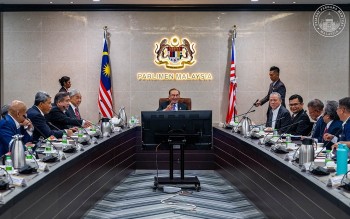
Prime Minister Datuk Seri Anwar Ibrahim has signalled the government's commitment to addressing cost burdens facing Malaysia's manufacturers as they grapple with ongoing disruptions in global supply chains. In a directive issued following a Monday meeting of the National Economic Action Council, which Anwar chairs, the premier has tasked both the Ministry of Investment, Trade and Industry (MITI) and the Ministry of Economy with intensifying outreach to industry operators to develop tailored interventions that can alleviate mounting pressures while fortifying the country's manufacturing competitiveness.
The government's heightened focus on the manufacturing sector reflects broader concerns about the fragility of Malaysia's industrial ecosystem in the face of external shocks. Anwar, who serves concurrently as finance minister, underscored that the council's deliberations prioritised strengthening resilience across the sector. This two-pronged approach—acknowledging industry grievances while mobilising government agencies to craft practical responses—demonstrates an understanding that Malaysia's manufacturing base requires active policy support to navigate the current uncertain global environment.
The plastics industry has emerged as a particular flashpoint in these discussions, commanding special attention from policymakers. This focus is hardly incidental; the sector functions as a linchpin supporting some of Malaysia's most economically vital industries. Food packaging, electrical and electronics (E&E) manufacturing, automotive production, and medical devices all depend substantially on plastic inputs and components. When disruptions ripple through the plastics supply chain, the knock-on effects cascade across these interconnected sectors, potentially undermining export competitiveness and domestic production capacity.
Economy Minister Akmal Nasrullah Mohd Nasir provided quantitative context during a public briefing, revealing that the plastics industry generated RM62.69 billion in sales value in 2025, a decline from RM64.78 billion recorded in 2024. This contraction, though modest in percentage terms, signals weakening demand and mounting cost challenges that industry participants are struggling to absorb. The breakdown of market composition shows that packaging applications represent the largest segment at 45 per cent of sales, while the E&E sector accounts for a further 29 per cent. Together, these two sectors demonstrate the outsized role that the plastics industry plays in supporting Malaysia's high-value manufacturing exports.
The cascading nature of supply chain disruptions means that stress in the plastics sector threatens to propagate throughout Malaysia's broader industrial apparatus. Beyond the headline sectors of food packaging and E&E, ripple effects would extend to automotive manufacturing, medical device production, construction materials, agricultural inputs, and the manufactured export base more generally. For a country dependent on manufacturing exports as a cornerstone of economic growth and employment, such interconnectedness transforms what might appear as a sectoral issue into a matter of macroeconomic consequence.
The government's engagement strategy signals recognition that market forces alone may be insufficient to stabilise conditions without policy intervention. By directing MITI and the Economy Ministry to conduct deeper consultations with industry stakeholders, Anwar's administration is creating space for collaborative problem-solving that can yield context-specific solutions. Such engagement serves multiple purposes: it gathers detailed information about where cost pressures are most acute, identifies bottlenecks in supply chains, and builds consensus around interventions that enjoy industry buy-in.
The timing of this policy emphasis is significant given Malaysia's broader economic positioning. The country competes internationally as a manufacturing hub, attracting foreign direct investment in capital-intensive sectors. Any deterioration in operational conditions—whether through rising input costs, supply disruptions, or regulatory uncertainty—risks pushing investors to consider alternative locations or consolidating operations. Proactive government engagement aimed at easing cost pressures thus serves as both a stabilisation measure for existing producers and a signal to potential investors that Malaysia remains committed to maintaining a supportive business environment.
The Council's review process itself reflects a structured approach to economic governance. By elevating supply chain resilience to the level of the National Economic Action Council, the government has ensured that this issue receives ministerial attention and cross-agency coordination. This institutional architecture should facilitate information-sharing between MITI, which handles investment and trade policy, and the Economy Ministry, which oversees broader economic management. Such coordination capacity becomes essential when addressing problems that traverse multiple policy domains simultaneously.
For Malaysian manufacturers themselves, the government's stated commitment offers some reassurance that their concerns are being heard at the highest levels. However, the substantive impact will depend on what solutions ultimately emerge from the promised engagements. Potential interventions might range from temporary tariff adjustments or import duty waivers to targeted financing schemes, infrastructure investments to ease logistical bottlenecks, or regulatory streamlining to reduce operational friction. The specific menu of options will likely emerge only after MITI and the Economy Ministry have completed their consultations with industry representatives.
The broader context of this initiative reflects Malaysia's evolving approach to economic management in an increasingly volatile global environment. Rather than pursuing rigid, one-size-fits-all policies, the government appears to favour more responsive, consultative approaches that acknowledge sectoral specificities. This pragmatism acknowledges that manufacturing is not a monolithic sector, and that different subsectors face distinct challenges requiring tailored responses. The plastics industry's role as a linchpin supporting multiple downstream industries makes it a logical focal point for initial intervention, potentially offering multiplier effects across the broader manufacturing ecosystem.
As global supply chain pressures persist, Malaysia's willingness to engage systematically with its manufacturing base may prove consequential for maintaining industrial competitiveness. The next phase will involve translating the government's stated commitment into concrete policy measures that demonstrably ease the burden on producers while preserving the sector's long-term viability. The success of this approach will likely set the tone for how Malaysia manages future industrial policy challenges in an era when supply chain resilience has become a central preoccupation for governments and businesses alike.

