The Malaysian government has reaffirmed its commitment to sustaining comprehensive subsidy and assistance programmes for its citizens even as petroleum product subsidies balloon to almost RM40 billion annually, driven by geopolitical tensions in West Asia. Deputy Finance Minister Liew Chin Tong delivered this reassurance during a parliamentary session, responding to concerns that the massive fuel subsidy burden might force cutbacks in other welfare provisions including cash transfers and school assistance.
The escalating cost of petroleum subsidies reflects the vulnerability of Malaysian households to global oil price shocks. The West Asia conflict has exerted upward pressure on international crude oil prices throughout 2024, with prices reaching approximately RM5 per litre during the peak crisis period in March and April. Without government intervention through subsidies, Malaysian consumers would have faced dramatic increases at the petrol pump, with serious consequences for household budgets, transportation costs, and general economic activity across all sectors.
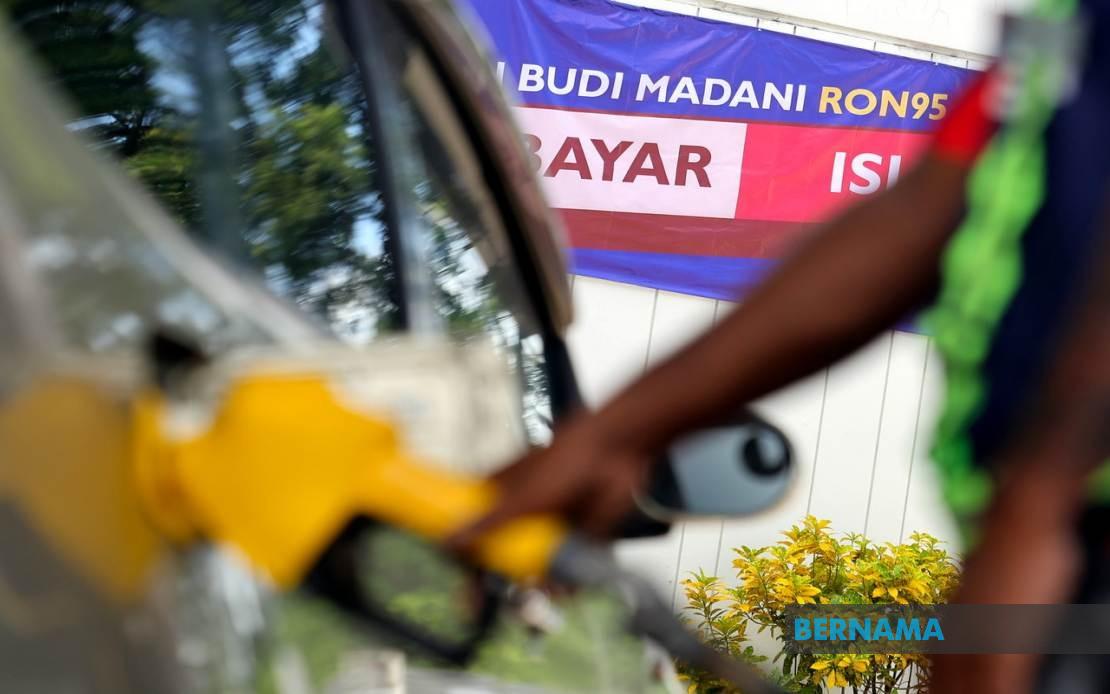
At the heart of the government's strategy to manage this dual challenge—protecting consumers while controlling fiscal exposure—sits the BUDI MADANI RON95 programme, which was introduced in September 2023. This initiative caps the price of RON95 petrol at RM1.99 per litre through a fixed-price mechanism coupled with consumption quotas. The structure ensures that ordinary Malaysians purchasing standard fuel pay a predictable amount regardless of international market turbulence, creating a buffer against external economic shocks.
Liew emphasised that the BUDI95 scheme has proven its worth during periods of maximum international volatility. When crude prices spiked during the March and April conflict escalation, local consumers remained insulated from these movements, continuing to pay RM1.99 per litre whilst international benchmarks soared. This represents a direct government expenditure—the difference between the fixed domestic price and the actual import cost—that contributes substantially to the annual subsidy bill. Yet Liew framed this spending as a strategic investment in social stability and economic resilience rather than an unsustainable burden.
Beyond fuel price controls, the government operates multiple direct assistance schemes targeting vulnerable populations. The Sumbangan Tunai Rahmah (STR) and Sumbangan Asas Rahmah (SARA) programmes provide cash transfers to qualifying households, whilst school assistance schemes support educational access. These programmes collectively represent government's broader commitment to shielding ordinary Malaysians from the cumulative effects of inflation and external economic pressures. The parliamentary question from Mohd Sany Hamzan, representing the Hulu Langat constituency, reflected legitimate public concern that such assistance might face reduction in the face of mounting subsidy costs.
The decision to maintain rather than trim existing aid demonstrates a policy priority that prioritises immediate citizen welfare over narrower fiscal consolidation measures. This approach carries both political and economic logic. Politically, abrupt reductions in subsidies or cash assistance would generate public discontent and electoral consequences, particularly as parliamentary elections approach. Economically, sustaining purchasing power among lower and middle-income households supports domestic consumption, which anchors economic growth when external conditions prove uncertain.
However, the sustainability question remains embedded in Malaysia's medium-term fiscal trajectory. An annual petroleum subsidy bill approaching RM40 billion represents approximately 10 to 12 percent of total government expenditure, a significant allocation that crowds out alternative investments in infrastructure, healthcare, and education. The government faces an ongoing tension between short-term affordability for citizens and long-term fiscal health. Regional peers face similar dilemmas; Indonesia's subsidy burdens have periodically forced painful reforms, whilst Vietnam has implemented more gradual fuel price adjustment mechanisms.
Liew highlighted a distinctive Malaysian advantage: the assured supply of petroleum products at stable prices maintains economic continuity that other nations cannot always guarantee. He noted that Malaysian motorists can still count on fuel availability and predictable costs, enabling reliable transportation and business planning in ways that communities facing price volatility or supply uncertainty cannot match. This framing positions the subsidy not primarily as a drain but as a competitive advantage that supports Malaysia's operational efficiency and attractiveness as an investment destination.
The government's stance also reflects confidence in Malaysia's medium-term revenue prospects. As an energy exporter, Petronas' petroleum earnings provide fiscal resources that help offset domestic subsidies. However, these revenues depend on global price levels; should crude prices moderate, subsidy costs would naturally decline, reducing the fiscal strain. Conversely, fresh Middle Eastern tensions could push prices higher, intensifying the subsidy burden. This exposure to external factors underscores the structural challenge facing oil-exporting nations attempting to balance domestic price controls with fiscal sustainability.
For Malaysian citizens and businesses, the commitment to maintained subsidies and assistance provides near-term relief and planning certainty. Households can expect stable fuel prices and continued welfare transfers; employers can forecast labour and transportation costs with greater confidence. This predictability matters particularly for small and medium enterprises that operate on tight margins and benefit disproportionately from price stability in fuel and transport.
Looking forward, the sustainability of this dual commitment—maintaining full subsidies whilst preserving fiscal space for other priorities—will depend substantially on international oil price trajectories and Malaysia's ability to manage expenditure growth across the broader government budget. Policymakers may face difficult choices if geopolitical instability proves protracted or spreads, pushing crude prices toward structural new highs. At present, however, the government's messaging prioritises immediate citizen protection, reflecting both electoral pressures and genuine concern for household affordability during a period of global economic uncertainty.

