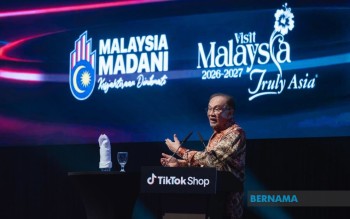
Malaysia's government will implement stricter scrutiny of foreign investment applications to guarantee tangible benefits for the domestic economy, Prime Minister Datuk Seri Anwar Ibrahim announced during the TikTok Shop Summit 2026 in Kuala Lumpur. The announcement reflects growing concern within the Ministry of Investment, Trade and Industry (MITI) about a proliferation of foreign-owned operations that exploit Malaysia's geographic and trade advantages while contributing little to local employment or economic growth.
Anwar revealed that MITI had flagged the emergence of several companies using warehouse and transit facilities solely for logistical purposes, without generating employment opportunities or contributing meaningfully to Malaysia's economy. These operations, he suggested, represent a distortion of Malaysia's position as an open, trade-friendly nation. The government has already halted certain activities deemed unbeneficial, but Anwar stressed that a comprehensive review mechanism for incoming investment proposals is now essential to prevent similar patterns from emerging among new entrants to the Malaysian market.
The announcement gained particular significance given the context of rapid e-commerce expansion in Southeast Asia. When pressed during the summit by a TikTok Shop participant about the flood of inexpensive imported goods from platforms such as Temu and Pinduoduo, Anwar acknowledged the challenge of balancing Malaysia's free-trade commitments with the need to protect local businesses from unfair competition. He characterised the aggressive pricing strategies employed by these platforms as a form of market dumping, designed to rapidly capture market share at the expense of established local retailers and manufacturers.
A particularly troubling trend identified by the Prime Minister involves foreign operators registering shell companies under ostensibly local business names while importing entire product ranges. Anwar cited the example of entities registering as coffee shops or traditional retail businesses but sourcing all merchandise from overseas suppliers. This practice, he noted, delivers zero benefit to Malaysian communities or local enterprises, while simultaneously misleading consumers about the origin and nature of products they purchase. Such operations exploit regulatory gaps by creating the appearance of domestic business ownership without any corresponding local economic activity.
Port Klang emerged as a specific focal point in Anwar's concerns about warehouse-based foreign investment. Major overseas investors, he explained, have established warehousing operations at the port without any obligation or intention to employ Malaysian workers or source Malaysian products. These facilities function purely as transshipment and distribution hubs for imported goods destined for Southeast Asian markets, bypassing opportunities to stimulate local employment or support Malaysian suppliers. The absence of linkages to the domestic labour market or domestic supply chains renders such operations economically hollow from Malaysia's perspective, despite their use of Malaysian infrastructure.
The government's response has already begun to take tangible form. Anwar indicated that enforcement agencies have initiated action against problematic operations, though he emphasised that this reactive approach must be supplemented by more rigorous preventive screening of new applications. The challenge lies in distinguishing between legitimate foreign investment that creates genuine economic multipliers within Malaysia and opportunistic operators seeking merely to exploit the country's strategic location and trade networks.
This policy direction reflects broader regional anxieties about the uneven impact of digital commerce and e-commerce platforms across Southeast Asia. Countries including Vietnam, Thailand, and Indonesia have similarly grappled with the influx of ultra-cheap imported goods that undercut local retailers and manufacturers. Malaysia's approach, however, extends beyond tariffs or import restrictions to focus on the foreign direct investment structures that enable such competition. By tightening scrutiny of investment applications and enforcement against operations failing to create local value, Anwar's government seeks to ensure that Malaysia's openness to international commerce translates into tangible benefits for Malaysian workers and businesses.
The timing of Anwar's remarks at the TikTok Shop Summit reflects an important nuance: the government is not seeking to shut down e-commerce or digital platforms, but rather to ensure that operators within Malaysia adhere to standards benefiting the local economy. This distinction matters for Malaysia's competitiveness in attracting legitimate digital commerce investment while deterring exploitative operations. TikTok Shop and similar platforms can contribute to Malaysia's digital economy if structured to generate employment and support local sellers, but they become problematic when they function merely as import pipelines for foreign merchandise.
Enforcement and prevention strategies will require cooperation between MITI, the Ministry of Domestic Trade and Consumer Affairs, customs authorities, and labour regulators. The interconnected nature of these operations—involving foreign ownership structures, import-export licensing, employment practices, and consumer protection—necessitates a whole-of-government approach. Anwar's public commitment to reviewing investment applicants signals that cabinet-level attention now focuses on closing loopholes that have allowed value-extractive foreign operations to proliferate.
For Malaysian small and medium enterprises already struggling against online competition from low-cost importers, the government's tougher stance on investment screening offers modest reassurance. However, the effectiveness of such measures depends on consistent enforcement and on avoiding regulatory approaches that inadvertently deter legitimate foreign investment in manufacturing, technology, or other sectors generating substantial local employment. Malaysia must thread a narrow needle between protecting domestic businesses and maintaining its attractiveness as a regional investment destination.

