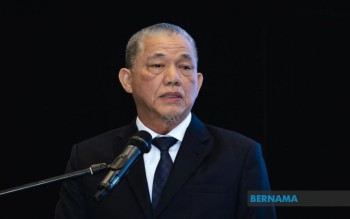
Malaysia's government has unveiled an ambitious strategy to breathe new economic life into retiring coal-fired power stations by transforming them into renewable energy and battery storage facilities, according to Deputy Prime Minister Datuk Seri Fadillah Yusof. Speaking at the World Economic Forum's closing ceremony for its "Malaysia's Energy Future: Power Sector Decarbonisation Deep Dive" event in Kuala Lumpur on July 2, the Energy Transition and Water Transformation Minister revealed the proposed National Coal Site Repurposing Framework designed to convert these aging installations into engines of clean energy innovation and sustainable investment.
Rather than viewing coal plant retirements as a loss of productive infrastructure, policymakers are framing the transition as an opportunity to harness decades of accumulated industrial assets for the renewable energy era. The nation's existing coal fleet encompasses more than merely combustion units—these sites feature intricate transmission networks, established industrial infrastructure, and land parcels strategically positioned across the country. By preserving and repurposing these locational and physical assets, Malaysia can avoid the economic disruption and stranded investment that typically accompanies sudden industrial closures. The framework underscores a growing recognition within Southeast Asia that energy transition planning must account for the downstream effects on communities, workers, and the broader economic ecosystems surrounding energy infrastructure.
Fadillah emphasised that selected coal plant locations possess exceptional potential for conversion into multi-purpose clean energy zones. Beyond simple renewable energy generation facilities, these sites could house battery energy storage systems—critical infrastructure for stabilising grid frequency as Malaysia increases its reliance on intermittent solar and wind generation. The minister framed this repurposing as a mechanism to sustain local economic activity while simultaneously advancing national decarbonisation targets. This dual objective is particularly significant for coal-dependent regions, where sudden industry contraction without accompanying economic diversification could trigger unemployment and reduced municipal revenue.
The proposed framework emerged from collaborative analysis detailed in the World Economic Forum's insight paper titled "Beyond Coal: Building a Flexible, Resilient and Clean Power System for Malaysia," which provided the intellectual foundation for government engagement. The initiative intends to establish structured mechanisms for ongoing dialogue among multiple stakeholders—national authorities, regulatory bodies, utility operators, private investors, and resident communities. This multi-stakeholder model reflects lessons learned from energy transitions in other jurisdictions, where effective change requires not top-down mandates but rather negotiated agreements acknowledging diverse interests and concerns.
Each decommissioned power station, Fadillah explained, represents far more than an industrial closure. These transitions create openings for new industrial ecosystems, opportunities to attract domestic and foreign capital seeking to participate in Malaysia's clean energy expansion, and platforms for workforce retraining initiatives. The government recognises that successful energy transformation requires preparing the labour force for emerging sectors—from renewable installation and maintenance to battery technology and smart grid management. This workforce development dimension reflects understanding that energy policy ultimately affects millions of Malaysians whose livelihoods depend on employment within the energy sector and related industries.
Malaysia's commitment to accelerated renewable deployment is underscored by firm policy targets: no new coal-fired power plants will be constructed, the nation will transition away from coal-generated electricity by 2044, and renewable energy installations must reach seventy percent of total capacity by 2050. These aspirational goals require not merely policy announcements but coordinated investments across generation, transmission, and distribution infrastructure. The repurposing framework serves as a practical mechanism for achieving these ambitions without requiring entirely new sites and new grid connections—a significant advantage given the lengthy permitting processes and community consultation requirements for greenfield projects.
Crucially, Fadillah warned that renewable deployment must accelerate ahead of coal retirement to avoid a counterproductive outcome: simply replacing coal dependence with increased reliance on imported liquefied natural gas. This concern reflects a sophisticated understanding of energy security vulnerabilities. Should renewable capacity expand too slowly, Malaysia would become trapped in a transition trap where coal retirements force increased LNG imports, thereby substituting one external dependence for another. This scenario exposes the nation to international fuel price fluctuations and geopolitical disruptions in liquefied natural gas supply chains—vulnerabilities particularly acute for Southeast Asian importers competing with larger regional economies. A genuinely successful energy transition, Fadillah stressed, must reduce Malaysia's overall external fuel dependence rather than merely shifting it between different imported energy sources.
To facilitate this accelerated renewable transition, the Ministry of Energy Transition and Water Transformation is prioritising multiple complementary initiatives. Large-scale solar deployment projects are expanding across the country, while the Corporate Renewable Energy Supply Scheme encourages major industrial and commercial consumers to directly procure renewable energy from private producers. Battery energy storage systems are being deployed to address intermittency challenges, and smart grid modernisation efforts will enable more sophisticated management of distributed generation from thousands of rooftop solar installations. This multi-pronged approach recognises that successful energy transition requires simultaneous progress across multiple technology platforms rather than reliance on any single solution.
Regional cooperation through the ASEAN Power Grid initiative also features prominently in Malaysia's clean energy strategy. By expanding cross-border electricity trade mechanisms, the Association of Southeast Asian Nations can enhance collective energy security while facilitating greater renewable energy integration across the region. This approach acknowledges that renewable generation resources are unevenly distributed across Southeast Asia—some nations possess superior solar resources, others have abundant hydroelectric potential. Coordinated trading arrangements allow countries to balance complementary generation profiles while reducing the need for each nation to maintain expensive backup capacity. For Malaysia specifically, participation in regional electricity markets provides options for integrating variable renewable generation while supporting neighbours' energy transition objectives.
Looking beyond the coal-to-renewables transition, Fadillah indicated Malaysia remains open to advanced nuclear technologies and small modular reactors as long-term decarbonisation options. This measured approach acknowledges that achieving net-zero emissions targets may require diverse energy sources beyond renewables alone. However, the government is setting appropriately stringent prerequisites: robust safety frameworks, comprehensive regulatory structures, and genuine public confidence must precede any nuclear deployment. This cautious stance reflects regional sensitivities regarding nuclear power, as well as the substantial institutional capacity required to manage advanced nuclear facilities safely. The emphasis on prerequisite conditions rather than immediate nuclear deployment demonstrates that while nuclear remains under consideration, renewable energy expansion represents the nearer-term priority.
The National Coal Site Repurposing Framework represents a sophisticated policy response to energy transition challenges facing Malaysia and the broader Southeast Asian region. Rather than accepting coal plant retirements as inevitable economic losses, the government is actively repositioning these assets to support clean energy infrastructure development. This approach simultaneously addresses multiple policy objectives: facilitating decarbonisation, maintaining local economic vitality, managing workforce transitions, and avoiding counterproductive dependencies on imported liquefied natural gas. As Malaysia navigates the complex technical, economic, and social dimensions of energy transformation, the repurposing framework demonstrates growing policy maturity in recognising that energy transitions succeed when they create opportunity alongside change.

