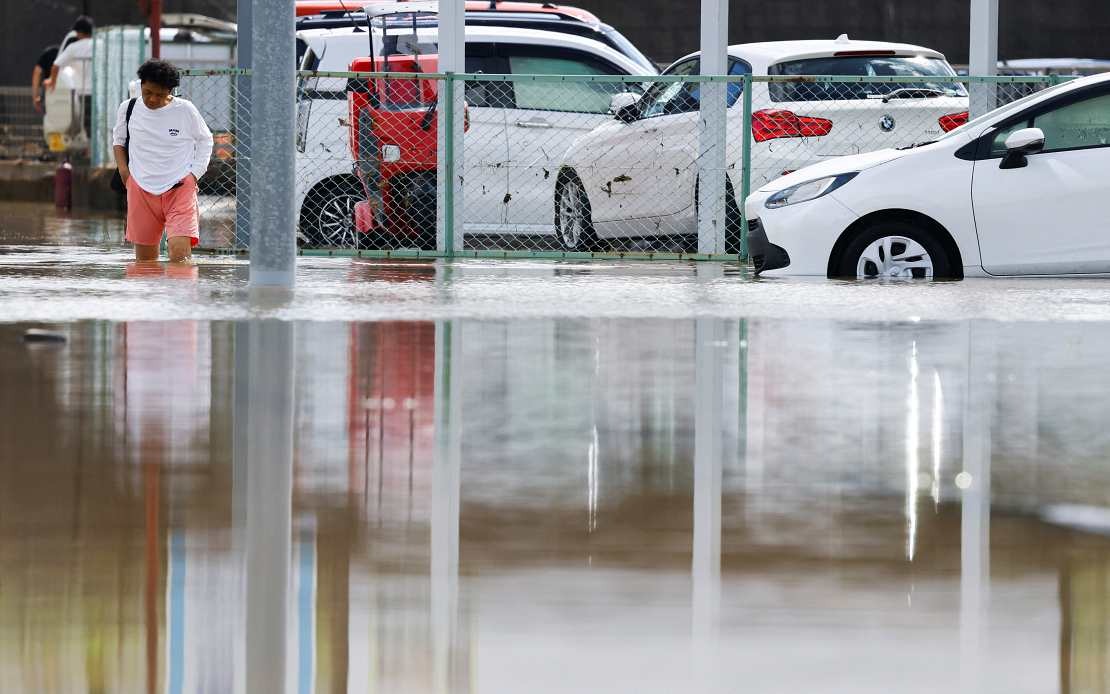
The Malaysian Embassy in Tokyo has issued a formal advisory cautioning all Malaysian nationals residing in or visiting Japan to minimise unnecessary travel and maintain heightened awareness as catastrophic flooding grips the Kanto region, particularly Chiba Prefecture. The unprecedented deluge has triggered widespread disruption to critical transport infrastructure and left thousands of people immobilised in the affected areas, prompting authorities across multiple prefectures to activate emergency response protocols.
Transport networks throughout the region have suffered devastating damage, with both road and railway systems incapacitated or severely compromised by floodwaters. The disruption has cascading effects across the eastern Japanese transport network, trapping approximately 7,000 passengers at Narita International Airport, one of Asia's busiest aviation hubs. Many stranded travellers have been forced to spend nights at the airport as transport operators struggle to restore services and clear access routes to the facility.
The toll from the flooding has been severe, with at least eight confirmed fatalities reported by Kyodo News as the torrential rainfall continues to pummel the region. The Japan Meteorological Agency took the exceptional step of issuing its highest alert status—Level 5 rain warning—across more than one-third of Chiba Prefecture's municipalities adjacent to Tokyo. This maximum alert level represents the most critical precipitation risk classification in Japan's weather warning system and signals imminent or occurring catastrophic conditions.
Local government authorities have responded by implementing mass evacuation directives, with more than 400,000 residents ordered to leave their homes at the peak of the emergency. These evacuation orders reflect the severity of flood risk to populated areas, as swollen rivers threaten to breach containment and inundate residential neighbourhoods. The sheer scale of displacement demonstrates the magnitude of the natural disaster unfolding across densely populated regions of the Kanto metropolitan area.
For Malaysian citizens caught in the affected zones, the embassy has provided explicit guidance to prioritise personal safety by avoiding flooded regions and low-lying terrain susceptible to flash flooding. The directive emphasises the importance of maintaining vigilance and staying informed about rapidly evolving conditions through official Japanese weather services and local government announcements. Malaysians are urged to subscribe to emergency alerts and evacuation notifications issued by prefectural and municipal authorities to ensure timely awareness of danger.
The embassy has directed nationals to monitor updates from the Japan Meteorological Agency through its official English-language portal at www.jma.go.jp/jma/indexe.html, which provides real-time weather warnings, precipitation forecasts, and storm surge information. This resource proves invaluable for foreign residents attempting to distinguish between routine weather alerts and critical danger warnings that necessitate immediate protective action.
For Malaysians requiring immediate consular assistance or facing emergency situations, the embassy has established dedicated contact channels. During standard business hours, nationals can reach the Embassy of Malaysia in Tokyo via telephone at +81-3-3476-3840. An emergency hotline operating outside regular office hours is available at +81-70-1471-9756, ensuring round-the-clock access to consular support during crisis situations. Email communication is also available through two dedicated addresses: [email protected] and [email protected].
The flooding in Chiba Prefecture represents a significant reminder of the climate vulnerabilities affecting Japan's densely populated regions, where intense precipitation events pose escalating risks to urban infrastructure and public safety. Malaysia's sizeable expatriate community in the Tokyo metropolitan area—encompassing business professionals, students, and their families—faces particular exposure to transport disruptions and displacement during such environmental emergencies.
The incident underscores the importance of Malaysian workers and residents in Japan maintaining comprehensive understanding of local disaster response systems and maintaining emergency preparedness measures. Many Malaysian expatriates may lack familiarity with Japan's distinctive warning hierarchies, evacuation procedures, and emergency communication protocols, making embassy guidance particularly crucial during crisis periods.
Regional implications extend beyond Malaysia's immediate expatriate community, as the flooding disrupts supply chains, transport corridors, and economic activities affecting broader Southeast Asian commercial interests in Japan. Narita Airport's partial incapacitation creates bottlenecks for goods and passenger movements across Asia-Pacific logistics networks, potentially affecting Malaysian traders and manufacturers reliant on rapid cargo transit through Japanese ports.
The flooding also illustrates the growing climate resilience challenges confronting East Asian economies, with extreme precipitation events becoming increasingly frequent across Japan. Malaysia and other Southeast Asian nations face similar climate-driven flood risks in their own densely populated lowland areas, making Japan's emergency response—both failures and successes—instructive for regional disaster management planning.

