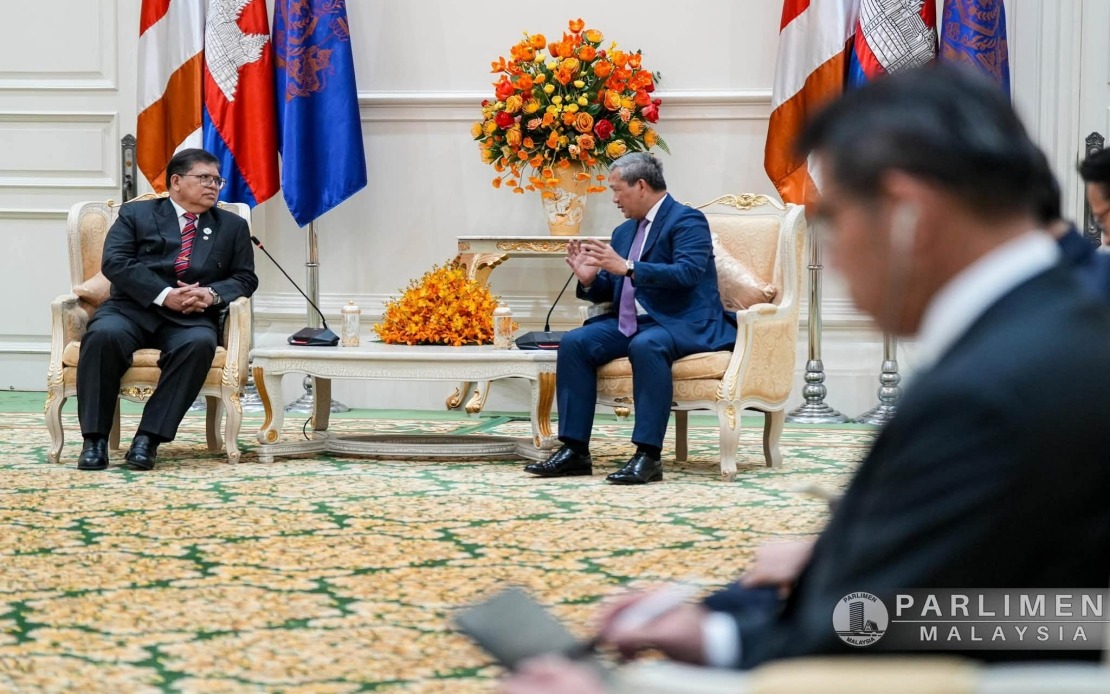
Malaysia has called for sustained diplomatic engagement to address the ongoing border tensions between Cambodia and Thailand, with parliament's top official warning that unresolved bilateral disputes threaten the foundational unity of ASEAN. Dewan Rakyat Speaker Tan Sri Johari Abdul made these remarks following his meeting with Cambodian Prime Minister Hun Manet during the Second Inter-Parliamentary Speakers' Conference in Phnom Penh this week, signalling Kuala Lumpur's commitment to playing a stabilising role in managing regional flashpoints.
Johari's emphasis on dialogue reflects Malaysia's broader diplomatic philosophy within Southeast Asia's premier multilateral forum. By framing the border issue not merely as a bilateral problem but as a challenge to ASEAN's collective identity, the speaker underscored how uncontrolled conflicts between member states can erode the consensus-based decision-making model that has underpinned the grouping for nearly six decades. This positioning is particularly significant given Malaysia's historical role as a mediator in regional disputes and its stake in maintaining the institutional integrity of ASEAN.
The Cambodia-Thailand border dispute remains one of Southeast Asia's most persistent territorial issues, punctuated by military skirmishes and competing sovereignty claims over disputed areas. The situation has periodically destabilised the region, affecting border communities and drawing unwanted international attention to ASEAN's ability to manage its own affairs. Malaysia's intervention, though carefully couched in diplomatic language, suggests growing concern among ASEAN capitals that the current escalation requires coordinated pressure to bring both nations back to negotiating positions.
During the parliamentary conference, Johari stressed Malaysia's willingness to facilitate negotiations and encourage both Cambodia and Thailand to pursue peaceful resolution mechanisms. His acknowledgement of Cambodia's legitimate concerns regarding the impact on border residents demonstrates an understanding that while diplomatic solutions must be prioritised, they cannot ignore the humanitarian dimensions of territorial disputes. This balanced approach reflects how middle-power diplomacy often operates in Southeast Asia—acknowledging all parties' grievances while emphasising shared regional interests.
Beyond the border issue, the bilateral discussions between Malaysian and Cambodian leadership encompassed a substantially broader agenda. Both delegations explored pathways for deepening parliamentary cooperation, a domain where Malaysia sees particular opportunity for institutional learning and democratic capacity-building. This diversification of engagement is strategically important, as it prevents the relationship from becoming defined solely by Malaysia's role as mediator in external disputes while building robust people-to-people and institutional linkages.
Youth engagement emerged as a particular focus area for expanded Malaysia-Cambodia cooperation. Both nations recognised that younger generations must develop personal and professional networks across borders to sustain long-term regional integration. Exchange programmes and joint initiatives in education and skills development serve dual purposes: they reduce stereotyping and misunderstanding while addressing the chronic skills gaps that limit development in Southeast Asia. Malaysia's experience with technical and vocational training positions it as a potential model for Cambodian institutions seeking to upgrade their capacity.
The Technical and Vocational Education and Training sector represents a concrete arena where bilateral partnership can generate tangible benefits for both economies. By facilitating skills exchanges and industry collaboration, Malaysia and Cambodia can create pathways for workers to move between economies while building human capital that serves broader regional integration objectives. This focus on TVET also aligns with ASEAN's collective agenda around human capital development and the digital economy transition that requires substantially upgraded technical capabilities across member states.
Economic cooperation featured prominently in Johari's account of the bilateral discussions, with Malaysia expressing appreciation for Cambodia's regulatory environment supporting Malaysian business operations. This commercial dimension is essential context for understanding Malaysia's diplomatic investment in Cambodian stability. When border conflicts escalate, they disrupt supply chains, increase operational costs, and create uncertainty that discourages business expansion. By promoting peaceful resolution, Malaysia simultaneously protects its commercial interests while contributing to regional stabilisation.
The conference venue in Phnom Penh itself carried symbolic weight, as parliamentary diplomacy offers a distinct channel for dialogue that sometimes operates more flexibly than formal government-to-government channels. Inter-parliamentary forums can explore creative solutions and build personal relationships among influential political figures in ways that complement and sometimes facilitate official diplomatic negotiations. Johari's participation placed Malaysia in a position to influence both Cambodian and Thai representatives present at the conference, reinforcing constructive messaging from multiple angles.
Looking forward, Malaysia's approach suggests a recognition that ASEAN's durability depends on member states actively investing in preventing disputes from metastasising into crises. This requires consistent messaging from respected voices within the bloc, regular high-level dialogue, and demonstrated commitment to supporting peaceful resolution mechanisms. The emphasis on dialogue does not minimise the complexity of the Cambodia-Thailand issues, but rather reflects a conviction that military or coercive approaches have repeatedly failed and that patient diplomatic engagement remains the only viable path toward lasting settlement.

