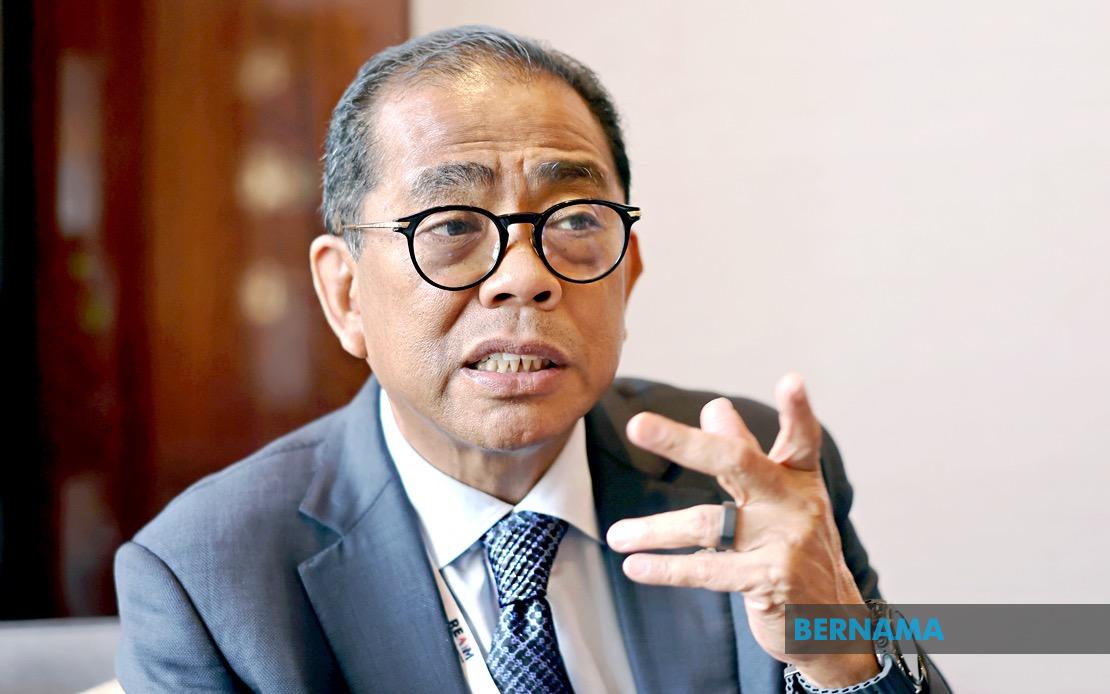
Malaysia and Vietnam have reaffirmed their commitment to expanding defence cooperation across multiple operational domains, marking a significant step in cementing bilateral security relations at the ministerial level. Defence Minister Datuk Seri Mohamed Khaled Nordin underscored this dedication following substantive talks with Vietnamese Minister of National Defence Gen Phan Van Giang, conversations that took place as part of Mohamed Khaled's two-day official visit to Hanoi. The renewal of this commitment builds upon the foundational Memorandum of Understanding on Defence Cooperation signed between the nations in November 2023, demonstrating continuity in strategic defence engagement.
The bilateral dialogue encompassed an expansive range of security cooperation initiatives that extend well beyond traditional military matters. Among the priority areas discussed were coordination of military training exercises, protocols for sharing sensitive intelligence, enhanced maritime domain awareness capabilities, and joint submarine rescue operations protocols. The two ministers also explored emerging domains of defence collaboration, particularly artificial intelligence applications in military contexts and cooperative defence industry projects. These discussions reflect recognition by both countries that contemporary security challenges demand integrated responses spanning conventional military coordination alongside technological innovation and industrial partnership.
Mohamed Khaled proposed a significant institutional upgrade to the defence cooperation framework by advocating for a strengthened High-Level Committee mechanism. This structural enhancement would facilitate more systematic coordination of bilateral initiatives and ensure faster, more effective implementation of agreed-upon defence projects. Such institutional architecture becomes particularly important when cooperation spans as many operational areas as Malaysian-Vietnamese defence relations now encompass, as it provides clear lines of authority, communication channels, and accountability for various initiatives under active development.
The defence minister placed particular emphasis on addressing what are increasingly termed grey zone activities—security challenges that fall outside traditional warfare parameters but pose significant risks to regional stability. These include maritime militia operations, cyber incursions, and other non-kinetic threats that demand coordinated response frameworks between allied nations. By identifying grey zone activities as a specific cooperation priority, Malaysia and Vietnam are acknowledging a security environment in Southeast Asia that has become increasingly complex and multi-dimensional beyond conventional military-to-military threats.
Regional strategic dynamics featured prominently in the ministerial discussions, particularly the contentious issue of the South China Sea. Mohamed Khaled reiterated Malaysia's position that sustained peace and stability in the region must be underpinned by dialogue, diplomatic engagement, and adherence to established international legal frameworks. The Malaysian position supports the conclusion of an effective and meaningful Code of Conduct governing South China Sea activities, a framework that has been in protracted negotiation among ASEAN members and China. This cooperative stance reflects Malaysia's belief that multilateral mechanisms, rather than bilateral confrontation, offer the most sustainable pathway toward regional equilibrium.
Malaysia's broader regional vision emphasises the critical importance of ASEAN maintaining institutional unity, strategic autonomy in decision-making, and recognition of ASEAN's central role in maintaining peace and stability across Southeast Asia. These principles represent Malaysia's fundamental approach to regional security architecture and directly inform bilateral defence partnerships. By coordinating with Vietnam through this lens, Malaysia seeks to strengthen ASEAN's collective capacity to navigate geopolitical pressures while maintaining the association's independence from great power competition.
Mohamed Khaled's visit commenced with a courtesy call on Vietnamese Prime Minister Le Minh Hung, elevating the significance of the engagement beyond defence ministry level and signalling whole-of-government commitment to deepening bilateral relations. The conversation with the Prime Minister focused on technical cooperation coordination, including structured approaches to military officer training and professional development programmes. Maritime security strengthening emerged as another key discussion area, reflecting shared concerns about navigational safety, resource protection, and surveillance capabilities across disputed waters.
Both countries reaffirmed their dedication to the ASEAN Defence Ministers' Meeting and the expanded ADMM-Plus platform, which includes dialogue partners beyond ASEAN membership. These multilateral forums serve as critical mechanisms for maintaining ASEAN Centrality—the principle that ASEAN should remain the driving force in regional security architecture rather than external powers. By recommitting to these platforms, Malaysia and Vietnam are strengthening their collective role in preserving ASEAN's institutional relevance amid ongoing geopolitical shifts in the Indo-Pacific region.
Malaysia's Defence Ministry characterised the bilateral engagement as directly aligned with the National Defence Strategic Plan 2026-2030, specifically Core 6, which emphasises strengthening international defence relations to ensure national sovereignty. This strategic framing demonstrates how bilateral defence diplomacy serves broader national security objectives within an explicitly defined multi-year defence policy framework. The ministry further emphasised that this defence engagement supports the "Competent Partnership" pillar outlined in Malaysia's Defence White Paper, connecting bilateral cooperation to overarching defence policy architecture.
The implementation of bilateral defence initiatives through this upgraded cooperation framework carries implications extending beyond Malaysia-Vietnam relations to encompass broader Southeast Asian security architecture. Enhanced Malaysian-Vietnamese defence coordination contributes to ASEAN's collective capacity to address transnational security challenges including maritime piracy, human trafficking, and terrorism financing. Stronger institutional mechanisms between major regional players like Malaysia and Vietnam create demonstration effects encouraging similar cooperation upgrades among other ASEAN member states, thereby gradually building more integrated regional security frameworks.
From a Malaysian perspective, deepened ties with Vietnam serve multiple strategic objectives simultaneously. They strengthen bilateral relations with a significant regional power sharing maritime boundaries and security concerns, support ASEAN unity and institutional effectiveness, and demonstrate Malaysia's commitment to rules-based regional engagement. For Vietnam, the partnership reciprocally provides enhanced security cooperation with an influential ASEAN member while reinforcing broader regional coordination on South China Sea governance and great power management.
Looking forward, the upgraded cooperation framework between Malaysia and Vietnam is expected to generate concrete operational outcomes across the identified priority areas. Joint training exercises, intelligence-sharing protocols, and maritime awareness capabilities should gradually materialise throughout the remainder of this strategic plan cycle. The strengthened High-Level Committee will provide institutional mechanism for tracking progress and adjusting cooperation approaches based on operational experience. This evolving partnership demonstrates that despite competing geopolitical pressures, Southeast Asian nations continue investing in institutional mechanisms and bilateral relationships that support regional stability and collective defence interests.

