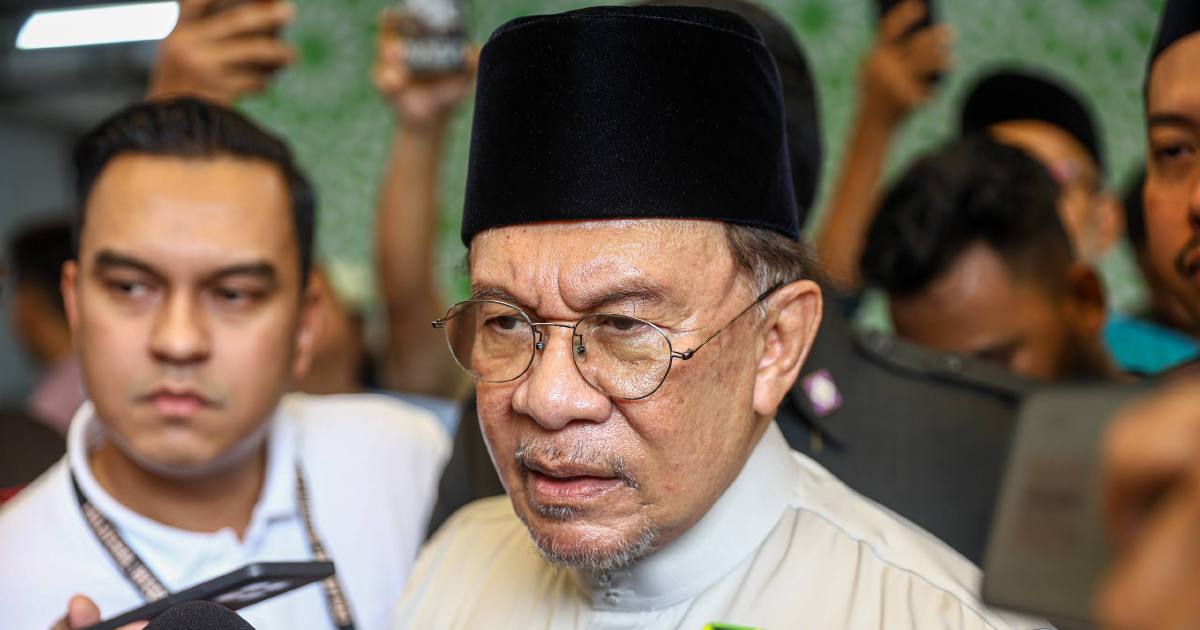
Prime Minister Datuk Seri Anwar Ibrahim has reaffirmed Malaysia's unwavering commitment to the legal case against fugitive businessman Low Taek Jho—commonly known as Jho Low—declaring that any potential presidential pardon granted by the United States would not sway the country's resolve to pursue justice and recover assets allegedly misappropriated during the massive 1Malaysia Development Berhad scandal.
The statement, delivered with characteristic firmness, signals that Kuala Lumpur views its domestic interests as distinct from Washington's legal decisions. Malaysia's investigation and prosecution efforts remain anchored in the nation's own legal framework and the evidence accumulated by Malaysian authorities, making external pardon decisions largely irrelevant to the country's position. This distinction is particularly significant given the international dimensions of the 1MDB case, which has implicated individuals and financial institutions across multiple jurisdictions.
Jho Low's prominence in Malaysian affairs stems from his alleged central role in orchestrating one of the world's largest financial fraud schemes. The businessman, who has maintained a low profile in recent years while reportedly residing in China, became synonymous with the 1MDB financial mismanagement that ultimately triggered Prime Minister Najib Razak's political downfall and shaped Malaysia's subsequent political landscape. The scale of alleged losses—running into billions of ringgit—has made recovery efforts a priority for successive Malaysian administrations.
The Prime Minister's remarks come amid broader speculation about potential shifts in US foreign policy, particularly regarding the treatment of fugitives and the possibility of clemency measures. Anwar's statement preemptively establishes that Malaysia will not regard such actions as diminishing the legitimacy of its own legal position or weakening its case. This approach reflects the principle that crimes prosecuted under Malaysian law warrant pursuit through Malaysian courts, irrespective of outcomes in other jurisdictions.
For Malaysian readers, this declaration carries practical implications extending beyond Jho Low himself. It reinforces the government's commitment to recovering assets that remain crucial to national finances and public accountability. The 1MDB debacle scarred Malaysia's international reputation and domestic trust in institutions, making visible progress on asset recovery both symbolically and financially important to restoring confidence in governance and the rule of law.
The statement also reflects the complexities of international criminal justice and asset recovery. When alleged perpetrators operate across borders and accumulate wealth in multiple countries, pursuing them requires coordination among nations and persistence despite setbacks in any single jurisdiction. Malaysia's position essentially guarantees that even if Jho Low were pardoned in the US, allowing him to move freely within American territory, he would remain subject to Malaysian warrants and international arrest mechanisms in countries that maintain extradition treaties with Malaysia.
From a Southeast Asian perspective, the Malaysian government's stance demonstrates that regional nations take seriously their obligations to pursue financial crimes originating within their borders. The 1MDB case became a textbook example of cross-border financial manipulation, money laundering, and corruption. Malaysia's refusal to abandon its legal claims despite external pressures or developments sends a signal to other nations in the region that asset recovery efforts remain viable and that sovereign governments will not defer entirely to decisions made in foreign capitals.
Anwar's comments also underscore the distinction between criminal prosecution and asset recovery mechanisms. Even if criminal charges in the US were somehow resolved through a pardon, the question of what should become of assets allegedly stolen from Malaysia remains separate. Much of the property, financial accounts, and luxury goods linked to the 1MDB scandal are scattered across jurisdictions including the United States, Singapore, and others. Recovery efforts typically operate alongside criminal cases and may continue even after criminal proceedings conclude.
The political dimensions merit consideration as well. For Anwar's administration, maintaining a tough posture on Jho Low recovery efforts aligns with his government's broader narrative of combating corruption and restoring institutional credibility. The previous Najib administration's apparent tolerance of the 1MDB situation proved politically catastrophic, and Anwar's coalition has benefited from positioning itself as committed to accountability and reform. Public statements reaffirming that commitment serve both principled and political purposes.
International observers have noted that the United States has frozen and seized significant assets allegedly connected to 1MDB, and American courts and prosecutors have pursued aspects of the case independently. Any US pardon would primarily affect individuals' legal exposure within American borders, not their status in other countries or the fate of assets held under foreign legal claims. Malaysia's position, therefore, rests on solid legal footing—a country need not defer to another nation's pardon decisions regarding individuals accused of crimes in its own jurisdiction.
For Malaysian businesses and investors concerned about the nation's investment climate and governance standards, the government's stance provides reassurance that corruption cases will not simply disappear due to external factors. International investors increasingly consider rule-of-law indicators when making decisions about capital allocation, and visible commitment to pursuing large-scale financial crimes signals institutional strength and judicial independence.
Moving forward, observers expect Malaysia to continue coordinating with international partners on asset recovery, leveraging bilateral agreements and multilateral frameworks designed to facilitate cross-border prosecution and financial restitution. The 1MDB case has become instructive globally, spawning initiatives aimed at improving transparency in high-value transactions and enhancing mechanisms to trace and recover illicit assets. Malaysia's refusal to abandon its position contributes to this broader international effort to strengthen financial accountability.
Anwar's statement ultimately conveys that Malaysia's pursuit of Jho Low and 1MDB-related assets constitutes a fundamental question of national justice and sovereignty, not a matter that external legal decisions can fully resolve. The country will continue pursuing its legitimate claims through whatever means remain available under international law and bilateral agreements, ensuring that the case does not fade into historical footnote but remains an active priority for Malaysian institutions.

