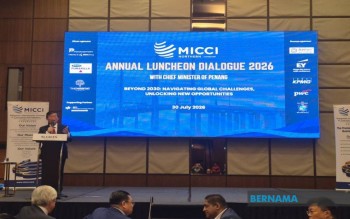
The Malaysian International Chamber of Commerce and Industry (MICCI) has issued a direct call to its business members to substantially increase their commitment to developing human capital and driving innovation, warning that those who fail to adapt to rapid technological change risk losing ground to more agile competitors. Speaking at the MICCI Northern Branch Annual Luncheon Dialogue 2026 in George Town on July 30, Datuk Brian Tan Guan Hooi, chairman of the chamber's Northern Branch, emphasised that the convergence of artificial intelligence, automation and digitalisation represents both an existential challenge and a wealth of untapped opportunities for Malaysian enterprises across all sectors.
The technological revolution sweeping through global industries is fundamentally redefining the nature of employment and skills requirements, Tan explained, creating a widening gap between what traditional education systems produce and what modern businesses actually need. Rather than simply eliminating jobs, these transformative forces are generating entirely new categories of high-value work while simultaneously rendering certain traditional roles obsolete or redundant. This dual dynamic means Malaysian companies must view workforce development not as a cost centre but as a strategic investment that directly determines their survival and growth prospects in the coming decade.
Tan stressed that businesses can no longer rely solely on academic qualifications when hiring and developing their workforce. While foundational knowledge remains important, companies must now prioritise building technical capabilities that enable employees to work effectively alongside AI systems and automated processes. Beyond technical skills, Tan highlighted the critical importance of cultivating creativity, strengthening communication abilities and fostering a genuine commitment to continuous learning within organisational culture. These softer skills become increasingly valuable as routine tasks become automated, shifting human work towards problem-solving, strategic thinking and innovation roles that machines cannot easily replicate.
The disconnect between educational outcomes and industry needs represents a systemic challenge that Malaysia shares with many Southeast Asian economies. Tan called for closer integration between education and training institutions and the private sector, ensuring that curricula evolve in real time to reflect changing market demands rather than lagging several years behind industry developments. Young Malaysians entering the workforce need exposure not just to technical knowledge but to practical experience navigating rapidly changing professional environments where adaptability becomes as important as expertise in any single domain.
Tan's remarks came during an event attended by Penang Chief Minister Chow Kon Yeow, underscoring the significant policy implications of these workforce challenges for state and federal governments. The presence of political leadership at the dialogue suggests growing recognition among Malaysian policymakers that human capital development is intrinsically linked to economic competitiveness and long-term growth prospects. States competing for foreign direct investment increasingly recognise that multinational corporations factor workforce quality and training ecosystems heavily into location decisions.
Beyond individual company actions, Tan advocated strongly for systemic collaboration between government and private sector stakeholders to construct a more robust ecosystem supporting business growth and innovation. He characterised this partnership as essential rather than optional, arguing that government's responsibility to establish appropriate policy frameworks and infrastructure must be matched by businesses investing capital, deploying operational expertise and creating employment opportunities. The traditional model of government directing business activity is increasingly insufficient in rapidly evolving technological landscapes where government cannot possibly anticipate all developments.
Continuous dialogue between industry representatives and policymakers emerged as a key priority in Tan's message, with regular engagement ensuring that government policies, investment in infrastructure and business support mechanisms remain aligned with actual commercial needs. Malaysia's position in global supply chains and its aspirations to become a higher-value-added economy both depend on such coordination. Without systematic communication channels, policies risk becoming disconnected from reality, potentially hindering rather than facilitating business adaptation to technological change.
The MICCI's institutional position makes it a natural vehicle for facilitating this crucial dialogue. As an organisation serving the Malaysian business community for 189 years since its establishment in 1837, MICCI possesses deep historical roots and extensive networks spanning multiple sectors and regions. Tan outlined the chamber's commitment to evolving this traditional bridging role, serving as a conduit through which industry insights flow to government and policy guidance flows back to the business community. This ongoing conversation creates feedback loops where practical problems identified by companies can inform policy adjustments, while government priorities can be communicated clearly to business leaders.
The broader context underpinning MICCI's call reflects genuine global anxiety among business leaders about technological disruption. Countries and regions that successfully manage workforce transition through innovation investment and skills development will capture economic opportunities and attract quality employment. Those that lag will face structural disadvantages, potentially experiencing brain drain as talented individuals migrate to more dynamic economies offering better opportunities. Malaysia's demographic advantages and relatively young population are assets, but only if Malaysian businesses and educational institutions move decisively to equip this workforce with genuinely contemporary skills.
The timing of this message carries particular weight as Malaysian businesses operate within increasingly competitive regional dynamics. Singapore, South Korea, Vietnam and other neighbours are investing heavily in similar areas, meaning Malaysian companies cannot afford complacency. The race for technological leadership and talent acquisition is intensifying across Southeast Asia, with early movers gaining substantial advantages in attracting investment and skilled workers. Companies that invest aggressively in innovation and talent development position themselves to participate in this regional competition from positions of strength rather than reactive disadvantage.
For policymakers, Tan's message translates into an urgent imperative to review vocational training systems, ensure adequate funding for STEM education, and create regulatory environments encouraging business investment in employee development. Tax incentives for research and development, lighter regulatory burdens on companies experimenting with new business models and improved access to venture capital for innovative startups all contribute to the enabling ecosystem Tan described. Malaysia's future economic trajectory increasingly depends on such systemic choices being made intelligently and executed with genuine commitment across government and business leadership.

