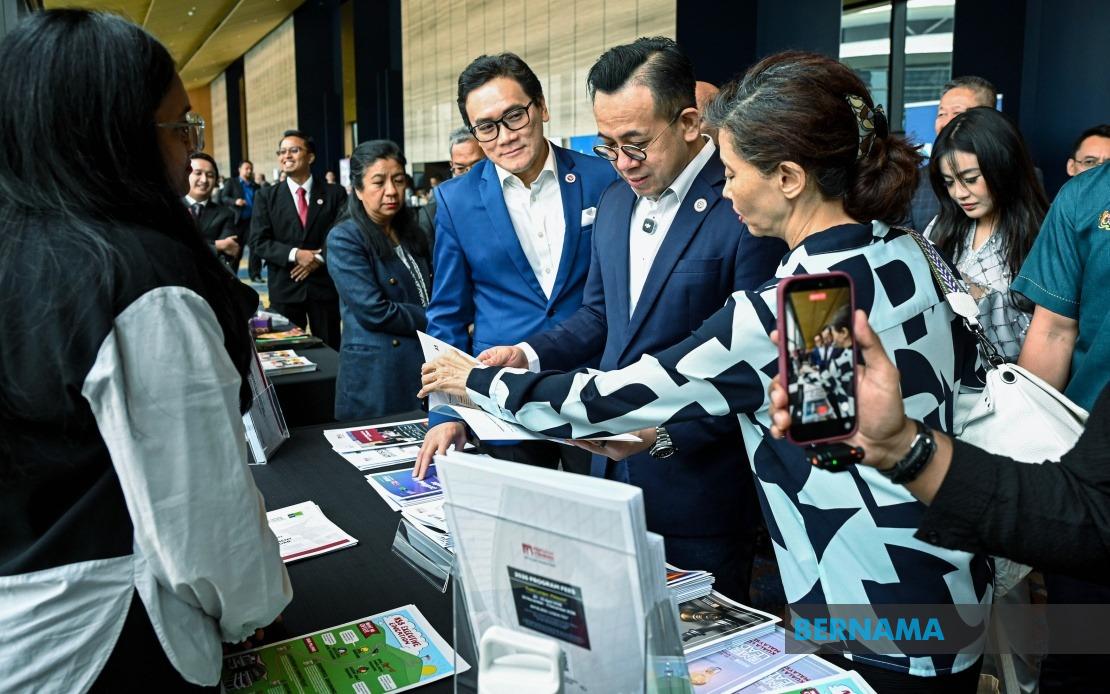
Entrepreneur and Cooperatives Development Minister Steven Sim has called for a fundamental reorientation of how Malaysian businesses approach global competition, urging local companies to anchor their strategies on value creation, genuine innovation, and uncompromising standards rather than competing primarily on cost. Speaking at the BrandQuest 2026 programme and National Mark of Malaysian Brand Appreciation Ceremony in Kuala Lumpur, Sim outlined a strategic framework that positions quality, health standards, and safety as the defining characteristics that should distinguish Malaysian products in increasingly crowded international markets.
The minister's remarks represent an acknowledgment that Malaysia's traditional competitive advantage—manufacturing goods at lower cost than developed nations—has become insufficient in a landscape where countries across Southeast Asia and beyond now offer similar labour cost advantages. By emphasizing value over price, Sim is signalling that the government believes Malaysia's future prosperity depends on moving up the value chain and establishing brands that command premium positioning based on genuine differentiation rather than undercutting competitors on price alone. This strategic pivot carries significant implications for how Malaysian manufacturers should invest in research and development, workforce skills, and quality control systems.
Central to Sim's vision is a conceptual shift encapsulated in the transition from "Made in Malaysia" to "Made by Malaysia". The distinction is meaningful: the former model describes a country functioning as a contract manufacturer for foreign companies, producing goods under licences or to specifications determined elsewhere. The latter envisions Malaysia as a source of original intellectual property, product design, and creative innovation. Under this framework, Malaysian entrepreneurs would develop concepts, engineer solutions, and bring products to market bearing the intellectual imprint of their creators. This transformation requires not just capital investment but a cultural shift in how businesses approach problem-solving and market development.
Sim's articulation of this ambition reflects broader concerns within policymaking circles about Malaysia's long-term competitiveness as manufacturing wages rise and automation reduces the labour cost advantage that has historically attracted investment. Countries that have successfully transitioned to higher-value economies—South Korea and Taiwan being prime examples—invested heavily in developing indigenous technological capabilities and building brands with global recognition. Malaysia's pathway forward likely requires similar commitments, though the starting points and sectoral opportunities differ considerably from those East Asian precedents.
The government has begun translating this strategic vision into concrete support mechanisms. The Entrepreneur and Cooperatives Development Ministry allocated RM230,000 to help approximately 40 micro, small, and medium enterprises (PMKS) obtain the National Mark of Malaysian Brand certification during 2025 and 2026. While this figure may appear modest, the certification itself serves as a quality signal to domestic and international buyers, helping participating companies differentiate their products and justify premium pricing. Sim indicated that the ministry would periodically reassess whether this allocation requires expansion, suggesting openness to scaling support as demand and results warrant.
Beyond brand certification, the ministry has deployed significantly larger financing mechanisms to enable broader business expansion. The Power Up 10K programme has distributed RM9 billion to approximately 250,000 entrepreneurs nationwide as of July, working toward a RM15 billion target for the year. This financing initiative addresses a fundamental constraint facing many Malaysian SMEs—access to affordable capital for growth investments. By channelling such substantial resources through targeted lending programmes, the government seeks to ensure that promising entrepreneurs are not constrained by financial limitations when pursuing expansion or innovation strategies.
The tangible recognition of business excellence also forms part of this strategic effort. The Malaysian Brand Heritage Award, presented at the same ceremony, acknowledged companies including Seasonings Specialties Sdn Bhd, Passive Fire Protection Sdn Bhd, Goodnite Sdn Bhd, Halagel (M) Sdn Bhd, and Sydney Cake House Sdn Bhd for their sustained commitment to quality and brand building. These awards serve multiple functions simultaneously: they provide public recognition that motivates participating companies, demonstrate viable business models to other entrepreneurs, and signal to consumers that certified Malaysian brands meet rigorous standards.
The economic logic underlying Sim's push is straightforward but consequential. As Malaysian manufacturing wages converge toward regional averages and labour-cost arbitrage narrows, competing primarily on price becomes increasingly untenable. Companies that successfully differentiate through superior design, reliability, environmental responsibility, or innovation can command higher margins and build more defensible market positions. For Malaysia's economy, a portfolio of businesses operating at higher value-added levels generates greater prosperity, higher employment quality, and more robust export revenues than an economy dependent on thin-margin contract manufacturing.
However, achieving this transition requires more than exhortation and financing programmes. It demands sustained investment in education systems that develop creative and technical capabilities, regulatory frameworks that protect intellectual property, and institutional support for the commercialization of research. Many Malaysian companies must also develop export marketing capabilities and build relationships with international distribution channels—competencies that differ markedly from contract manufacturing operations. These requirements suggest that the transition from "Made in Malaysia" to "Made by Malaysia" will unfold gradually across different sectors and company cohorts.
The initiative also reflects awareness that Malaysia's regional standing depends partly on demonstrating successful homegrown enterprises that compete globally on quality and innovation rather than cost alone. For ASEAN, having member states develop indigenous technological and brand capabilities strengthens the region's overall economic resilience and reduces dependence on supply chains controlled by non-regional powers. Successful Malaysian brands in regional and global markets contribute to a broader narrative of Southeast Asian economic dynamism and capability.
Sim's framing of his portfolio's mission—"to make Malaysian businesses great"—encapsulates an aspiration that extends beyond industrial policy into economic identity. The terminology and emphasis suggest officials view brand-building and innovation as central not merely to competitiveness but to how Malaysia positions itself economically and culturally. This perspective acknowledges that in contemporary global markets, perception, reputation, and brand association often matter as much as intrinsic product qualities in determining commercial success.

