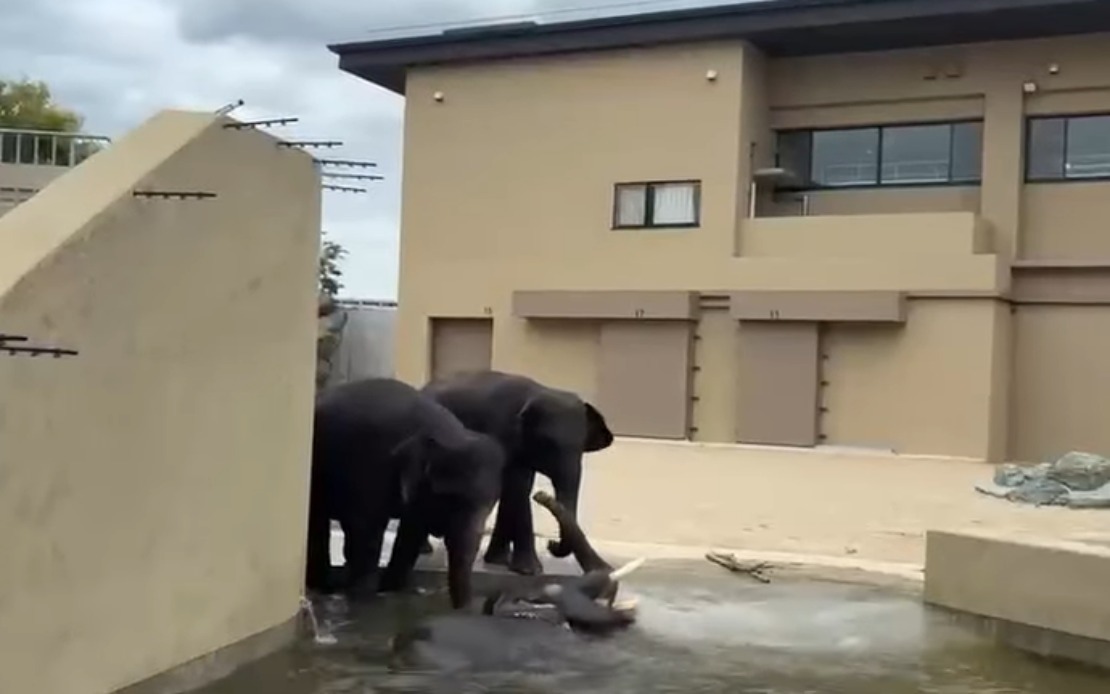
Three female elephants named Dara, Amoi and Kelat continue to demonstrate encouraging progress since relocating to Tennoji Zoo in Osaka, Japan, according to the latest health assessments received by Malaysia's Taiping Municipal Council. The animals have recorded substantial weight improvements across recent months, with Kelat achieving a particularly notable gain of 260 kilogrammes whilst her companions Dara and Amoi have added 35 kilogrammes and 30 kilogrammes respectively, indicating that the transition to their new environment has been successful from a physiological standpoint.
Taiping Municipal Council president Mohamed Akmal Dahalan issued a comprehensive statement detailing the current welfare status of the trio, emphasising that veterinary and nutritional standards at the Japanese facility meet the species' specific biological requirements. The clarification came as part of the council's ongoing commitment to transparency regarding the elephants, which departed from Zoo Taiping & Night Safari in Perak as part of a landmark international zoological exchange programme.
The elephants' daily dietary regimen has been meticulously structured by Tennoji Zoo's animal care specialists in consultation with veterinary professionals. Their feeding programme incorporates multiple sources of dietary fibre, primarily comprising various grades of hay supplemented with bamboo shoots and fresh grass, while leafy vegetables such as cabbage provide essential micronutrients. Additionally, the facility provides specially formulated elephant pellets developed to address the precise nutritional needs of Asian elephants in managed care settings.
This placement represents a significant development in regional wildlife management cooperation. The formal arrangement between Tennoji Zoo and Zoo Taiping & Night Safari, officially formalised through agreements signed in May and October of 2022, establishes a 25-year framework for collaboration. Such extended partnerships are increasingly recognised as valuable mechanisms for supporting elephant populations, particularly given the species' complex social and environmental needs that demand specialised expertise and resources.
The Taiping Municipal Council has established an ongoing monitoring regime conducted jointly with the Department of Wildlife and National Parks Peninsular Malaysia, ensuring that the elephants' health trajectories, behavioural patterns and living conditions remain subject to rigorous assessment. This bilateral oversight structure reflects Malaysia's commitment to maintaining international standards whilst preserving institutional accountability for the animals' welfare outcomes.
Official sources have acknowledged the legitimate interest Malaysian society has expressed regarding the elephants' relocation, recognising that public concern regarding animal welfare reflects broader conservation consciousness. However, Mohamed Akmal cautioned against circulating unverified claims about the programme, arguing that accurate information and professional assessment should anchor public discourse. The emphasis on factual accuracy stems from recognition that misinformation could potentially damage both regional wildlife initiatives and the collaborative relationships that enable such conservation work.
The strategic importance of cross-border zoological partnerships has grown substantially across Asia in recent years. Collaborative programmes allow institutions to pool expertise, genetic diversity and research capabilities whilst enabling animals to benefit from world-class veterinary and environmental management. Tennoji Zoo, established as one of Japan's major zoological facilities, operates under stringent animal welfare protocols consistent with international standards, though regional protocols do vary across jurisdictions.
Malaysia's role in such arrangements reflects the nation's broader positioning within Southeast Asian conservation efforts. As a megadiverse country harbouring significant elephant populations and managing complex wildlife interactions within increasingly urbanised landscapes, the nation's engagement with international zoos and research institutions serves multiple purposes including knowledge exchange, genetic conservation and public education about species preservation.
The council's stated intention to maintain full transparency and cooperate with investigative or informational requests from relevant authorities underscores an institutional desire to establish credibility for the programme. Such openness contrasts with historical instances across the region where animal welfare concerns have escalated due to limited information access, suggesting that proactive communication may serve both the animals' interests and public confidence more effectively.
Looking forward, the 25-year timeframe embedded within the cooperation agreement indicates expectations of sustained engagement and relationship development. This extended horizon allows for longitudinal health monitoring, potential breeding considerations and accumulated experience that can inform broader conservation strategies applicable to wild elephant populations. The arrangement also potentially creates platforms for scientific research and educational initiatives that might yield insights benefiting Asian elephant conservation more broadly.
For Malaysian observers, this arrangement represents a practical expression of commitments made under various international wildlife protection frameworks and demonstrates how diplomatic cooperation can advance conservation objectives. The elephants' documented physical progress provides early validation of the programme's execution, though animal welfare specialists note that longer-term assessments spanning years rather than months typically provide more conclusive evidence of genuine wellbeing in relocated populations.
The council's invitation for public engagement, combined with simultaneous insistence on evidence-based dialogue, reflects an attempt to balance democratic accountability with operational autonomy. This approach recognises that sustainable conservation initiatives increasingly require social licence from populations who view animal protection as reflecting broader values concerning humanity's relationship with wildlife.

