The rapid integration of artificial intelligence into recruitment practices has created a paradox for Malaysian employers: while AI-powered tools have streamlined hiring by processing applications faster and reducing administrative burden, they have simultaneously opened new avenues for deception that threaten the integrity of the hiring process. The Malaysian Employers Federation is sounding an alarm about this growing tension, calling on businesses to establish more rigorous safeguards that balance the efficiency gains of automation with the irreplaceable value of human judgment.
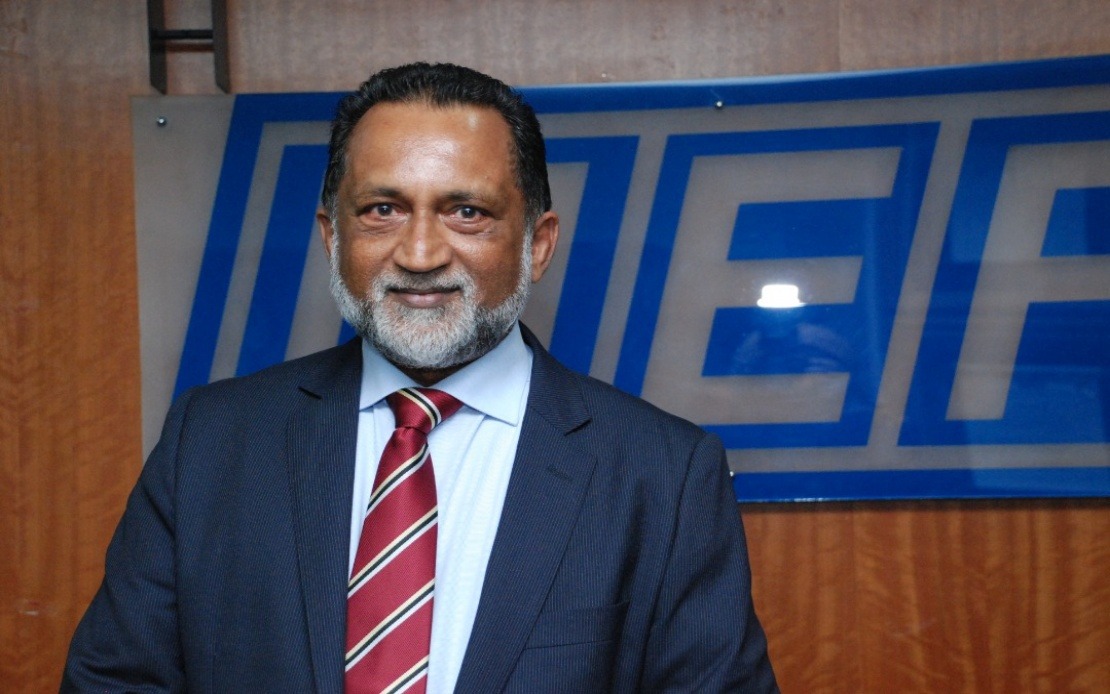
Datuk Dr Syed Hussein Syed Husman, president of the MEF, highlighted in recent comments that the same generative AI technologies enabling job seekers to craft more polished applications have made it substantially harder for recruiters to distinguish between genuine qualifications and carefully fabricated ones. The concern extends beyond simple resume embellishment—candidates can now use AI tools to produce flawless cover letters, tailor application materials with surgical precision, and create presentation materials that would have taken considerably more time and effort to produce manually. This technological levelling of the playing field has unintended consequences, making it increasingly difficult for hiring teams to assess true capability beneath a veneer of algorithmic perfection.
The scale of the problem became clearer when MEF referenced findings from the National Background Screening Risk Index, compiled by background screening specialist Venovox Sdn Bhd using data from approximately 300,000 screening cases across 20 industries. The index revealed that one in every seven job candidates screened carried discrepancies in their employment records, ranging from inaccurate job histories to forged qualifications and identity-related issues. These findings suggest that credential fraud is not an isolated phenomenon but rather a systemic challenge permeating Malaysia's recruitment landscape, and one that AI tools are likely making easier to perpetrate at scale.
Beyond falsified credentials, Dr Syed Hussein identified deepfake technology and digital identity manipulation as emerging threats that pose particular risks in an era when remote and hybrid work arrangements have become commonplace. Virtual interviews, once a convenience measure, now represent potential security vulnerabilities where candidates might deploy sophisticated impersonation techniques, manipulated video feeds, synthetic voice technology, or other forms of digital deception. For employers conducting interviews entirely through screens, without the subtle cues available in face-to-face interactions, the capacity to detect such manipulation diminishes substantially, raising fundamental questions about whether remote hiring can ever be entirely secure without additional verification layers.
The federation's core recommendation is deceptively simple in concept but demanding in execution: employers must treat AI as an aide to human decision-making rather than as a replacement for it. This principle directly challenges the trend toward automated screening systems that eliminate high percentages of applicants before any human reviewer examines their files. While such automation reduces hiring team workload, it also concentrates critical filtering decisions in algorithmic systems that cannot exercise contextual judgment, understand nuanced career trajectories, or recognize exceptional candidates whose applications might not match algorithmic templates. The MEF is essentially advocating for a recalibration toward a more labour-intensive but ultimately more reliable hiring methodology.
To operationalise this philosophy, the MEF has proposed a multi-layered verification approach that begins with more stringent identity confirmation procedures. Official identification documents should be validated through established processes, with live video interactions or in-person assessments substituted for purely digital evaluations when positions warrant the additional investment. For critical roles—particularly those involving financial management, sensitive information access, or positions of significant responsibility—this heightened diligence becomes not merely advisable but essential.
The federation also advocates moving beyond resume-based assessments, recommending instead multi-stage evaluation processes that directly test applicant capabilities. Technical tests, skills assessments, work samples, case studies, and competency-based interviews all serve to penetrate the varnish of well-crafted application materials and reveal what candidates can actually accomplish. Such assessments prove particularly valuable because they create friction—AI tools may generate convincing resume text, but they cannot perform live technical examinations or produce genuine work samples without human participation from the applicant.
Credential verification represents another critical component, requiring employers to systematically validate academic qualifications and employment histories rather than accepting them at face value. Reference checks, while sometimes perfunctory in practice, become meaningful when conducted with specific focus on dates of employment, job titles, responsibilities, and performance levels. Credential validation services that contact educational institutions directly to confirm degrees and qualifications offer another layer of verification, though Malaysian employers have historically underutilised such services due to cost and administrative overhead.
The MEF recognises that recruiters and hiring managers themselves require capability development to detect AI-mediated manipulation. Inconsistencies between application materials, interview performance, and demonstrated competencies often signal that something is amiss, but only if evaluators are actively looking for such patterns. This suggests a need for training programmes that equip hiring personnel to recognise red flags—answers that sound polished but lack specificity, work samples that seem inconsistent with claimed experience levels, or interview responses that feel rehearsed rather than authentic. Building this detection capacity across Malaysia's diverse employer base represents a substantial educational challenge that industry associations and human resources professionals must jointly address.
The broader implication of the MEF's guidance is that hiring integrity cannot be outsourced entirely to technology, and that the trend toward increasingly automated recruitment processes may be creating vulnerabilities that grow more serious rather than less so. As both sides of the hiring equation—employers and candidates—deploy increasingly sophisticated tools, the gap between authentic qualifications and technologically enhanced presentations widens. Employers who maintain robust human oversight and multi-stage verification processes will build recruitment functions more resistant to deception, while those who rely heavily on automated screening risk accepting candidates whose actual capabilities diverge significantly from their presented credentials.
For Malaysian businesses operating in competitive talent markets, the implementation of these safeguards represents an investment in hiring quality and organisational integrity. The cost of hiring a poorly qualified candidate, discovering this deficiency after employment commences, and subsequently managing performance issues or separation processes far exceeds the cost of more thorough initial verification. The MEF's warnings should prompt Malaysian employers to reconsider whether their current recruitment processes adequately protect against AI-enabled deception, and whether the efficiency gains from automation justify the potential risks to workforce quality and organisational trustworthiness.

