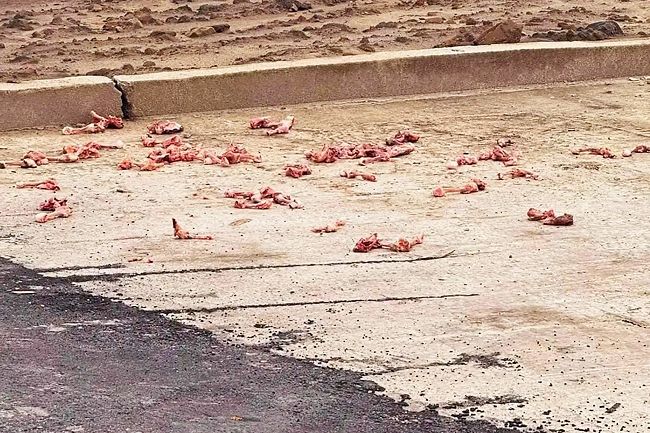
A Malaysian national has been penalised with a BN$300 compound fine by the Brunei-Muara District Office for disposing of food waste illegally in a public location. The enforcement action against Koh Tian Liang, formally issued on July 21, came after members of the public reported the incident and submitted supporting evidence that had circulated on social media platforms. This case underscores the growing vigilance among residents across Brunei in addressing environmental violations, and the authorities' responsiveness in acting swiftly when breaches are documented and brought to their attention.
The investigation determined that the individual had contravened Section 12(1)(a) of the Miscellaneous Act (Chapter 30) by discarding food waste at Ban 4, Kampong Muluat. The offence falls under provisions that specifically criminalise the unauthorised dumping or abandonment of refuse in areas accessible to the public. The Licensing and Enforcement Division of the District Office conducted the inquiry and concluded that sufficient grounds existed to issue the compound notice as a form of administrative penalty, allowing the matter to be resolved without full court proceedings.
The relatively modest fine amount reflects Brunei's tiered enforcement approach to environmental violations. For those who accept a compound notice, the financial burden is substantially reduced compared to the potential consequences of proceeding to court conviction. However, the authorities have made clear that those who choose to contest or ignore such notices face considerably steeper penalties. Under the Miscellaneous Act, individuals convicted in court may be ordered to pay fines reaching up to BN$9,000, while corporate entities could face penalties as high as BN$30,000. Beyond monetary sanctions, offenders may also receive custodial sentences of up to 12 months, or in some cases, both imprisonment and fines may be imposed together.
The incident gained traction on social media before authorities intervened, highlighting how digital platforms have become crucial conduits for environmental accountability in the region. Residents increasingly document violations and share them online, creating a form of community-based enforcement that complements official regulatory mechanisms. For Malaysian nationals working or residing in Brunei, this case serves as a stark reminder that environmental standards are enforced rigorously, and that social media visibility can accelerate official action. The precedent may also encourage greater civic participation across the sultanate, as residents recognise that their evidence and reports can drive meaningful consequences.
The Brunei-Muara District Office's public commendation of those who provided information signals an intentional strategy to foster collaborative environmental stewardship. By acknowledging and thanking informants, the authorities reinforce community participation and demonstrate that tip-offs genuinely lead to enforcement outcomes. This approach contrasts with purely reactive enforcement models and instead cultivates a culture where residents perceive themselves as active stakeholders in maintaining public hygiene standards. The timing and publicity of this enforcement action appear designed to deter similar behaviour and reinforce the message that food waste disposal standards are taken seriously.
Malaysian workers and residents in Brunei represent a significant portion of the sultanate's labour force, particularly in service sectors, construction, and domestic employment. Environmental compliance issues involving Malaysian nationals occasionally surface in Brunei's enforcement records, reflecting the scale of cross-border movement and the importance of ensuring migrant populations understand local regulations. Educational outreach targeting Malaysian communities about proper waste disposal practices could prevent future violations and reduce diplomatic friction arising from enforcement actions against Malaysian nationals. Consular awareness of such cases may also prompt advisory materials informing citizens about their legal obligations.
Food waste specifically presents environmental and public health concerns that extend beyond simple littering. Improperly disposed organic matter can attract pests, create odorous conditions in neighbourhoods, and potentially contaminate nearby areas. Kampong Muluat, where this particular incident occurred, is a residential area where such dumping would have direct impacts on residents' quality of life. The District Office's action thus addresses not merely a technical breach of regulations but a genuine nuisance affecting the community. The choice of a high-visibility compound fine rather than warnings suggests the authorities viewed the violation as sufficiently serious or potentially repeated to warrant immediate financial consequences.
The enforcement division's reference to WhatsApp reporting channels demonstrates how Brunei's regulatory authorities are adapting to modern communication preferences. By offering a digital, documented method for submitting complaints—complete with photographic and video evidence—the system reduces friction for citizens seeking to report violations. This infrastructure matters particularly for transnational cases involving Malaysian nationals, where language barriers or unfamiliarity with formal complaint procedures might otherwise inhibit reporting. The specificity of instructions requesting location details, images, and videos of both the incident and the offender enables enforcement teams to prioritise credible complaints and act decisively.
For Malaysian employers with workforce operations in Brunei, cases like this underscore the importance of workplace training and induction programmes that cover local legal requirements. Companies operating in the sultanate have potential liability or reputational exposure if their employees breach environmental laws, particularly when those breaches gain social media attention. Proactive education about waste disposal responsibilities can mitigate risks and reduce enforcement encounters. The incident also reflects broader Southeast Asian trends toward stricter environmental enforcement and public intolerance of violations—patterns affecting businesses and workers across the region.
The case of Koh Tian Liang ultimately illustrates the convergence of several modern enforcement phenomena: social media-driven accountability, rapid official response to documented violations, and escalating legal penalties for environmental breaches. For Malaysian nationals operating in Brunei, it serves as a practical warning that public spaces are monitored informally by residents and formally by authorities, and that violations—especially those captured digitally—will likely result in swift consequences. As Southeast Asian nations increasingly prioritise environmental governance, such enforcement actions are likely to become more frequent, making legal compliance essential rather than optional for cross-border workers and residents.

