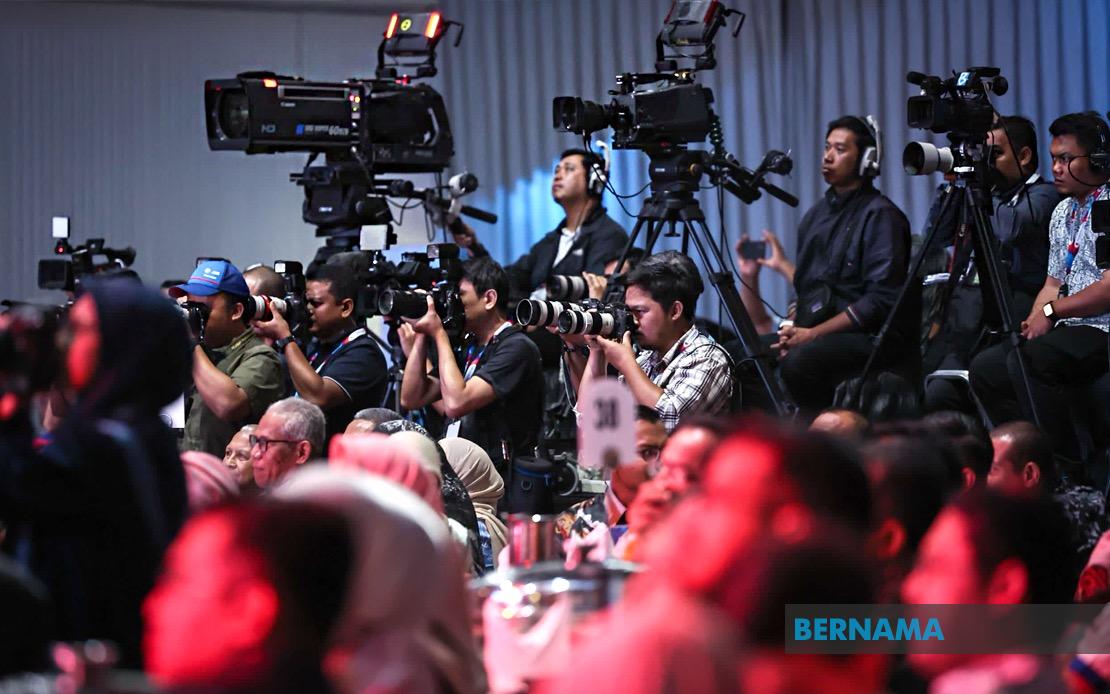
The Malaysian Media Council (MMM) has thrown its weight behind Prime Minister Datuk Seri Anwar Ibrahim's recent statement establishing a procedural requirement for complaints against journalists. Under the directive, grievances involving reporters and editorial staff from accredited media outlets must first pass through MMM's review process before any subsequent action is pursued. This move represents a significant affirmation of the Council's institutional role and signals a deliberate shift toward professionalised dispute resolution in Malaysia's increasingly complex media landscape.
MMM framed the Prime Minister's intervention as a decisive endorsement of independent media self-regulation, describing it as recognition that media freedom and accountability must advance together rather than in tension. The Council underscored that this approach aligns with its foundational mandate to strengthen journalism standards, promote ethical media practice, and establish transparent mechanisms for addressing industry-related concerns. By positioning itself as the appropriate first point of call for such complaints, MMM seeks to create a buffer zone between public grievances and the immediate involvement of law enforcement or legal proceedings.
Crucially, the Council clarified that its self-regulatory role operates within defined boundaries. MMM does not seek to supplant the authority of courts or police investigating genuine criminal matters or violations of Malaysian law. Rather, its jurisdiction focuses specifically on disputes concerning journalistic methodology, media ethics standards, reporting accuracy, and questions of fair treatment. This delineation proves essential for maintaining both press freedom and the rule of law, ensuring that editorial decisions remain insulated from automatic legal action while preserving accountability mechanisms when journalists genuinely transgress established norms.
The rationale underpinning this framework addresses a growing concern across Southeast Asia: that media outlets face arbitrary pressure, harassment, or legal weaponisation when powerful figures or institutions lodge complaints. By requiring an intermediate professional assessment, the system aims to filter out complaints driven by malice or political motivation from those reflecting genuine editorial failings. MMM emphasised that journalists operate within Malaysia's legal framework but deserve protection from punitive measures triggered solely by the act of complaint, without consideration of journalistic context, democratic function, or the media's responsibility to inform the public.
MMM's complaints mechanism operates through a tiered system designed to balance competing interests. When the public, organisations, government agencies, or affected parties file complaints, the Council's Secretariat first determines jurisdictional eligibility and whether the matter concerns genuine journalism or media practice. This preliminary stage functions as an important filter, preventing trivial or out-of-scope grievances from consuming institutional resources. Complaints deemed within purview may then be referred to the relevant media organisation for response, clarification, or corrective measures before advancing to formal Code of Conduct assessment.
This procedural architecture reflects international best practice in media self-regulation, comparable to systems operating in established democracies such as the United Kingdom, Canada, and Australia. Each tier provides opportunities for resolution at progressively more formal levels, allowing disputes to be settled through dialogue and professional engagement rather than escalating immediately to adversarial legal terrain. The Council stressed that this approach does not shield media organisations from legitimate accountability but instead ensures that scrutiny occurs through balanced, independent, and transparent processes grounded in journalistic principles rather than institutional power dynamics.
MMM's statement explicitly noted the Prime Minister's comments arose in response to Malaysia's World Press Freedom Index performance, a sensitive international metric that reflects both external perceptions and domestic realities regarding media independence. Malaysia's ranking has attracted diplomatic scrutiny and criticism from international press freedom advocates, creating diplomatic complications and undermining the nation's soft power aspirations. By establishing clearer protocols for complaint handling, the government signals commitment to addressing systematic concerns about arbitrary pressure on media outlets, potentially improving Malaysia's international standing while strengthening domestic media institutions.
The Council appealed to all stakeholders—government agencies, political actors, public institutions, and civil society—to utilise the formalised complaints mechanism rather than pursuing alternative channels outside professional frameworks. This plea targets a persistent pattern in Malaysian public discourse where disputes become weaponised through social media campaigns, political rhetoric, or threats designed to intimidate journalists rather than resolve substantive grievances. By channelling complaints through MMM, stakeholders access a structured, evidence-based process that allows their concerns legitimate hearing without descending into harassment or public pressure campaigns.
MMM emphasised that media freedom and media responsibility represent complementary rather than contradictory principles. This formulation proves particularly relevant for Malaysian audiences, as public trust in media institutions has eroded amid polarisation, ownership concentration, and perceived editorial bias. The Council positioned its self-regulatory role as essential infrastructure for democratic governance, providing both journalists and the public with recourse mechanisms that strengthen institutional legitimacy. When media organisations demonstrably correct errors, acknowledge fair criticism, and respond professionally to legitimate concerns through MMM's framework, public confidence gradually rebuilds.
The Council committed to collaborative engagement with government, Parliament, media organisations, civil society, and the general public to implement this approach effectively and independently. This language acknowledges the delicate balance required: the system must prove sufficiently rigorous to maintain public trust and address genuine editorial failures, yet simultaneously protect journalists from politically motivated persecution. The challenge for MMM lies in executing this mandate without appearing captured by either media interests or state pressure, a tension that will test the institution's independence throughout implementation.
For Malaysian readers and regional observers, this development carries broader implications for press freedom across Southeast Asia. The region confronts mounting challenges to media independence, from corporate consolidation and advertising pressures to government intimidation and legal weaponisation of defamation statutes. Malaysia's embrace of formalised self-regulation, if implemented credibly, could establish a regional model demonstrating that press freedom and responsibility can coexist productively. Conversely, if the MMM mechanism becomes merely performative—appearing to channel complaints while journalists continue facing parallel legal harassment—the initiative risks discrediting self-regulation as a viable alternative to traditional legal safeguards.
Ultimately, the Prime Minister's directive and MMM's endorsement reflect recognition that Malaysia's media ecosystem requires institutional innovation beyond existing court and police mechanisms. By establishing clearer procedural expectations, the government acknowledges that media conflicts often reflect professional disputes rather than criminal matters, requiring different institutional handling. Whether this framework succeeds depends substantially on consistent implementation, genuine institutional independence for MMM, and stakeholder willingness to utilise formal mechanisms rather than pursuing parallel avenues designed to intimidate or marginalise journalists.

