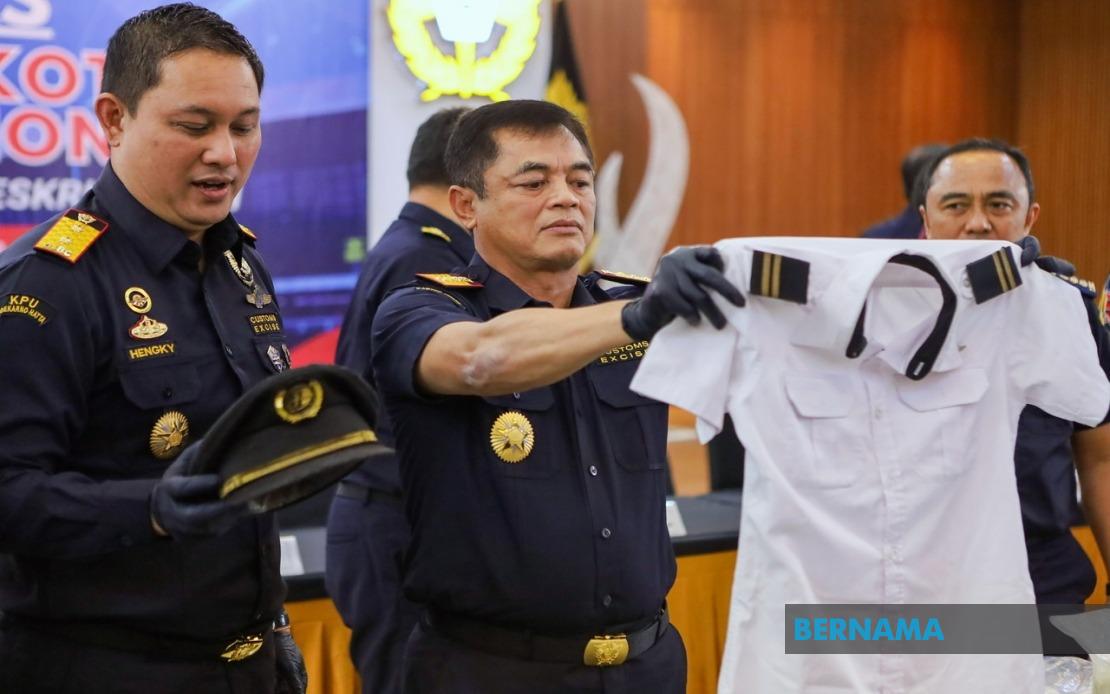
A 39-year-old Malaysian airline pilot faces serious drug trafficking charges after being apprehended at Jakarta's Soekarno-Hatta International Airport with a substantial quantity of narcotics concealed in his luggage. The arrest, confirmed by Indonesian customs officials on Friday, has raised fresh concerns about the vulnerability of aviation personnel to involvement in cross-border drug smuggling operations and the security risks posed by such incidents.
The pilot was intercepted on July 29 immediately after landing from Kuala Lumpur, where he had completed an international passenger flight carrying approximately 170 travellers. According to Indonesia's Director General of Customs and Excise, Djaka Budi Utama, customs officers discovered around 70,114 ecstasy pills distributed across 14 packages with a combined net weight of approximately 25.15 kilogrammes. The estimated street value of the seized ecstasy alone reaches Rp60 billion, equivalent to roughly RM13.4 million at current exchange rates. In addition to the MDMA, investigators also confiscated four grammes of methamphetamine from the suspect's possession.
The arrest highlights a troubling gap in airport security protocols despite assurances from Indonesian authorities. Flight crew members typically enjoy expedited processing through dedicated airport channels on the assumption they present minimal risk compared to ordinary passengers. However, this incident demonstrates how such assumptions can be exploited by sophisticated smugglers who deliberately position themselves within trusted professional categories. Hengki, the Customs and Excise Head at Soekarno-Hatta, acknowledged this vulnerability while insisting that Indonesian customs applies identical inspection standards to both crew members and regular travellers, though the pilot's successful passage through multiple checkpoints suggests considerable gaps in practice.
Laboratory analysis of the suspect's biological samples revealed the presence of MDMA, methamphetamine, and cocaine, indicating not merely trafficking but also personal consumption of multiple controlled substances. This finding becomes particularly significant given that the individual had just piloted a large commercial aircraft carrying nearly 200 people, raising serious questions about flight safety and the adequacy of pre-flight screening procedures. The discovery suggests a pattern of behaviour extending well beyond a single opportunistic smuggling attempt.
Investigators from Indonesia's Criminal Investigation Agency, specifically the Narcotics Directorate's Sub-Directorate II, have reason to believe this incident represents merely the visible portion of a much larger trafficking operation. During preliminary interrogation, the pilot admitted to transporting illegal narcotics into Indonesia on at least three previous occasions—twice through Jakarta and once through an unspecified alternative port of entry. This pattern of repeat offences strongly suggests organisational involvement rather than independent action, though the extent of coordination remains unclear pending further investigation.
The suspicion that the suspect operates as part of an international drug network carries significant implications for law enforcement agencies across Southeast Asia. Authorities are actively tracing other members of the purported syndicate and attempting to identify the intended recipients of the drugs within Indonesia. The involvement of an experienced commercial pilot with regular access to international air routes presents a particularly sophisticated trafficking methodology, leveraging legitimate aviation infrastructure and professional credibility to move large quantities of narcotics across national borders. Such arrangements typically reflect substantial organisational investment and suggest connections to larger supply chains originating elsewhere in the region.
Bilateral coordination between Indonesian and Malaysian authorities has already commenced in response to the arrest. Indonesia's Directorate General of Civil Aviation has initiated liaison activities with Malaysia's aviation authorities to address potential systemic vulnerabilities. Simultaneously, the Royal Malaysia Police and the Royal Malaysian Customs Department have established direct communication channels with their Indonesian counterparts to facilitate information exchange and joint investigation efforts. This diplomatic engagement reflects the recognised need for integrated regional responses to transnational smuggling networks that deliberately exploit jurisdictional boundaries.
The case also underscores the persistent challenge posed by drug trafficking networks operating throughout Southeast Asia. Despite coordinated enforcement efforts across multiple countries, the region remains a critical transit point for narcotics destined for both domestic consumption and international markets. The use of commercial aviation and trusted personnel represents an evolution in smuggling tactics designed specifically to circumvent conventional border security measures. The apparent sophistication of this operation—involving advance arrangement, multiple-country logistics, and previous successful iterations—indicates that regional law enforcement agencies face increasingly organised and adaptive adversaries.
For Malaysia, the arrest of one of its nationals highlights ongoing concerns about criminal exploitation of Malaysian citizens and the country's role within regional drug trafficking networks. The incident demands rigorous examination of domestic aviation industry oversight, crew vetting procedures, and the effectiveness of anti-trafficking mechanisms. Malaysian authorities must determine how an individual engaged in multiple international drug trafficking operations obtained and maintained employment with legitimate carriers, and whether other personnel within Malaysian aviation companies may require investigation.
The broader implications extend to passenger safety and public confidence in aviation security. An airline pilot active in drug smuggling while operating commercial services represents a catastrophic failure of multiple safety and security systems. The fact that such an individual successfully completed international flights while involved in ongoing criminal activity suggests deficiencies in background investigation, behavioural monitoring, and operational oversight that require immediate systematic remediation across the region's aviation sector.
Indonesian investigators emphasise that their inquiry remains ongoing and incomplete. Current priorities include mapping the full extent of the suspect's involvement in trafficking operations, identifying other syndicate members, establishing the origin points of the narcotics, and determining potential connections to other cross-border smuggling networks operating throughout Southeast Asia. The investigation may ultimately reveal links to larger supply chains operating at the regional level, potentially implicating trafficking organisations spanning multiple countries.
This case arrives amid broader regional efforts to combat drug trafficking, though progress remains limited by jurisdictional constraints, limited resources, and the persistent adaptability of criminal networks. The incident will likely drive policy discussions regarding aviation security protocols, crew screening procedures, and the adequacy of current international information-sharing mechanisms. For Malaysia particularly, it presents an opportunity to strengthen domestic oversight mechanisms and demonstrate commitment to combating organised drug trafficking through rigorous enforcement and international cooperation.

