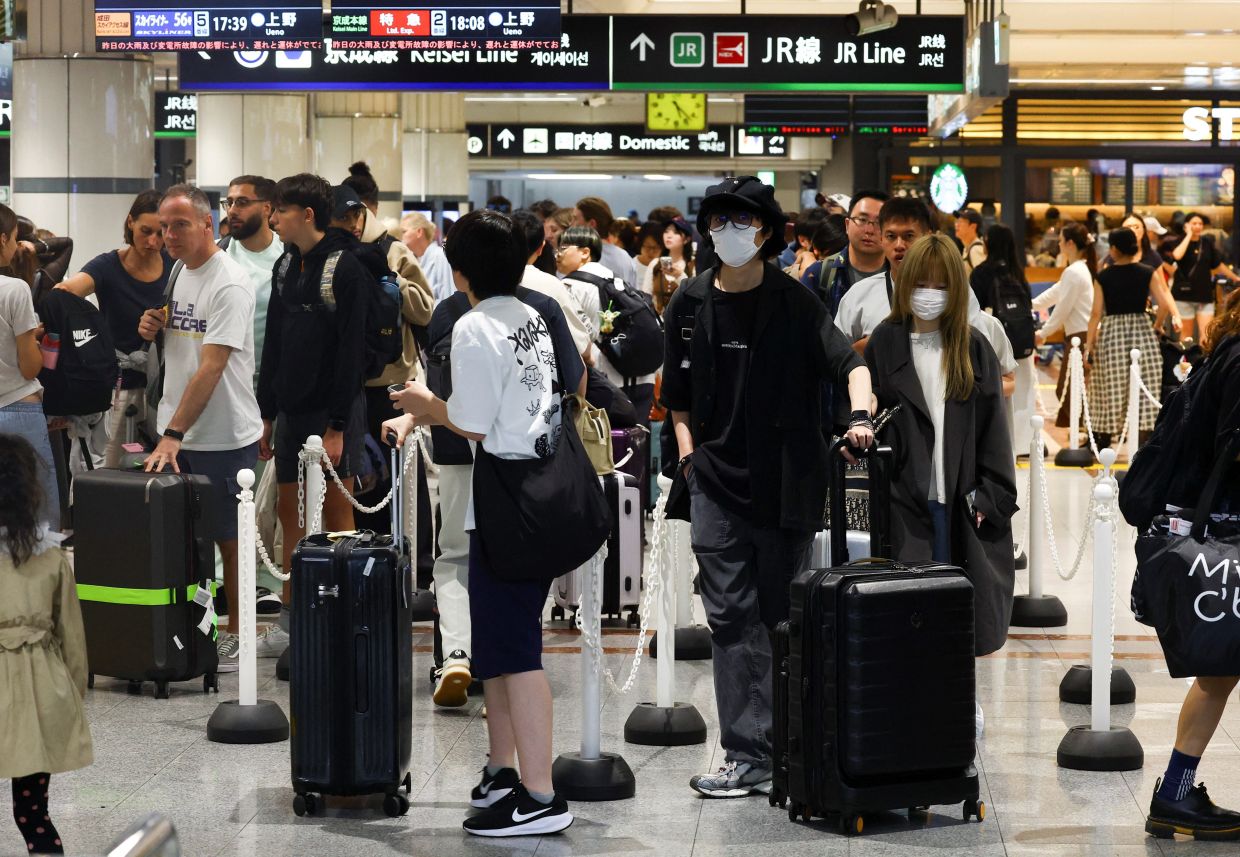
Residents and visitors from Malaysia in Japan face mounting safety concerns as unprecedented rainfall across Chiba Prefecture and the wider Kanto region has unleashed severe flooding and widespread transport paralysis. The Malaysian Embassy in Tokyo has issued formal guidance advising all Malaysian nationals to curtail non-essential travel and maintain heightened vigilance in the affected areas, reflecting the scale and severity of the meteorological emergency unfolding across eastern Japan.
The sheer scope of the disaster has fundamentally disrupted Japan's critical transport infrastructure. Major road and rail networks serving the densely populated Kanto region have suffered significant damage or complete operational failure, leaving tens of thousands of commuters and travellers unable to proceed with their journeys. The cascading effects have been particularly acute at Narita International Airport, where an estimated 7,000 people found themselves stranded as flooding rendered access roads and connecting rail services unusable. Many of these stranded travellers spent nights in airport terminals while authorities worked to restore connectivity.
The human toll of the disaster underscores the severity of the weather event. According to Kyodo News, at least eight fatalities have been confirmed across the affected region as torrential downpours overwhelmed drainage infrastructure and caused landslides in vulnerable areas. The Japan Meteorological Agency responded to the crisis by issuing its highest Level 5 rain warning—a classification reserved for the most extreme weather scenarios—covering more than one-third of municipalities throughout Chiba Prefecture, which lies adjacent to Tokyo.
Mass evacuation orders underscore official concern for public safety. At its peak, the crisis prompted evacuation directives affecting more than 400,000 individuals across multiple municipalities, representing one of Japan's largest weather-related mobilisations. These orders reflect the unpredictability of flooding in low-lying and vulnerable communities, where residents face genuine risk of property loss, injury, or worse if warning instructions are ignored. The sheer numbers involved highlight how Japan's ageing population and concentrated urban centres create particular vulnerabilities during extreme weather events.
For Malaysian nationals navigating this crisis, the embassy has provided detailed safety protocols. The guidance emphasises the critical importance of avoiding flooded zones and depressed terrain where water accumulation poses immediate danger. Malaysians are explicitly urged to exercise heightened caution, remain continuously alert to changing conditions, and closely track official communications from Japanese authorities regarding transport resumption, further evacuation instructions, and weather forecasts. This layered approach recognises that the crisis remains fluid and that situational awareness must be constantly refreshed.
Accessing reliable weather information has become essential for personal safety decisions. The Malaysian Embassy has directed nationals to rely on the Japan Meteorological Agency (JMA) as the authoritative source for real-time weather updates, active warnings, and official advisories. The JMA's sophisticated early-warning systems, refined through decades of earthquake and typhoon preparedness, provide granular forecasts at municipal levels that help residents anticipate danger windows and plan protective responses accordingly.
For Malaysians requiring emergency assistance, the embassy has established multiple communication channels to facilitate rapid response. During standard business hours, Malaysian nationals can reach the Embassy of Malaysia in Tokyo directly at +81-3-3476-3840. Recognising that emergencies often occur outside office hours, the embassy has activated a dedicated emergency hotline at +81-70-1471-9756 available round the clock. Additional contact options include email addresses [email protected] and [email protected], providing alternative pathways for nationals to alert diplomatic staff to urgent situations requiring consular intervention.
The flooding crisis carries broader implications for Malaysia-Japan relations and regional disaster coordination. Japan's experience managing this crisis provides instructive lessons for Southeast Asian nations, including Malaysia, which faces increasing flood risks from climate change and urbanisation. The scale of Japan's early-warning systems, evacuation protocols, and inter-agency coordination offers benchmarks that developing nations attempt to emulate. However, the sheer magnitude of this event—overwhelming even Japan's advanced infrastructure—suggests that regional preparedness remains perpetually challenged by the intensifying severity of extreme weather phenomena.
For the Malaysian diaspora in Japan, this crisis underscores both the vulnerability of expatriate communities and the robustness of embassy support structures. Beyond this immediate emergency, the incident highlights the importance of maintaining awareness of local hazard risks and building personal emergency preparedness plans. Malaysian students, workers, and business professionals based in Japan would benefit from registering with their embassy, understanding local evacuation procedures, and maintaining communication channels with family members in Malaysia.
The incident also reflects how Southeast Asian nationals navigate hazards in developed nations with sophisticated disaster-response systems. Unlike their home nations, where disaster response capacity may be more limited, Malaysians in Japan benefit from world-class early-warning technology and organised evacuation procedures. However, language barriers and unfamiliarity with Japanese emergency protocols can create communication gaps even within advanced systems, making embassy guidance and community networks vital supplementary resources.
As recovery operations continue in Chiba Prefecture and adjacent areas, the Malaysian Embassy will likely provide ongoing updates regarding transport restoration and conditions affecting Malaysian communities. The incident demonstrates how climate change and extreme weather are reshaping risks for expatriate populations across Asia, requiring both individual vigilance and strengthened diplomatic coordination to safeguard nationals abroad during emergencies.

