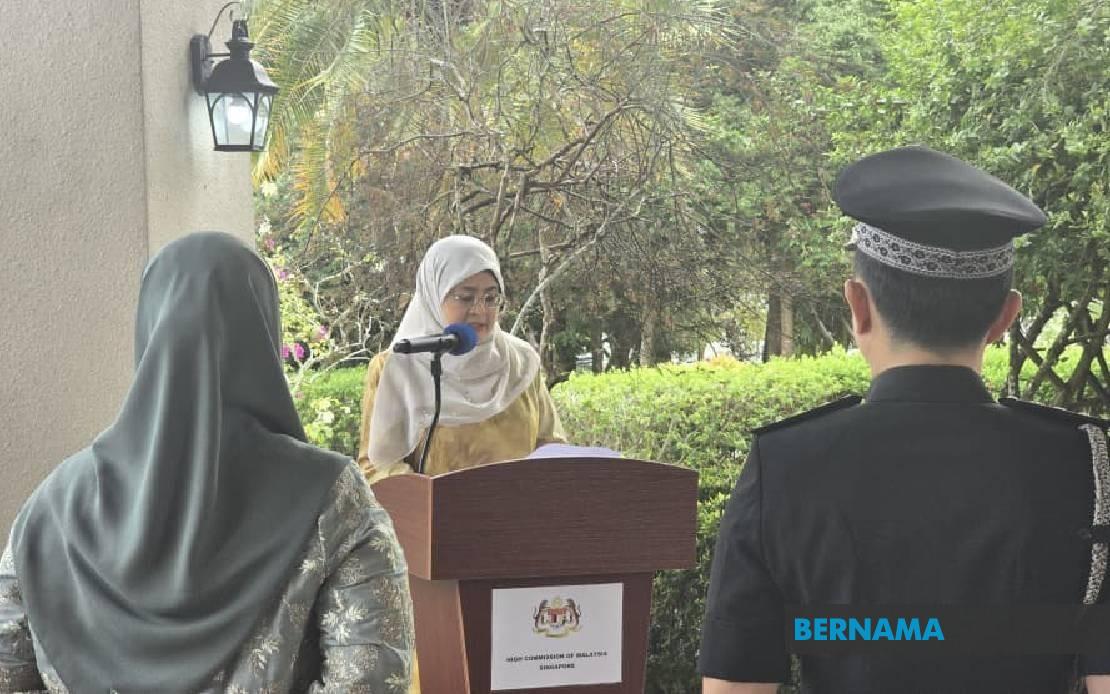
The Malaysian High Commissioner to Singapore, Datin Paduka Anizan Siti Hajjar Adnin, has underscored the significance of Malaysians residing in the island nation as instrumental figures in fortifying diplomatic and people-to-people connections between the two neighbours. Speaking during the Malaysian High Commission's 2026 National Day celebrations held at Rumah Malaysia, Anizan characterized the expatriate community not merely as residents but as representatives who embody the best of Malaysia's character and values on the world stage.
The High Commissioner's remarks came at a moment when cross-border mobility between Malaysia and Singapore remains substantial, with tens of thousands of citizens traversing the Causeway and Second Link daily for employment, business, and personal reasons. This continuous flow of people creates a unique dynamic whereby ordinary citizens become conduits for cultural exchange and mutual understanding. Anizan emphasized that this movement extends far beyond mere logistics; it represents an ongoing narrative of shared history and interdependence that defines the relationship between Kuala Lumpur and Singapore.
In her address, Anizan highlighted the multifaceted nature of Malaysia-Singapore relations, rooted deeply in historical circumstances, geographical proximity, economic integration, cultural commonalities, and family connections that transcend borders. She stressed that Malaysians working and living in Singapore occupy a particularly privileged position from which to project Malaysian values and professionalism. The High Commissioner's framing of expatriates as "unofficial ambassadors" reflects a broader strategic understanding that soft power and cultural diplomacy operate through individual actors and communities as much as through formal diplomatic channels.
Anizan called upon the Malaysian community in Singapore to consistently demonstrate integrity, professionalism, courtesy, and mutual respect in their daily interactions. She emphasized that these personal qualities, when exhibited consistently across various professional and social contexts, accumulate into a collective national image that shapes perceptions of Malaysia. The implicit argument is that individual behaviour contributes to macro-level diplomatic outcomes, making every Malaysian working in Singapore a participant in bilateral relationship management.
The High Commissioner also addressed the younger generation of Malaysians in Singapore, urging them to maintain active connections with their cultural heritage and linguistic roots. In particular, she stressed the importance of preserving proficiency in the Malay language, which she described as the unifying national language of Malaysia. This appeal reflects concerns within Malaysia about language preservation among diaspora communities and acknowledges the tension between cosmopolitan adaptation and cultural continuity that younger expatriates often navigate.
Anizan articulated a vision of Malaysia as a nation confident in its identity while remaining open to global influences, yet fundamentally grounded in its cultural and historical values. This formulation attempts to reconcile what some perceive as competing imperatives: remaining competitive and attractive in an increasingly globalized world whilst maintaining distinctive Malaysian characteristics. For expatriates, this translates into a message that cultural pride need not conflict with professional ambition or international engagement.
The 2026 National Day parade at Rumah Malaysia drew participation from over 70 staff members and family members of the Malaysian High Commission, reflecting the diplomatic mission's commitment to celebrating national occasions abroad. Such events serve multiple functions within expatriate communities: they provide spaces for cultural affirmation, strengthen community bonds, and demonstrate official commitment to maintaining Malaysian identity among citizens residing overseas. The involvement of High Commission staff and their families sends a signal that national observance remains important regardless of geographical location.
From a regional perspective, Malaysia's emphasis on the diplomatic role of its expatriate communities in Singapore carries implications for how Southeast Asian nations approach bilateral relations and people-to-people connectivity. As economic integration deepens across ASEAN and labour mobility increases, the question of how citizens abroad contribute to national interests becomes increasingly pertinent. Malaysia's framing suggests a sophisticated understanding that diaspora communities represent strategic assets in regional relationship management.
The timing of these remarks during National Day observances also connects individual contributions to collective national pride. By positioning expatriates as ambassadors, the High Commissioner validates their choice to live abroad whilst maintaining Malaysian identity and commitment. This messaging matters for retention of skilled professionals and for maintaining psychological connections between the diaspora and homeland.
Singapore hosts a significant Malaysian population that includes not only expatriate professionals but also long-term residents and cross-border workers. This heterogeneous community requires different approaches and messaging. The High Commissioner's speech attempted to encompass this diversity by addressing both established expatriates and younger Malaysians, whilst acknowledging the daily commuters who constitute another form of bilateral engagement.
The broader context involves how Malaysia maintains influence and cultural presence in Singapore, where rapid modernization and cosmopolitanism sometimes challenge the visibility of Malaysian cultural markers. The High Commission's deliberate efforts to celebrate National Day and encourage cultural participation reflect institutional strategy to keep Malaysian identity salient within the republic's diverse society. For readers in Malaysia, understanding how the country's representatives abroad work to maintain bilateral relationships offers perspective on the human dimension of diplomacy that extends beyond government-to-government interactions.

