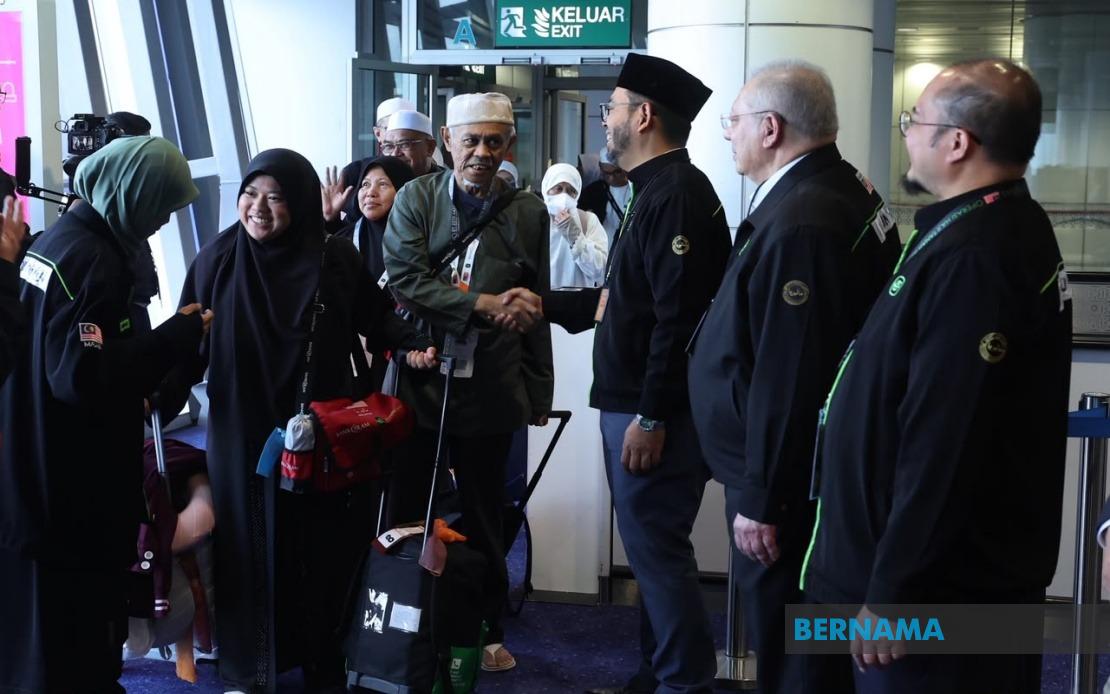
The final contingent of 258 Malaysian pilgrims touched down at Kuala Lumpur International Airport on Tuesday afternoon, marking the official end of Malaysia's haj operations for the 1447 Hijrah season. The Malaysia Airlines flight MH 8385 landed at 12.10 pm after departing Madinah the previous evening, with all pilgrims reported in good health and safe condition. The completion of this year's pilgrimage represents a significant milestone for the country's religious affairs management, achieved despite considerable geopolitical tensions affecting the broader Middle Eastern region.
Minister in the Prime Minister's Department (Religious Affairs) Dr Zulkifli Hasan welcomed the returning pilgrims and formally declared the conclusion of the season's operations. He emphasised that the safe return of every pilgrim—from the first departure to this final flight—reflected the dedication and careful coordination exhibited throughout the entire campaign. His remarks underscored not merely logistical success, but a demonstration of Malaysia's capacity to manage large-scale religious and international operations amid challenging circumstances. The presence of Deputy Minister Marhamah Rosli and Tabung Haji chairman Tan Sri Abdul Rashid Hussain at the airport underscored the institutional importance accorded to this moment.
Beyond Malaysia's borders, the haj season garnered international recognition that extends well beyond typical operational metrics. Saudi Arabia's Ministry of Haj and Umrah presented Malaysia with the Labbaikum Diamond Award, a distinction reserved for the world's best performers in haj administration and pilgrim services. This accolade reflects not only the absence of major incidents or complaints but also the exemplary standards maintained across accommodation, healthcare, transportation, and spiritual guidance throughout the pilgrimage period. For Malaysia, receiving this highest honour positions the country as a benchmark for other nations managing significantly larger pilgrim populations.
The success of this year's operations cannot be attributed to any single factor but rather to a convergence of institutional preparation, technological innovation, and human commitment. Dr Zulkifli explicitly credited the discipline demonstrated by Malaysian pilgrims themselves, noting that intensive pre-departure courses conducted by Tabung Haji had instilled proper understanding of haj protocols and spiritual objectives. The pilgrim cohort's collective adherence to guidelines and cooperative attitude substantially reduced operational friction and contributed to the smooth functioning of the broader system. This emphasis on pilgrim preparation represents an understated but crucial element of Malaysia's competitive advantage in haj management.
Several concrete operational improvements implemented during this season demonstrate how Malaysia is progressively elevating its service delivery standards. The introduction of the MyNIISe system streamlined visa management processes, reducing bureaucratic delays and documentation errors. Enhanced accommodation—specifically the provision of sofa beds and improved tent facilities in the Holy Land—directly addressed comfort concerns raised by pilgrims in previous years. The deployment of around-the-clock bus services connecting major mosques to residential areas eliminated the irregular transport availability that had previously caused scheduling problems and fatigue. These enhancements, while individually modest, collectively create a substantially more dignified and manageable pilgrimage experience.
The role of Tabung Haji in orchestrating these improvements deserves particular attention, as the institution serves not merely as a financial intermediary but as the operational backbone of Malaysia's haj ecosystem. The organisation coordinated with the Health Ministry to ensure adequate medical coverage, worked with Malaysia Airlines to optimise flight schedules, engaged the Immigration Department to expedite processing, and contracted logistics providers to manage the thousands of logistical touchpoints. This coordination across multiple government and private entities, particularly during periods of regional instability, represents substantial managerial complexity that international observers often underestimate.
The reference to West Asian conflicts in official statements acknowledges the broader security context within which this year's operations unfolded. While the source material does not elaborate on specific challenges, the surrounding regional tensions created legitimate operational risks that could have disrupted flight schedules, affected security protocols, or necessitated contingency planning. That Malaysia navigated these circumstances without apparent incident or delays suggests either effective contingency planning or fortunate circumstance—likely a combination of both. The absence of major security incidents during the 1447H season represents a notable achievement for all participating agencies.
Looking forward, Malaysia is already positioning itself for continuous improvement rather than resting on current accomplishments. Tabung Haji has initiated post-mortem analyses and systematic evaluations specifically designed to identify operational shortcomings and areas amenable to enhancement. This institutionalised approach to learning prevents complacency and ensures that award-winning status does not become an excuse for stagnation. The scheduled National Haj Muzakarah—a conference bringing together stakeholders to deliberate on emerging issues and proposed reforms—will provide a formal platform for implementing recommendations derived from this season's experience.
For Malaysian pilgrims and their families, the safe return of all participants carries profound personal significance beyond institutional achievement. Families who have saved for years to undertake the religious obligation have completed their journey without the health emergencies, accidents, or separation that occasionally complicate the pilgrimage for residents of other countries. This consistent safety record, often taken for granted by Malaysian Muslims, represents a genuine competitive advantage when viewed from the perspective of pilgrims in less developed nations who face substantially higher risk profiles.
The geopolitical dimension of Malaysia's haj success warrants consideration within the broader context of Southeast Asian engagement with the Middle East. As a Muslim-majority nation with significant Sunni-Shiite demographic diversity and strategic partnerships across the Islamic world, Malaysia's capacity to execute effective haj operations serves as a soft power asset. The Labbaikum Diamond Award elevates Malaysia's diplomatic standing within the Organisation of Islamic Cooperation and signals to Saudi leadership that Malaysia possesses the institutional capacity to manage sensitive religious affairs with professionalism and cultural sensitivity.
The economic implications of the 1447H season also merit examination, though detailed financial data remains absent from available reporting. Successful haj operations generate substantial revenue for airlines, hotels, guide services, and supporting businesses while simultaneously creating employment across multiple sectors. The prestige associated with receiving top international recognition may enhance Malaysia's competitive position for attracting religious tourism beyond the annual haj period, potentially including Umrah pilgrimages and other Islamic tourism activities.
As Malaysia transitions from celebrating the conclusion of one season to preparing for the next, the lessons embedded in this year's operations will shape institutional practice for years to come. The convergence of technological innovation, enhanced training protocols, improved infrastructure, and coordinated inter-agency cooperation has established a model that other Muslim-majority nations may study and potentially emulate. For Malaysian policymakers and religious affairs officials, the challenge now becomes sustaining these elevated standards while continuing to identify incremental improvements that push the boundaries of what effective haj management can achieve.

