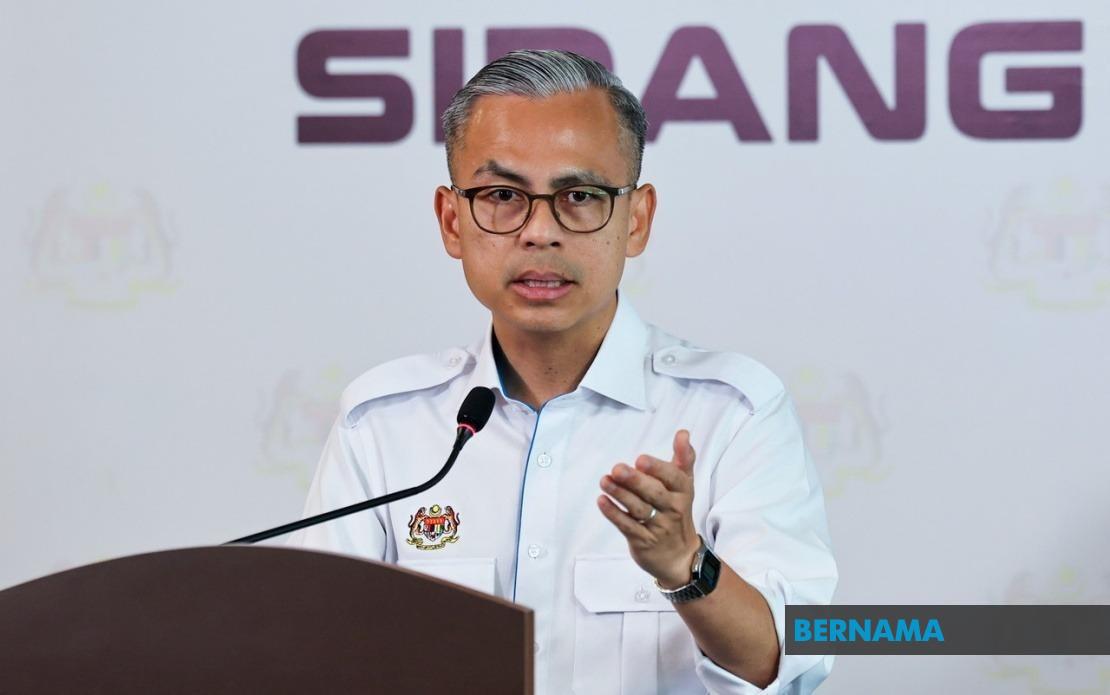
Communications Minister Datuk Seri Fahmi Fadzil has indicated that organisers of Malaysia's 2026 National Day and Malaysia Day celebrations are on track to complete virtually all preparations by tomorrow's full dress rehearsal at Dataran Putrajaya. Speaking after inspecting a rehearsal session conducted on Wednesday, Fahmi, who chairs the main organising committee, disclosed that only minor refinements remain—primarily involving the spacing and coordination of movement patterns between participating contingents to achieve a more polished and disciplined presentation.
The focus of these final adjustments centres on the geometric distances separating successive contingent formations, an aspect Fahmi described as requiring minor tightening to enhance the overall visual cohesion of the parade. Such precision in contingent spacing is crucial for large-scale ceremonial events, particularly when viewed from elevated vantage points and broadcast to national television audiences. By ensuring uniform intervals between marching units, organisers aim to create a seamless visual narrative that reflects the unity and coordination expected of such significant national occasions. Fahmi expressed confidence that these refinements would be completed well before the main event, allowing adequate time for any final adjustments that the comprehensive dress rehearsal might reveal.
Weather cooperation has considerably aided the rehearsal process, with clement conditions facilitating smooth execution of the complex choreography and logistical arrangements. More significantly, Fahmi praised the exceptional commitment demonstrated by all stakeholders, encompassing security personnel, school participants from three states involved in the human graphics performance, and other volunteers. This convergence of external factors and human dedication suggests that the organising apparatus has achieved a high degree of operational readiness, though the dress rehearsal tomorrow will serve as a critical stress-test of all integrated systems.
The 2026 celebrations will showcase several landmark features that distinguish them from previous iterations. Among these is the maiden participation of the Johor Military Force and the inclusion of a maritime asset—specifically the Ibrahim-class boat, a vessel personally designed by His Majesty Sultan Ibrahim, King of Malaysia. These elements add symbolic and ceremonial significance to the proceedings, representing contemporary dimensions of Malaysia's defence and royal institutions. The introduction of such novel components necessitates careful choreography to ensure they integrate seamlessly with established parade traditions and security protocols.
A particularly striking component of the celebration involves a multi-tiered viewing structure accommodating approximately 1,500 students participating in human graphics performance—intricate formations of students creating visual patterns and images visible from elevated perspectives. Fahmi provided assurances that Putrajaya Corporation (PPj) has conducted rigorous safety assessments of this structure, addressing concerns that observers may have noted regarding its slight movements during rehearsals. According to the minister, such movement falls comfortably within engineering tolerances designed to accommodate the rhythmic movements and repositioning of participants during performances. The structure has now been utilised on three separate occasions without incident, lending further credibility to safety certifications.
The positioning of the structure has also attracted attention, appearing marginally asymmetrical in relation to the broader parade layout. Fahmi explained that this geometric arrangement reflects practical constraints: the primary parade route and the PPj building occupy different spatial axes, and organisers deliberately reduced participant numbers from the originally planned 2,000 to 1,500 students. These modifications necessitated corresponding adjustments to structural positioning. Nevertheless, Fahmi indicated that the organising secretariat would undertake technical reviews for future celebrations, with the explicit goal of refining the structural orientation to eliminate any residual visual discord or negative perceptions regarding alignment.
For Malaysian readers and the broader Southeast Asian audience, these preparations underscore the intricate logistical undertakings required to orchestrate national pageantry at this scale. National Day parades serve functions extending far beyond ceremonial performance—they represent collective national identity, showcase institutional capabilities, and communicate governmental competence to both domestic and international observers. The deliberate integration of novel military assets, particularly the Sultan's personally designed vessel, carries additional significance, reflecting the contemporary evolution of Malaysia's national symbolism and the symbolic elevation of royal participation in defence initiatives.
The involvement of students from three different states in the human graphics component also merits consideration within Malaysia's federal architecture. Such inter-state participation in national celebrations reinforces bonds between federal and state institutions while providing provincial communities with tangible engagement in the nation's most significant commemorative occasion. The safety protocols and technical coordination required across state lines demonstrate how complex ceremonial events necessitate unprecedented levels of inter-governmental cooperation and standardisation.
Looking ahead, the dress rehearsal scheduled for tomorrow will provide crucial data regarding the effectiveness of coordination mechanisms and reveal any systemic vulnerabilities that pure rehearsal conditions might obscure. The transition from partial rehearsals to a full-scale dress rehearsal typically exposes unforeseen complications arising from the simultaneous deployment of all contingent elements, security personnel, broadcasting infrastructure, and crowd management systems. Fahmi's confidence in the near-completion of preparations reflects both his assessment of current progress and implicit acknowledgement that the tomorrow's full rehearsal represents the authentic final examination of readiness.
For the government, successful execution of the 2026 celebrations carries political significance extending beyond ceremonial considerations. Effective management of large-scale national events projects administrative competence, attracts international media attention, and generates domestic confidence in institutional capacity. The deliberate emphasis on novel features and technological integration—including bespoke military assets and engineered performance structures—signals governmental investment in modernising national celebration aesthetics while maintaining traditional ceremonial elements. As Malaysian approaches its 69th independence anniversary, the 2026 National Day parade will represent both continuity with established traditions and aspiration toward contemporary expression of national identity.

