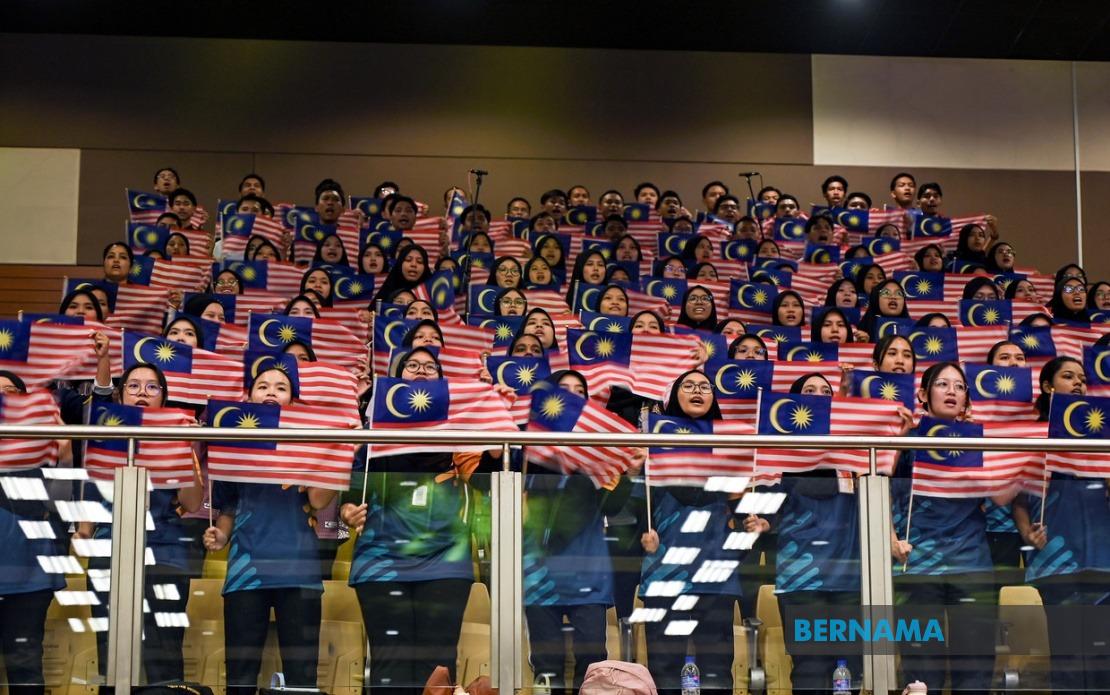
The launch ceremony for Malaysia's 2026 National Month and Kibar Jalur Gemilang campaign is on track for its Sunday debut in Ipoh, with organisers reporting that preparatory work has reached the 80 per cent mark. The event, scheduled to take place at Dewan Sri Perdana within the Sultan Azlan Shah Health Ministry Training Institute, represents a carefully calibrated approach to national celebration that prioritises inclusivity and patriotic messaging over elaborate pageantry.
Faizal Adanan, a senior official with the Information Department's Communication Services and Community Development Division, described the ceremony as deliberately modest in scale while maintaining strong cultural and symbolic impact. Speaking after an inspection of the venue, he outlined how the organisers have meticulously coordinated preparations, including full rehearsals, to ensure smooth execution of the programme scheduled for Sunday. The venue itself, with a capacity of 3,000 attendees, will host representatives from diverse racial, religious, and social backgrounds, reflecting the inclusive spirit that Malaysian national celebrations aim to foster.
A centrepiece of Sunday's programme is the Merdeka Patriotic Run, anticipated to draw approximately 2,000 participants through Ipoh's streets. The run will be formally flagged off by Datuk Abdul Halim Hamzah, the Communications Ministry's secretary-general, signalling the start of both the physical event and the broader 2026 campaign. This running event serves as both a literal and symbolic expression of national unity, inviting Malaysians from various communities to move together towards shared patriotic objectives.
Prime Minister Datuk Seri Anwar Ibrahim's presence as the ceremony's officiating dignitary underscores the political significance of the 2026 national celebrations. His participation legitimises the event at the highest governmental level and signals the administration's commitment to reinvigorating Malaysian national identity and civic pride during what the government views as a formative period for the nation. The choice of Ipoh, rather than Kuala Lumpur or another federal territory, also represents a strategic decision to decentralise national celebrations and demonstrate equal importance to regional centres.
One of the programme's most distinctive elements involves a patriotic choir performance by trainees from the Sultan Azlan Shah Health Ministry Training Institute, a group that has previously generated viral social media attention. Their participation bridges institutional responsibility with grassroots enthusiasm, and their prior online popularity suggests the Sunday performance will likely generate significant digital engagement. This convergence of traditional ceremonial elements with contemporary media dynamics reflects how modern Malaysian national celebrations must operate simultaneously across physical and digital spaces.
The ceremony will also feature a flag-raising ceremony by security forces performing duties that have remained in abeyance for two years, marking a symbolic restoration of military participation in public patriotic observances. The formal hoisting of the Jalur Gemilang by uniformed personnel carries deep resonance within Malaysian civic tradition, and reintroducing this element after a two-year pause suggests deliberate recalibration of how state institutions engage with public displays of nationalism. A local singer will debut the 2026 campaign's theme song, while participating government agencies will operate exhibition booths showcasing their contributions to national development and public services.
Recognising that public attendance will be restricted, organisers have prioritised comprehensive broadcasting to extend the ceremony's reach across Malaysia's population. Live streaming will commence at 10 am through multiple digital channels, including Radio Televisyen Malaysia, the Malaysian National News Agency, the Communications Ministry, the Information Department, and a dedicated Merdeka360 Facebook Live feed. This multi-platform approach acknowledges how Malaysians increasingly consume national events through social media rather than attending in person, and the decision to leverage established institutional channels alongside newer digital platforms suggests efforts to bridge generational divides in how citizens engage with patriotic messaging.
The broader 2026 National Month campaign itself, announced previously by Communications Minister Datuk Seri Fahmi Fadzil, carries a thematic framework intended to guide national discourse throughout the observance period. While the source material does not specify the theme itself, such campaigns typically crystallise government priorities and messaging around identity, development, and unity. The selection and articulation of this year's theme will substantially influence how citizens, media, and international observers perceive Malaysia's national self-perception and governmental aspirations.
Beyond the Sunday launch ceremony, the government has already announced plans for the main National Day celebration on August 31, to be held at Dataran Putrajaya in the federal capital. Officials have characterised this celebration as deliberately restrained yet vibrant, suggesting a consistent approach across 2026 commemorations toward quality over scale. This staging approach—beginning with a regional launch in Ipoh before culminating in a federal capital ceremony—creates a narrative arc that emphasises national inclusion and distributed celebration rather than concentrating patriotic expression in a single metropolitan location.
The 80 per cent completion figure for preparations indicates that final-stage work remains, including technical rehearsals, security arrangements, and contingency planning. Officials note that meticulous coordination has been essential, suggesting that despite the modest scale, logistics remain complex when coordinating multiple government agencies, security personnel, media broadcasts, and public participation across various formats. The Sunday event will serve as a practical test of whether this distributed, digitally-enabled approach to national celebration can effectively mobilise patriotic sentiment among Malaysians accustomed to increasingly diverse and fragmented media consumption patterns.

