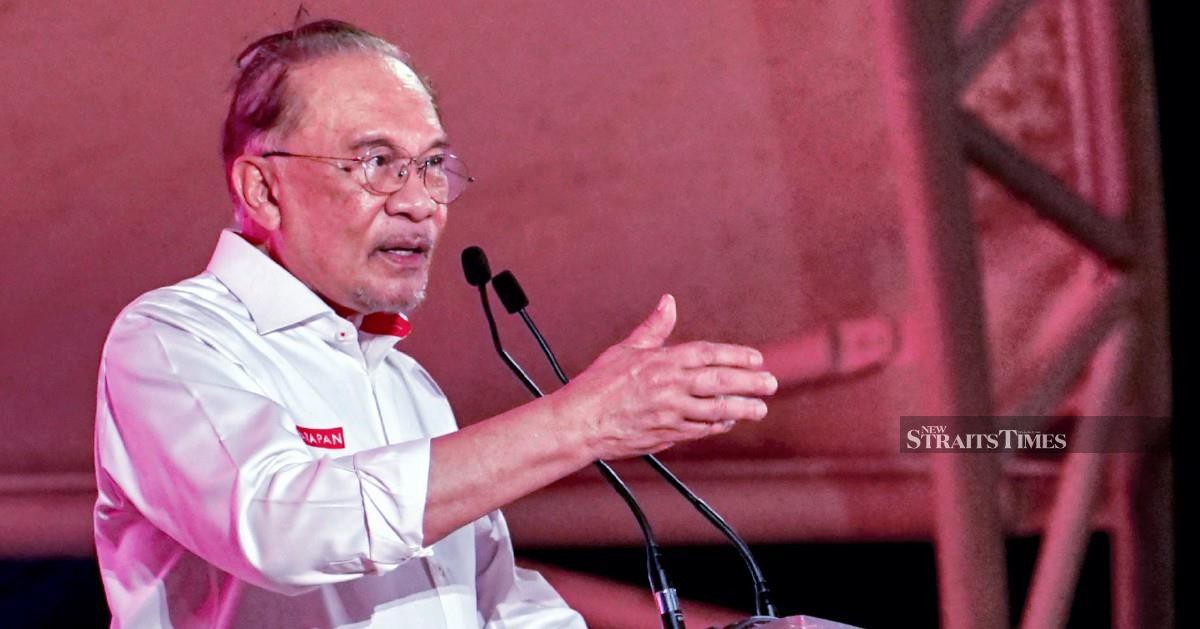
Malaysia's economy delivered a brighter-than-anticipated 5.8 per cent expansion during the second quarter of 2026, marking a pivotal moment for a nation navigating regional uncertainty and global economic headwinds. Prime Minister and Finance Minister Datuk Seri Anwar Ibrahim attributed this outperformance to the foundational work undertaken through the Madani Economic Framework, signalling that the government's policy direction is beginning to produce measurable results in genuine economic activity rather than merely statistical adjustments.
The stronger growth trajectory reflects a confluence of favourable domestic conditions and improved business confidence. Malaysia's diversified economy—spanning manufacturing, services, tourism, and digital sectors—has proven resilient as regional competitors face their own cyclical challenges. The expansion suggests that implementation of Madani initiatives, which prioritise fiscal discipline, inclusive growth, and structural competitiveness, is translating into employment creation and consumer spending patterns across both urban and rural markets. For a middle-income economy confronting the dual pressures of rising wages and automation, this performance offers reassurance that targeted reforms can yield near-term traction alongside longer-term strategic positioning.
However, Anwar's cautionary framing deserves careful attention from policymakers, investors, and observers tracking Malaysia's development trajectory. Acknowledging that stronger growth has materialised does not, in his assessment, justify complacency or a reduction in reform intensity. Instead, he has signalled that the current economic cycle presents a window of opportunity—one that must be seized to deepen structural transformations that Malaysia has long required but historically postponed. This distinction between cyclical relief and secular improvement underpins the government's philosophy and explains why officials continue to emphasise the unfinished agenda ahead.
The Madani Economic Framework itself represents a departure from previous growth models that often relied on commodity exports, foreign direct investment inflows, and credit-fuelled consumption. By contrast, the framework explicitly targets productivity gains, human capital development, and the transition toward higher-value manufacturing and services. The 5.8 per cent result validates that this philosophical shift need not come at the cost of short-term growth sacrifices—a concern that has historically deterred comprehensive reform in emerging markets where political cycles and electoral pressures incentivise quick wins.
For Malaysian policymakers, the strategic implication is clear: the economy possesses sufficient momentum to absorb near-term friction from structural changes without triggering a demand shock or social backlash. This creates space to accelerate labour market reforms, enhance digital infrastructure investment, streamline regulatory burdens on startups and small enterprises, and pursue sectoral diversification beyond traditional pillars. The performance also strengthens Anwar's hand in managing fiscal consolidation—a politically sensitive endeavour in any democracy—by demonstrating that measured austerity paired with efficiency gains need not suppress growth.
Regionally, Malaysia's 5.8 per cent growth rate positions the nation competitively within Southeast Asia at a moment when other economies face headwinds. Thailand, Indonesia, and the Philippines each carry distinct macroeconomic challenges ranging from tourism volatility to political uncertainty to currency pressures. Malaysia's diversification and relative institutional stability have historically allowed it to outperform peers during crises, though recent years have seen performance gaps narrow. The latest quarterly result reasserts Malaysia's capacity to deliver solid, above-trend expansion—a message that resonates with multinational corporations evaluating regional supply chain resilience and with foreign investors assessing political and economic stability.
Yet the government's insistence on continued reforms points to deeper anxieties about long-term competitiveness. Malaysia faces mounting competition from Vietnam, which has attracted manufacturing investment through lower labour costs and aggressive trade diplomacy, and from Bangladesh and other South Asian nations in lower-wage segments. Simultaneously, the digital economy expansion in Singapore, Indonesia, and increasingly Thailand threatens to capture higher-value service sector opportunities. Against this backdrop, 5.8 per cent quarterly growth, though commendable, cannot sustain Malaysia's prosperity indefinitely without accompanying productivity gains, innovation capacity, and labour skill advancement. Anwar's emphasis on reforms reflects understanding that demographic headwinds—an ageing population and slowing population growth—also necessitate efficiency improvements to maintain per-capita income growth.
The financial markets have responded positively to Malaysia's economic trajectory, with the ringgit benefiting from improved growth and interest rate expectations, while equities have reflected renewed investor interest in domestic demand stories. However, this sentiment remains conditional on evidence that reforms will indeed deepen rather than plateau. Any suggestion that the government views the 5.8 per cent result as sufficient grounds to ease off structural changes could trigger a swift correction in asset valuations and capital flows—a risk Anwar appears keenly aware of through his public emphasis on momentum.
Looking forward, the true test lies not in maintaining 5.8 per cent growth rates—which may prove unsustainable given global dynamics—but in using the current expansion window to improve Malaysia's productivity growth, reduce reliance on low-cost labour competition, and build institutional capacity for sustained innovation. Sectors including electrical and electronics manufacturing, petroleum and liquefied natural gas, and palm oil have historically driven Malaysian expansion, yet they face long-term demand and sustainability pressures. Digital services, advanced materials, renewable energy, and high-value healthcare and education exports represent emerging opportunities that require deliberate policy cultivation.
Anwar's balanced messaging—celebration of achievement coupled with insistence on intensified reform—thus reflects a sophisticated reading of Malaysia's medium-term development challenge. The economy is not in crisis, nor does current growth justify retreat from difficult adjustments. Instead, the 5.8 per cent expansion creates political space and economic room to pursue changes that will determine whether Malaysia can sustain upper-middle-income status and eventually achieve high-income status as envisioned in long-term development blueprints. For Malaysian stakeholders and regional observers, the quarter's result is encouraging but marks merely a chapter in a much longer narrative of transformation.

