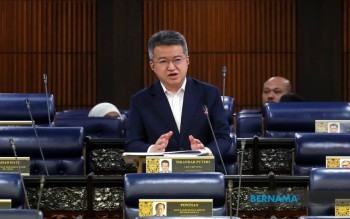
Malaysia's government has ruled out any immediate revision to its Budget 2027 fiscal framework based on economic performance during the first half of 2026, according to Deputy Finance Minister Liew Chin Tong. Speaking during parliamentary proceedings on July 15, Liew indicated that while the administration continues to assess global and regional developments, the current budgetary trajectory remains intact heading into the formal budget tabling in October. This measured stance suggests confidence that existing contingency mechanisms can absorb near-term pressures without derailing long-term fiscal consolidation goals.
The government's cautious optimism stems partly from a fortuitous offset mechanism embedded in Malaysia's petroleum-dependent revenue base. Although elevated crude oil prices have driven subsidy expenditure up by an estimated RM40 billion—a substantial burden reflecting geopolitical tensions in West Asia—the same price movements have correspondingly strengthened petroleum-related government revenues. Liew explained that each US$1 increase per barrel in world crude oil prices translates into approximately RM300 million in additional petroleum revenue for the federal government, a relationship that mathematically cushions the fiscal impact of higher subsidies.
This revenue windfall, however, excludes contributions from Petronas, the national oil company, which provides an additional fiscal cushion through dividend distributions. The cumulative effect of higher crude prices thus creates a partial self-correcting mechanism within the budget, allowing subsidy pressures to be partially offset without requiring supplementary revenue measures or expenditure cuts elsewhere. Liew emphasized that these revenue gains provide meaningful mitigation against the subsidy burden, though he stopped short of claiming complete neutrality between the two forces.
The deputy minister's comments address underlying concerns about Malaysia's fiscal flexibility amid mounting geopolitical risks. West Asia tensions have repeatedly triggered oil price volatility over recent years, creating uncertainty for policymakers who must balance social commitments through subsidies against the imperative of fiscal sustainability. By confirming that no projections revision is necessary at this juncture, Liew signals that the government believes its current revenue and expenditure assumptions remain realistic through the middle of the year, and potentially beyond.
Nevertheless, the government is implementing continuous monitoring mechanisms to track economic conditions and revenue performance. Liew disclosed that the National Economic Action Council's crisis management task force conducts weekly engagement sessions focused on preserving energy supply security and protecting access to essential goods for Malaysian households. This operational vigilance reflects awareness that assumptions underpinning Budget 2027 could shift if geopolitical circumstances deteriorate further or if international energy markets experience sharper disruptions.
The administration has already deployed intervention initiatives designed to contain the fiscal footprint of subsidy support while safeguarding public welfare. These measures emphasize targeted rather than universal subsidies—a distinction important for maintaining fiscal discipline while ensuring vulnerable populations retain affordable access to fuel and basic necessities. The government has also undertaken expenditure restructuring to prioritize critical needs and enhance operational efficiency across departments, creating fiscal space without necessarily reducing absolute spending on priority areas.
Liew's remarks underscored the government's medium-term fiscal consolidation strategy, which extends beyond the immediate budget cycle. Rather than relying on one-off interventions, the strategy rests on sustained improvements in revenue collection, heightened tax compliance, and structural refinements in expenditure prioritization. These elements are designed to gradually narrow Malaysia's fiscal deficit over multiple years while accommodating necessary investments in infrastructure, education, and healthcare—cornerstones of long-term economic competitiveness.
The timing of Liew's parliamentary statement reflects the government's need to manage market expectations ahead of the October budget announcement. By confirming fiscal stability despite near-term shocks, the statement aims to reassure investors, credit rating agencies, and international observers that Malaysia's fiscal trajectory remains sound. This messaging is particularly significant for a middle-income economy heavily reliant on foreign direct investment and capital market confidence, where perceptions of fiscal volatility can translate quickly into higher borrowing costs.
Looking ahead to the formal budget tabling, the government has committed to incorporating genuine H1 2026 economic data, including actual revenue collection outcomes and spending patterns, into final budget projections. This data-driven approach means the fiscal framework announced in October will reflect concrete performance rather than assumptions made earlier in the year. For Malaysian households and businesses, the implication is that while immediate subsidy relief may not materialize, the government has credibly committed to maintaining affordability on essential items while preserving fiscal health—a balancing act increasingly difficult as geopolitical risks persist.

